Ring Biceps Curl
The ring biceps curl is hardest at the bottom with your arms straight, and easiest at the top. That is the opposite of a dumbbell curl, which is light at both ends and hardest halfway up. You lean back under a pair of rings, arms straight, and pull your hands to your forehead while the elbows stay parked at one height. How far you stand under the anchor point decides how heavy it feels.
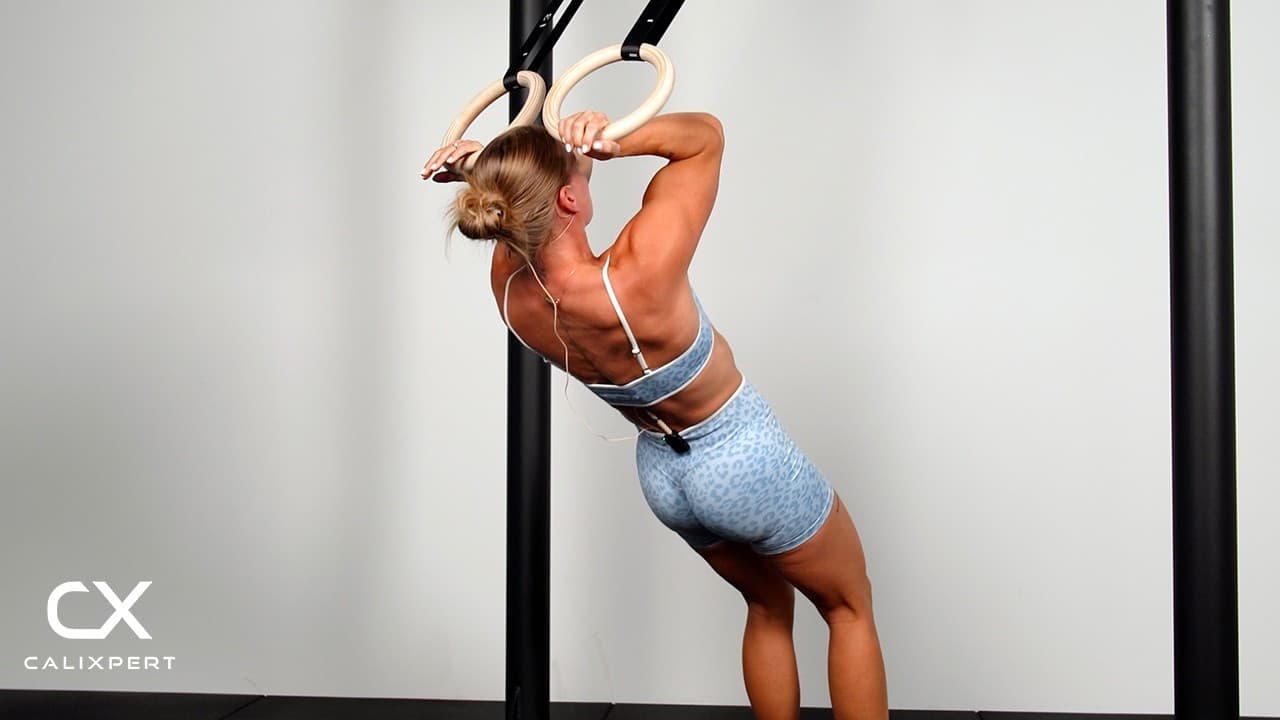
The ring biceps curl is hardest at the bottom with your arms straight, and easiest at the top. That is the opposite of a dumbbell curl, which is light at both ends and hardest halfway up. You lean back under a pair of rings, arms straight, and pull your hands to your forehead while the elbows stay parked at one height. How far you stand under the anchor point decides how heavy it feels.
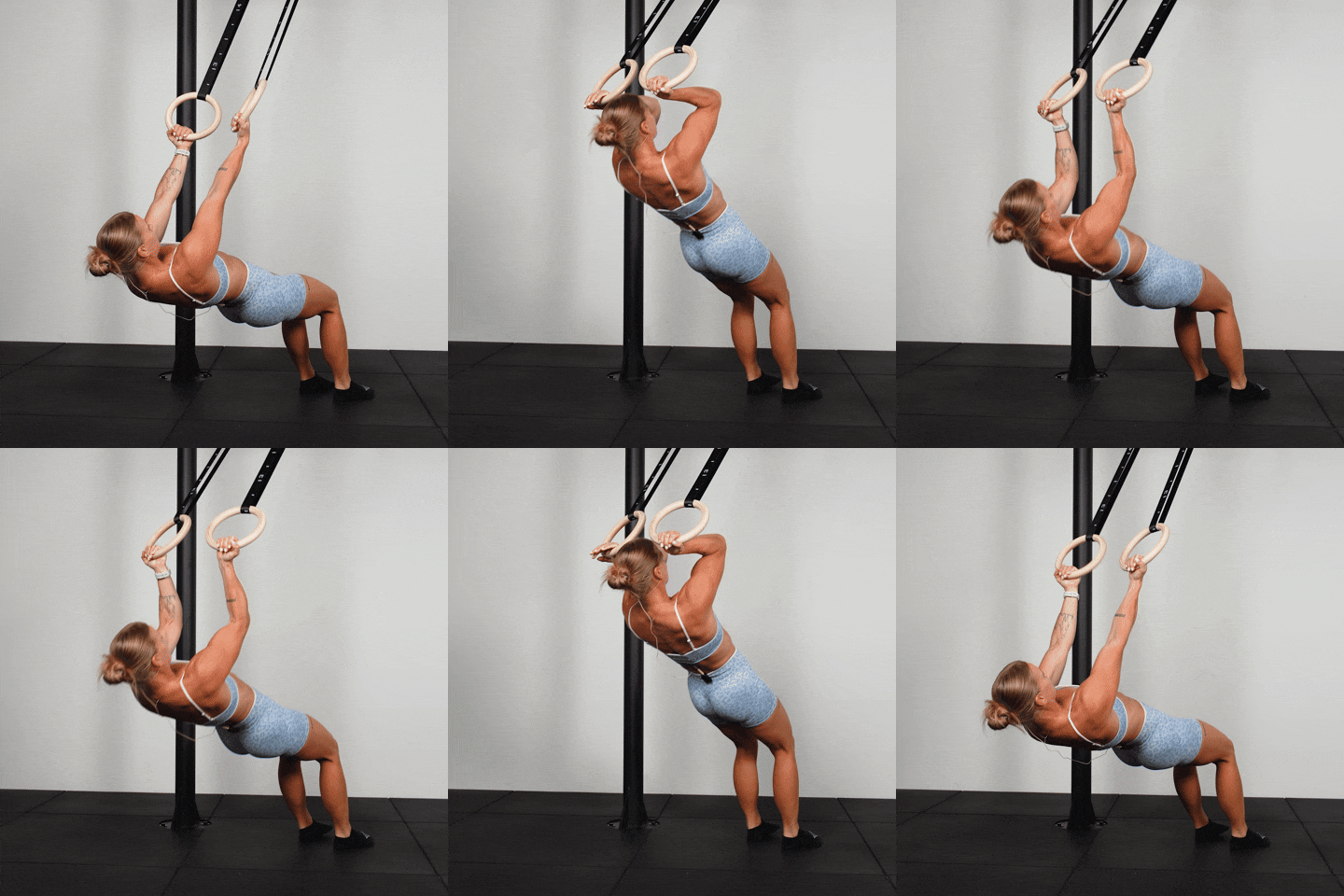
How to Do Ring Biceps Curl
1. Set The Rings And Pick Your Angle
Hang the rings on a solid anchor at around chest height and set both straps to the same mark. Take a ring in each hand and walk your feet forward until you are leaning back with your weight on your arms. Standing more upright is the easy version, and every step further under the anchor point makes it harder.
More upright is easier
2. Take A Supinated Grip
Hold the rings with your palms turned up, so your thumbs point outwards at all times. That palms up position is what keeps the biceps in the movement, and turning the hands in shifts the work onto the forearms instead. A firm grip is enough, you do not need to crush the rings.
Thumbs pointing outwards
3. Build The Body Line
The core wants to be fully engaged, with no arching and no relaxing. The hip stays in extension, so no piking and no hyperextension, just a neutral position of the hip and the core. Squeeze the glutes and hold that same line from the first rep to the last.
Core on, hip neutral
4. Extend Your Arms Fully
Let yourself settle back until your arms are fully extended above your head. Wherever your elbows sit in that position, up around head height and roughly in line with the rings, is where they stay for the rest of the rep. This bottom position is the hardest part, the reverse of a dumbbell curl, where the bottom is the easy part.
Straight arms, elbows up
5. Pull Your Hands To Your Forehead
Bend the elbows and pull your hands in to your forehead. The elbows stay at the same level throughout the whole movement, with no flaring out and no tucking in too much. If your hands arrive at your chest instead, the elbows have dropped and you are rowing.
Forehead, not chest
6. Squeeze At The Top
Finish with the hands at the forehead and squeeze the biceps. Your body is more upright here, so less of your weight sits on the arms and the position feels light. A short pause keeps the tension on the muscle instead of letting it drain away at the easy end of the rep.
Squeeze the biceps
7. Lower Under Control
Straighten the arms back to full extension without letting the body drop. Around two seconds down is a good default. The lowering half is where a lot of the work sits, and falling into the bottom dumps the load onto the elbow in one hit.
Slow all the way to straight
The elbows decide whether this is a biceps exercise or a row. They sit high, up around head height and roughly in line with the rings, and they stay at that one height the whole way, no flaring and no tucking in, while the hands travel to your forehead. If the elbows drop, your back takes the work and your arms get an easy ride. Start more upright than you think you need, and step further under the rings once you can hold that line for every rep.
Muscles Worked During Ring Biceps Curl
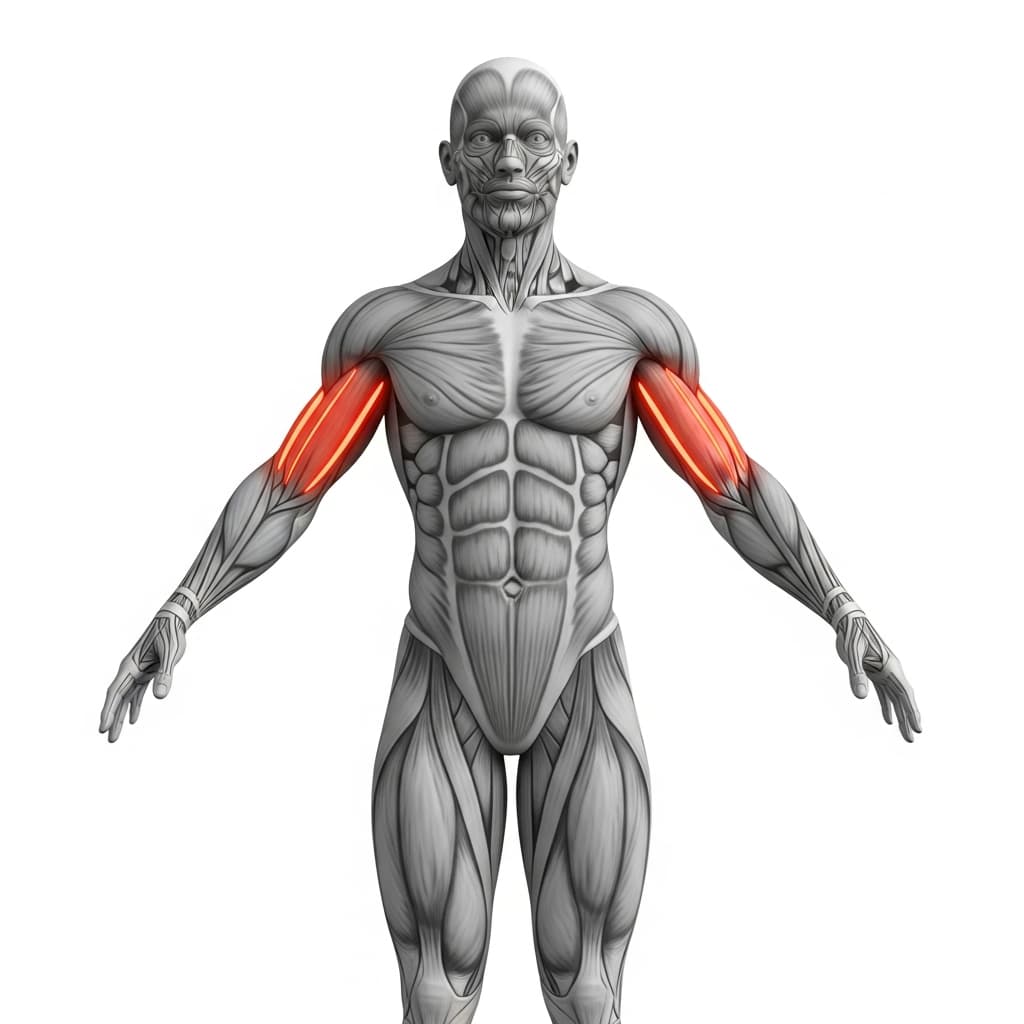
Secondary Muscles:
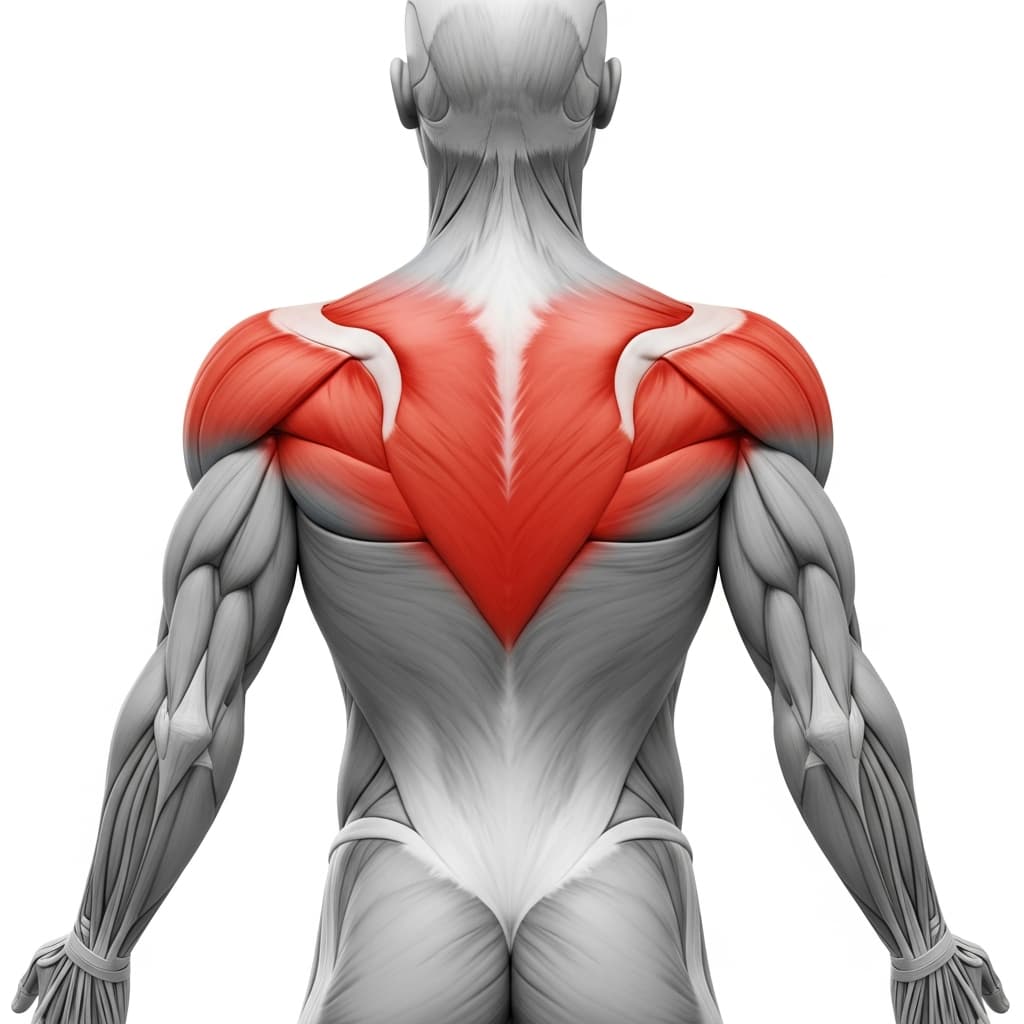
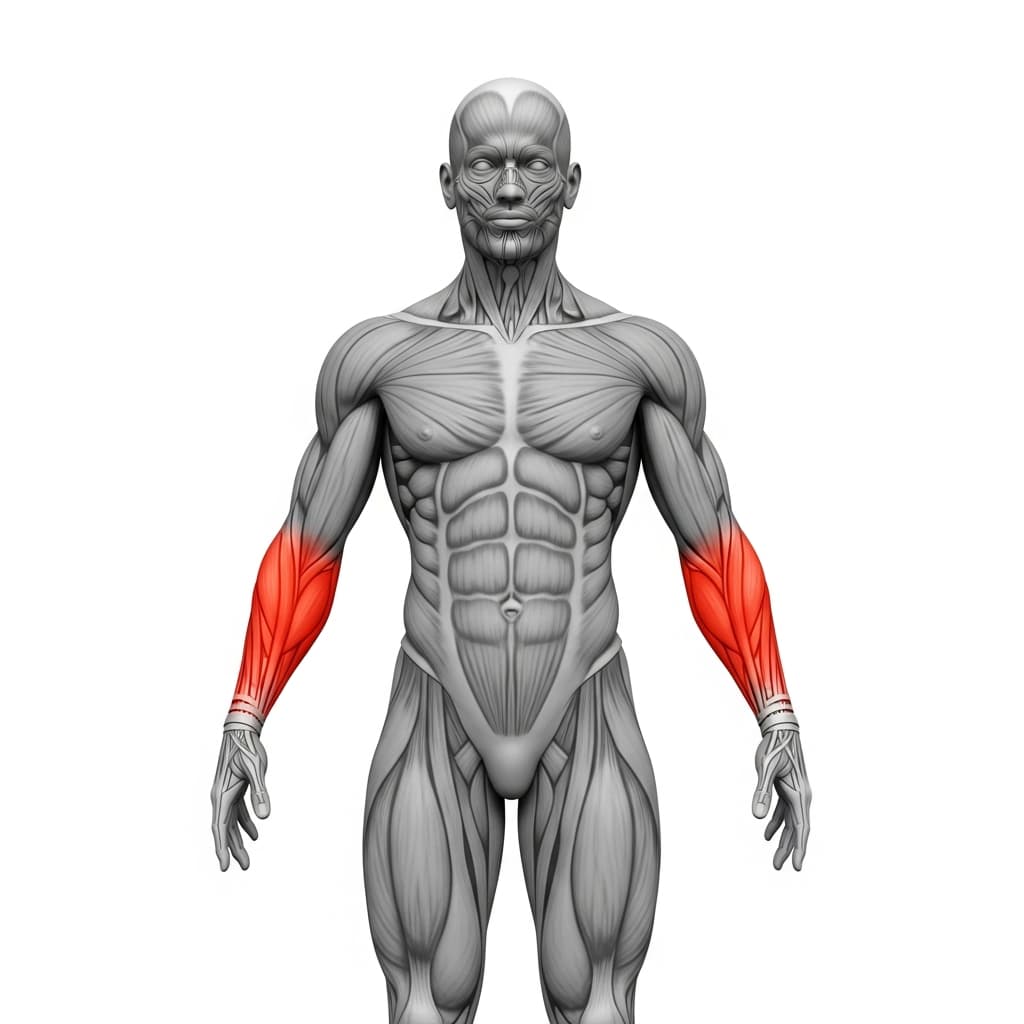
Primary Muscles
Biceps Brachii (Biceps) - Bends the elbow and holds the palms turned up, which is the whole reason this counts as a curl rather than a row, though with the elbows held high the brachialis underneath takes a large share of the lifting.
Forearm Flexors & Extensors (Forearms) - Grips the rings for every second of the set and helps bend the elbow, and the wrist muscles never switch off because the rings can rotate and swing under your hands.
Secondary Muscles
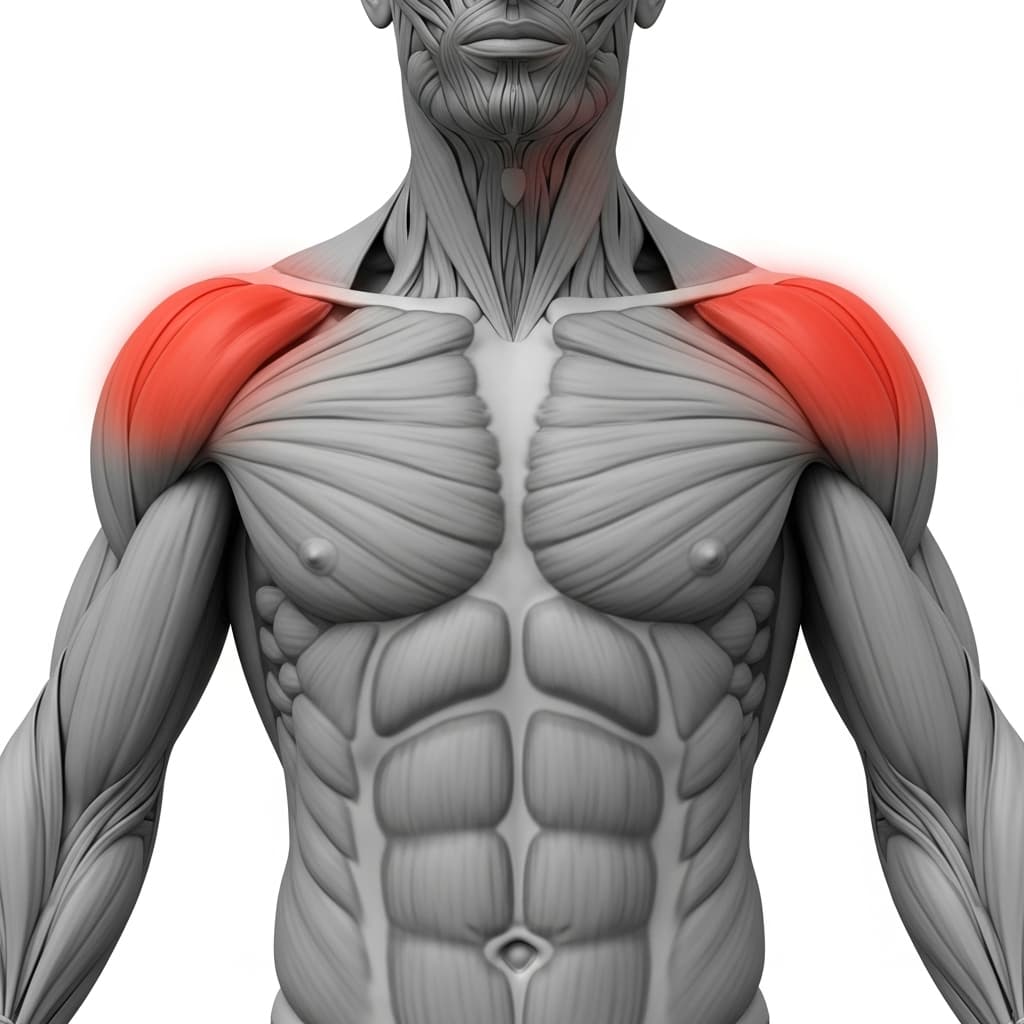
Anterior Deltoid (Front Deltoid) - Holds the elbows up near head height for the whole set, which is quiet work you only notice once the reps add up.
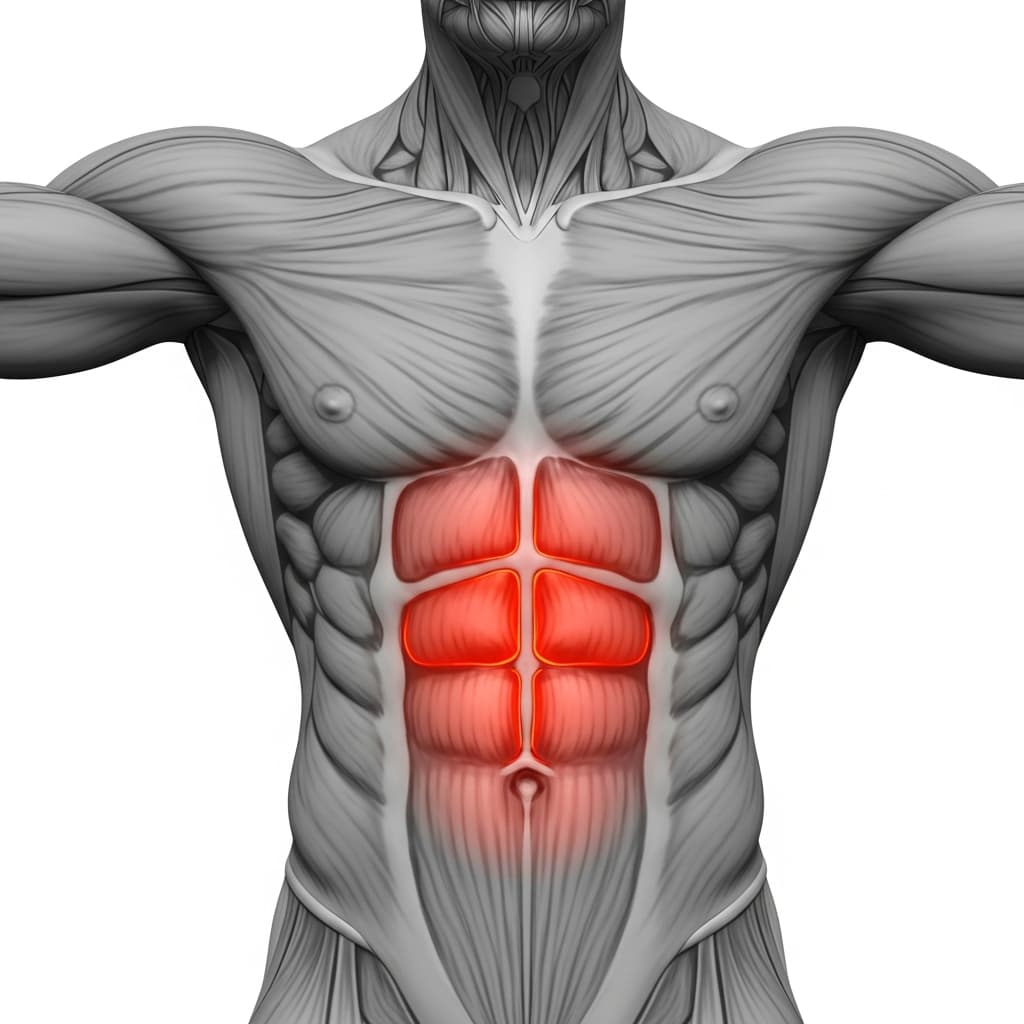
Rectus Abdominis (Abs) - Keeps the ribs pulled down and the pelvis level, which is what stops the low back arching as you lean further under the rings.
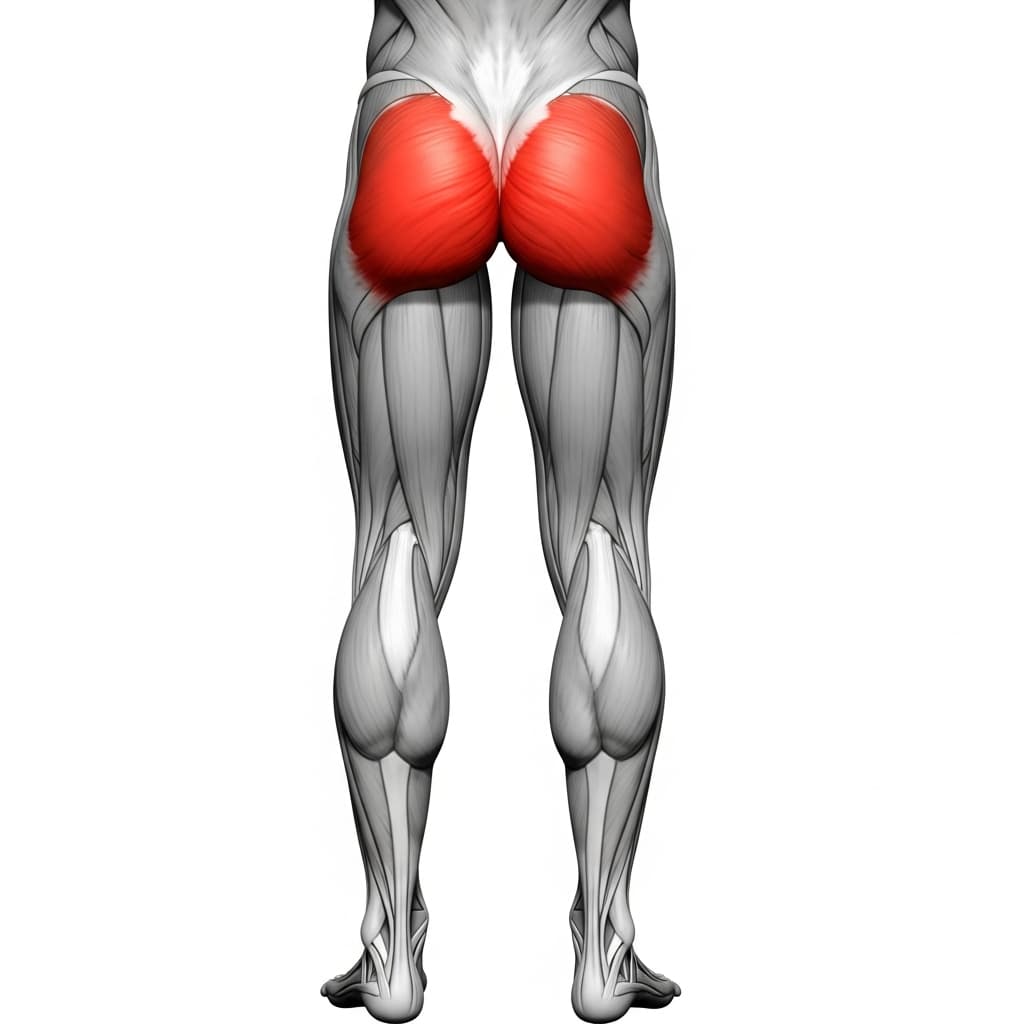
Gluteus Maximus (Glutes) - Squeezes to hold the hip in neutral extension, which is what stops you piking back or pushing the belly forward.
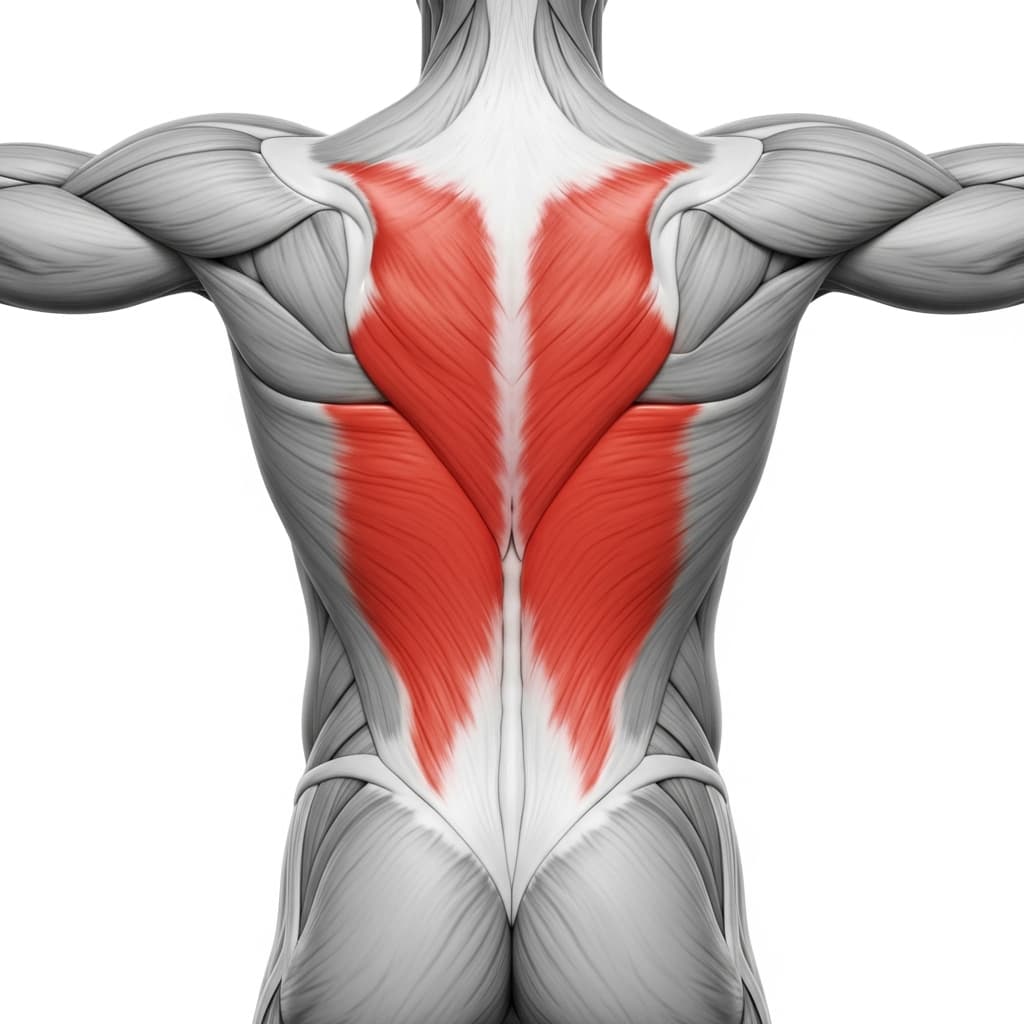
Erector Spinae (Spinal Erectors) - Works with the abs to hold the spine neutral, so the trunk stays one stiff segment from shoulders to hips instead of bending as the arms pull.
Rhomboids & Upper Trapezius (Upper Back) - Sets the shoulder blades down and back at the start and then holds that position, because the moment the shoulder blades start pulling, the exercise turns into a row.
Benefits of Ring Biceps Curl
- Trains the elbow flexors directly with nothing but a pair of rings, so arm work does not depend on having weights around.
- The load changes in one step. Walk the feet forward for more, back for less, even in the middle of a set.
- Your hands are free to rotate on the rings, so the wrists and elbows sit where they want instead of being locked in place by a fixed bar.
- Every rep doubles as a bracing drill. The core and glutes hold the torso and hips in one line while the arms work, so you get bracing practice inside an arm exercise.
- It fills the gap left by chin ups and rows, where the back does most of the work and the arms rarely get taken to the point that they are the limit.
Who Is This Exercise For?
You need a solid anchor and a body line you can actually hold. Your shoulders and hips stay in one line with the ribs down and the hip in neutral extension while the arms work, so if the hips fold or the low back arches the moment you get tired, spend a few weeks on planks and hollow holds first. Comfortable bodyweight rows tell you the pulling side is ready. Set both straps to the same mark before you start, because uneven rings load one arm more than the other, and lean your weight into the frame before your first rep. A free standing pull up frame can tip when you pull backwards on it, and it needs weighting down or bolting before it is safe for this.
Common Mistakes to Avoid
Letting the elbows drop: This is the error that shows up most often, and it quietly turns a curl into a row. The second the elbows fall toward your ribs, your back takes the load off your arms and the set gets much easier without feeling easier. Keep them at the height they sat when your arms were straight, and use the target as your check: hands to the forehead is a curl, hands to the chest is a row.
Piking or arching the hips: When the arms start to fail, the hips become a free lever, so people either fold at the hip or push the belly forward to shorten the work. Both mean the angle is harder than your current strength, not that your core is lazy. Reset the straight line, take a step back from under the rings, and finish the set with the body still.
Curling the wrists in: Squeezing the rings hard feels like control, and it drags the wrists into a curled position, which hands the work to the forearms instead of the biceps. Keep the wrists straight or slightly bent back and let the rings turn a little in your hands. Rings rotate freely, which is exactly why your wrist can sit where it wants to sit.
Swinging up and dropping down: A hip snap to start the rep and a fast drop at the end are the same problem: the angle is too steep for the reps you picked. Walk your feet back until you can lift with the arms alone, then control the way down at the same speed on every rep. Rushing the lowering half throws away most of what the set was worth.
Variations & Progressions
Eccentric Ring Biceps Curl
Step in with the hands already at your forehead and only lower, which lets you train a steeper angle than you can currently pull yourself out of.
One Arm Ring Biceps Curl
One ring, one arm and a more upright start, so a single arm carries the load while the core stops you twisting.
Ring Pelican Curl
The arms travel out behind the body under a deep stretch, which trains the range this curl never reaches and asks for a lot of shoulder and elbow preparation first.