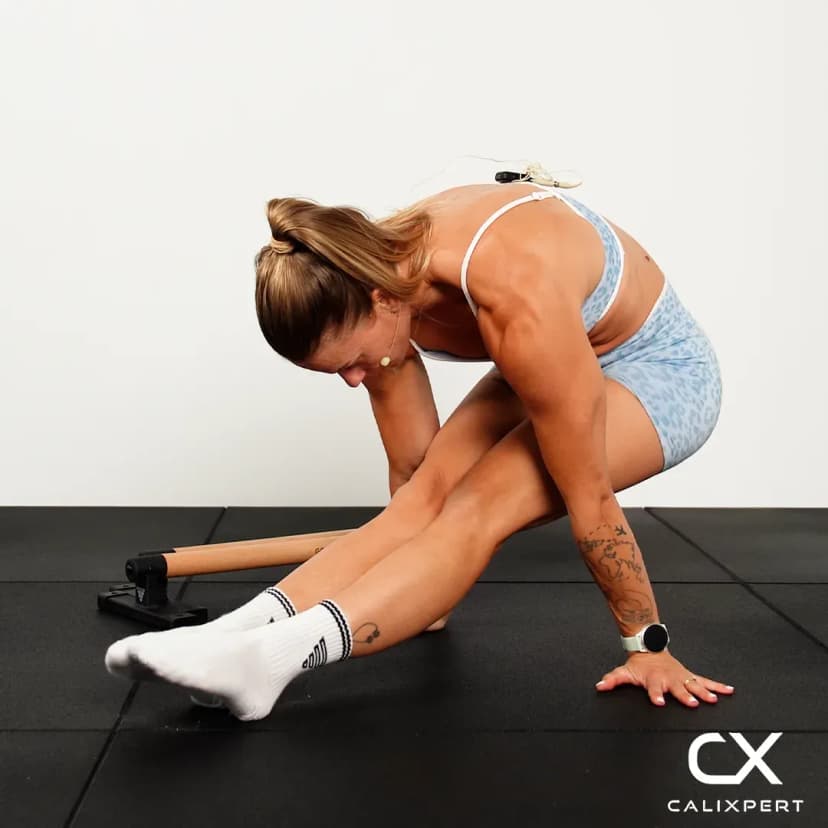
Seated Pancake Stretch
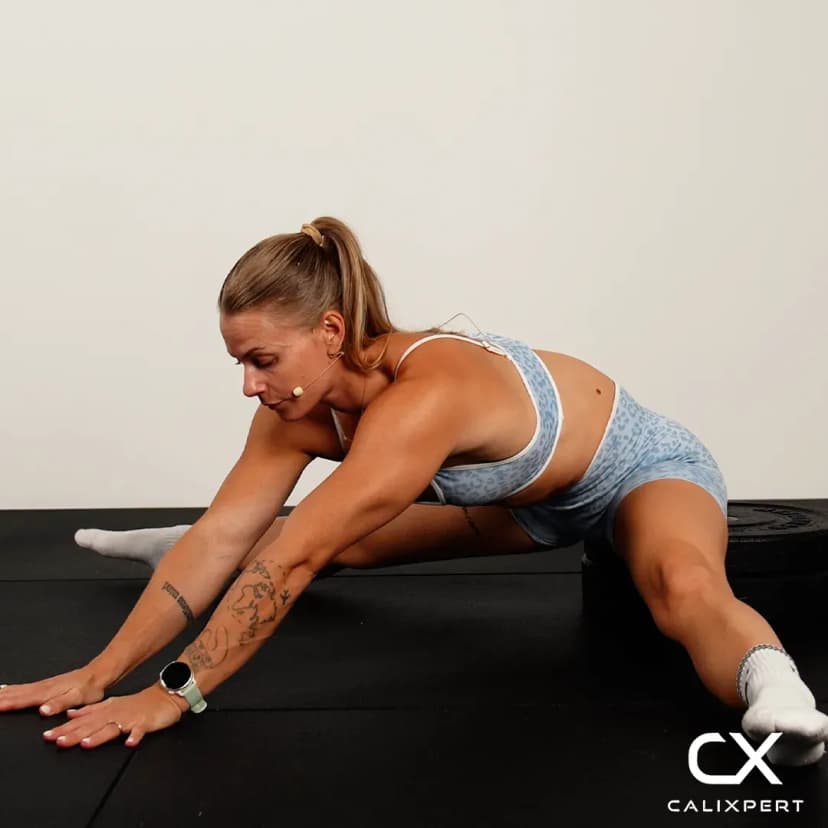
The Seated Pancake Stretch is a wide straddle fold on the floor that stretches the hamstrings and adductors, and you should also feel it in the hips and maybe the lower back. The point is to tilt the pelvis a little to the front and lower the chest with a straight back, starting on your elbows. It is the floor pancake itself, the shape your hips and legs need in the handstand press, while the Elevated Pancake Stretch and Half Pancake are easier ways in.
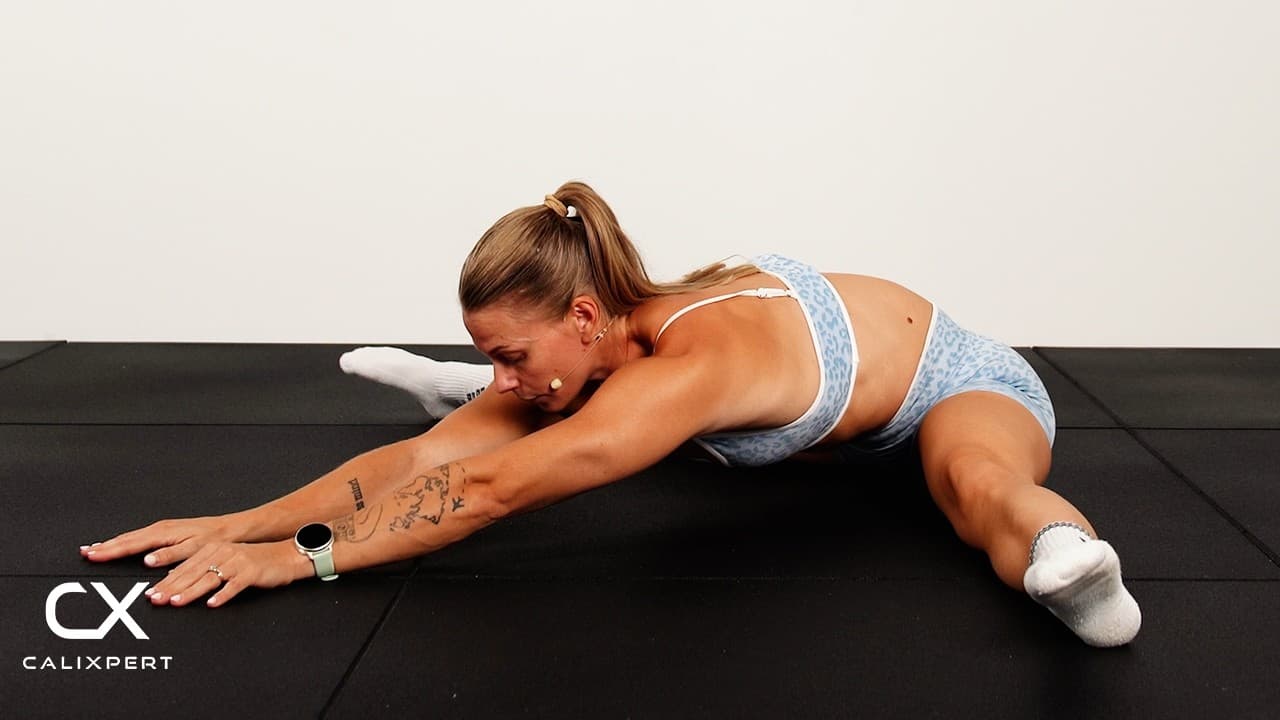
The Seated Pancake Stretch is a wide straddle fold on the floor that stretches the hamstrings and adductors, and you should also feel it in the hips and maybe the lower back. The point is to tilt the pelvis a little to the front and lower the chest with a straight back, starting on your elbows. It is the floor pancake itself, the shape your hips and legs need in the handstand press, while the Elevated Pancake Stretch and Half Pancake are easier ways in.
How to Do Seated Pancake Stretch
1. Sit Flat And Split Your Legs
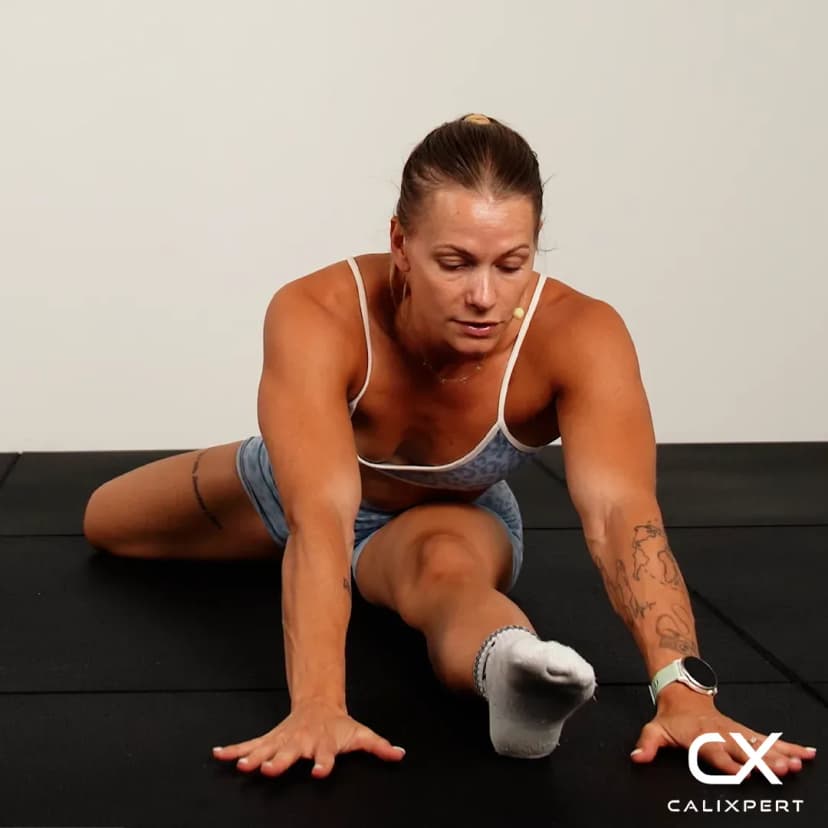
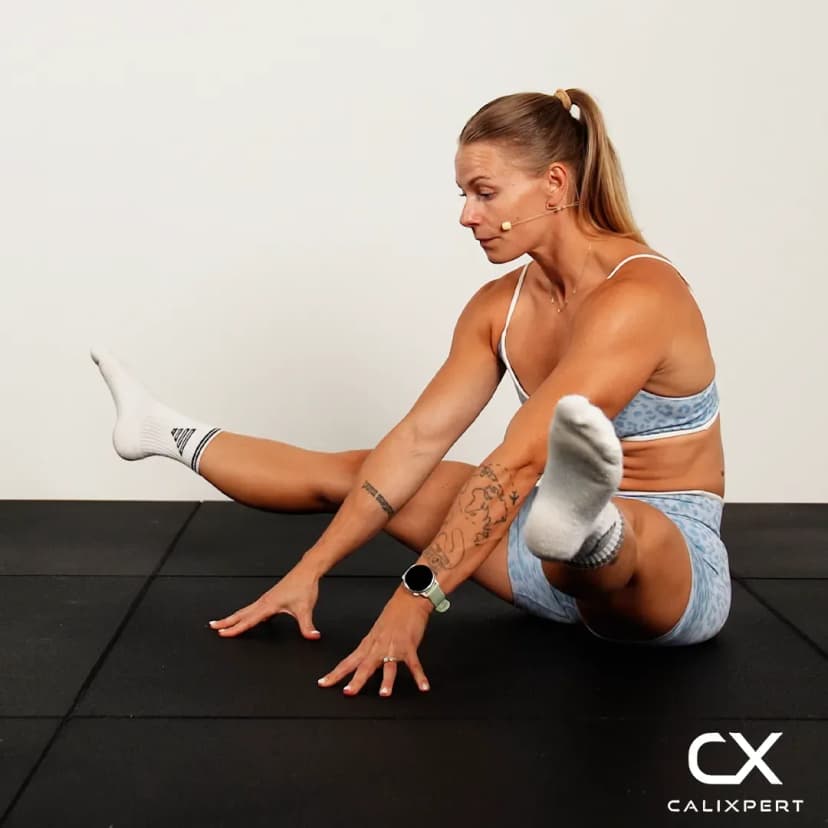
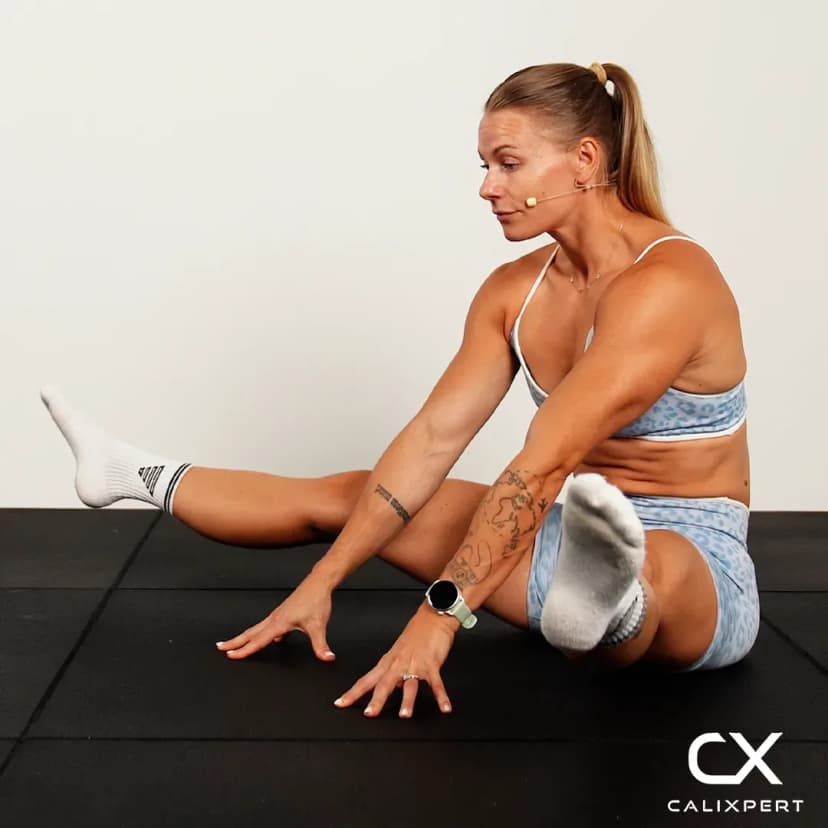
Sit flat on the ground and split your legs as much as you can, straight out to the sides. Go as wide as your own range allows today.
Legs as wide as they go
2. Tilt The Pelvis Forward
Tilt your pelvis a little to the front, into an anterior pelvic tilt, so the lower back moves toward an arch. This forward tilt is the point of the whole stretch, because it makes the fold come from the hips instead of from the spine.
Tip the pelvis to the front
3. Keep The Back Straight And The Head Neutral
Keep a straight back and an upright torso, with the chest going down toward the floor and the head neutral, in line with the spine. Hold that shape as you start to lean forward.
Straight back, chest toward the floor
4. Climb Down Onto Your Elbows
Climb slowly down as far as you can. You can start with your elbows on the floor as support, and only move on if that position feels okay.
Slowly down, elbows first
5. Crawl A Little Further Forward
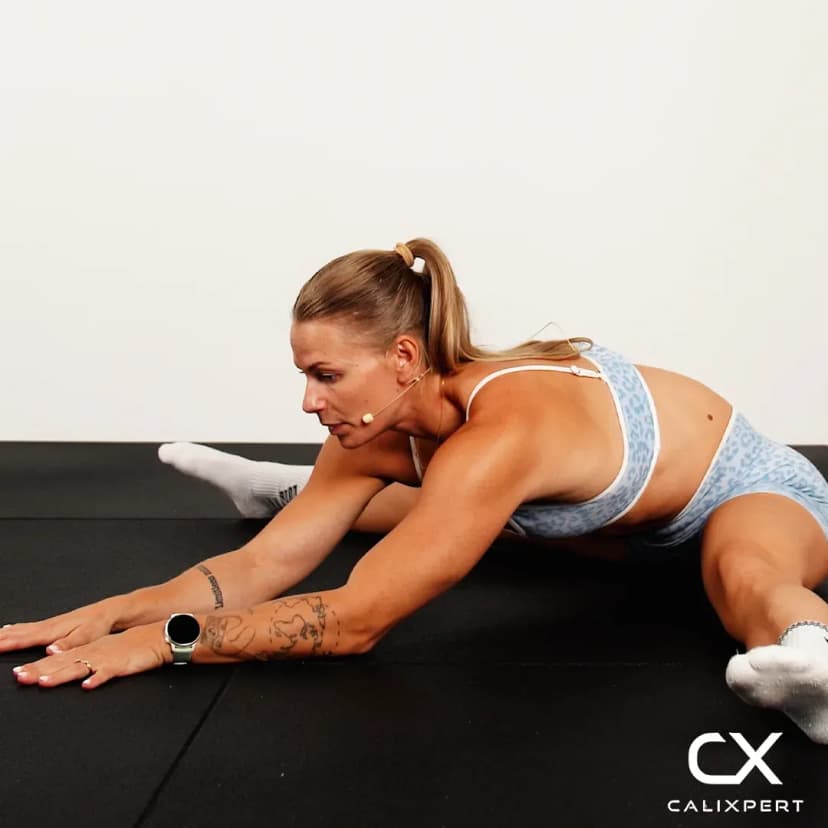
If that feels okay, slowly crawl your hands a little further to the front, as much as you can. It will never feel comfortable, because it is not supposed to: you are asking the muscles to go deep into a bigger range of motion, and it will hurt a little bit.
Crawl forward a little at a time
6. Hold And Breathe
Hold the position and breathe. You should feel the stretch in your hamstrings, your adductors, your hips and maybe your lower back.
Hold and breathe
Most people judge the pancake by how close the chest gets to the floor, and round the back to get there. Judge it by the pelvis instead: tilt it forward first, keep the back straight and accept stopping higher on your elbows if that is where the straight back runs out, so your hips learn the position that makes the press easier. It will never feel comfortable, so just breathe through the hold.
Muscles Worked During Seated Pancake Stretch
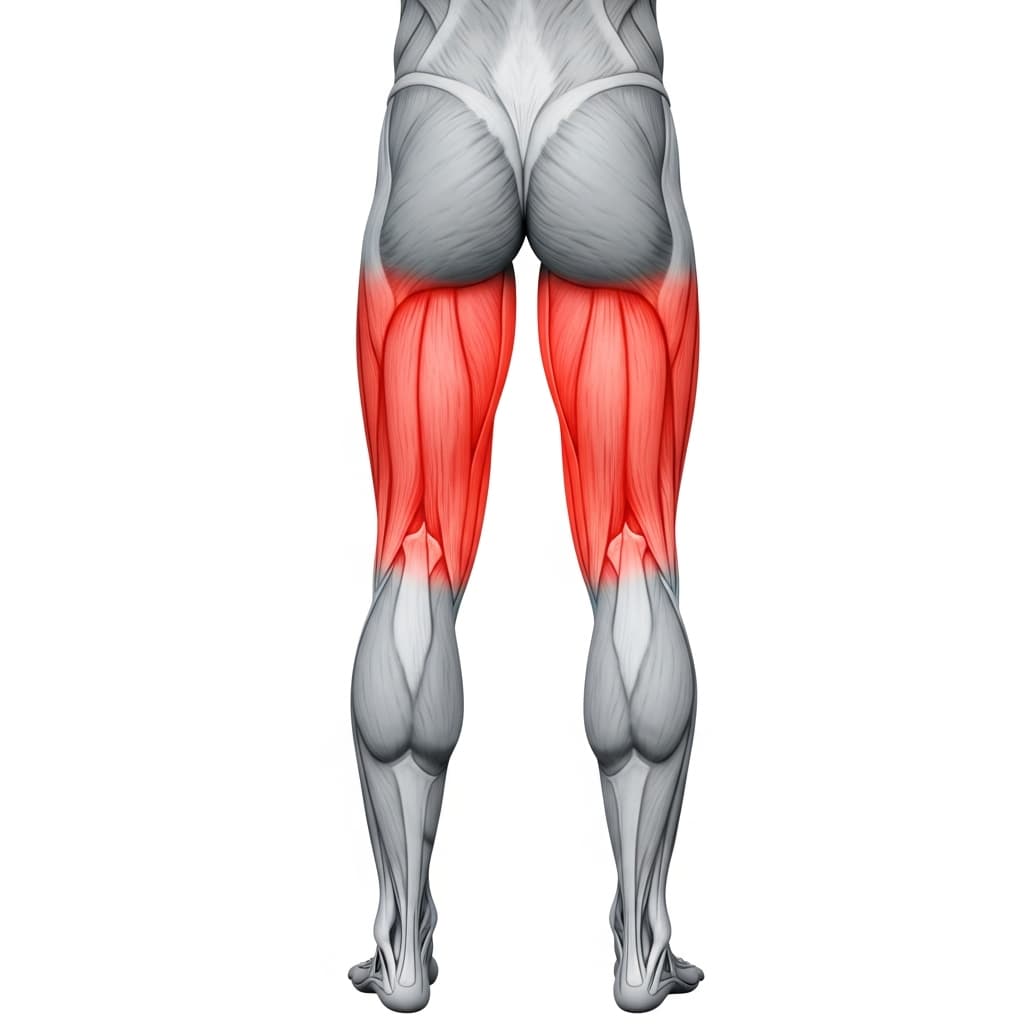
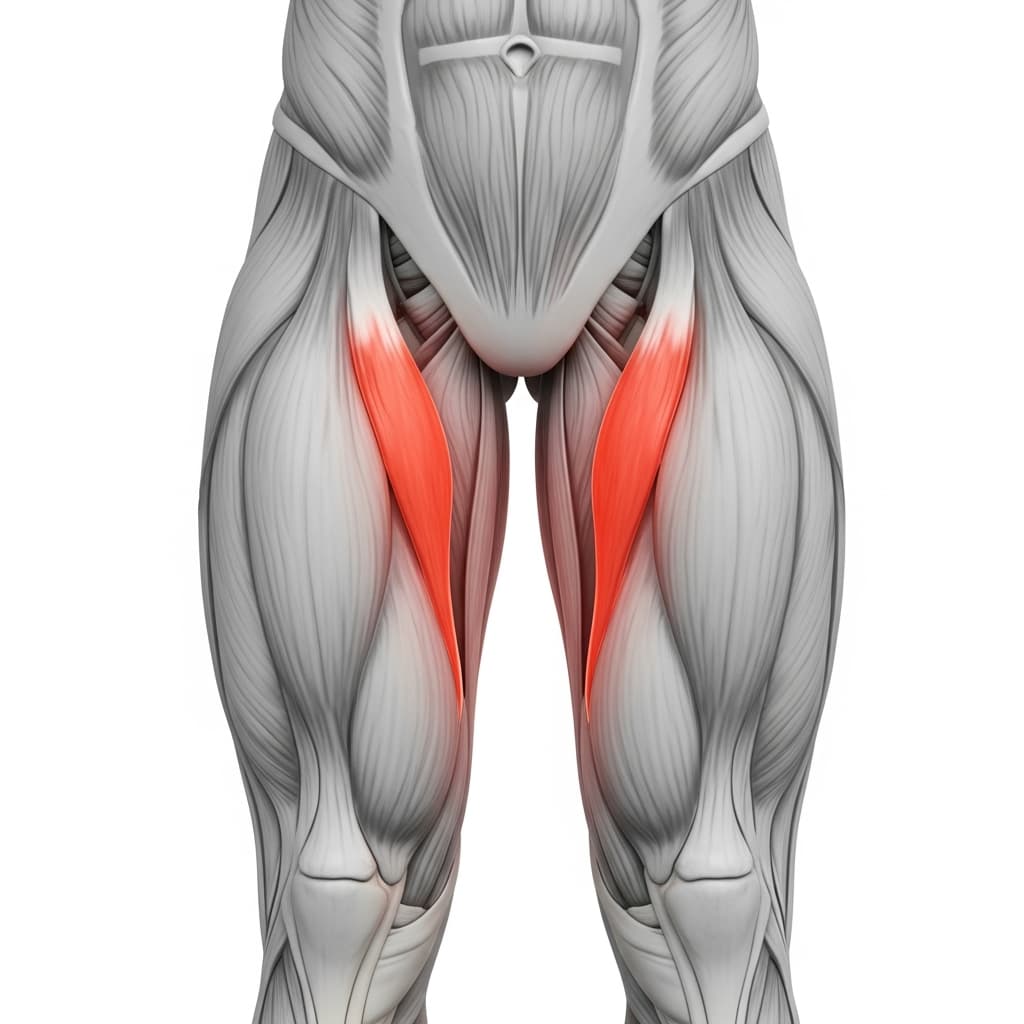
Primary Muscles:
Secondary Muscles:
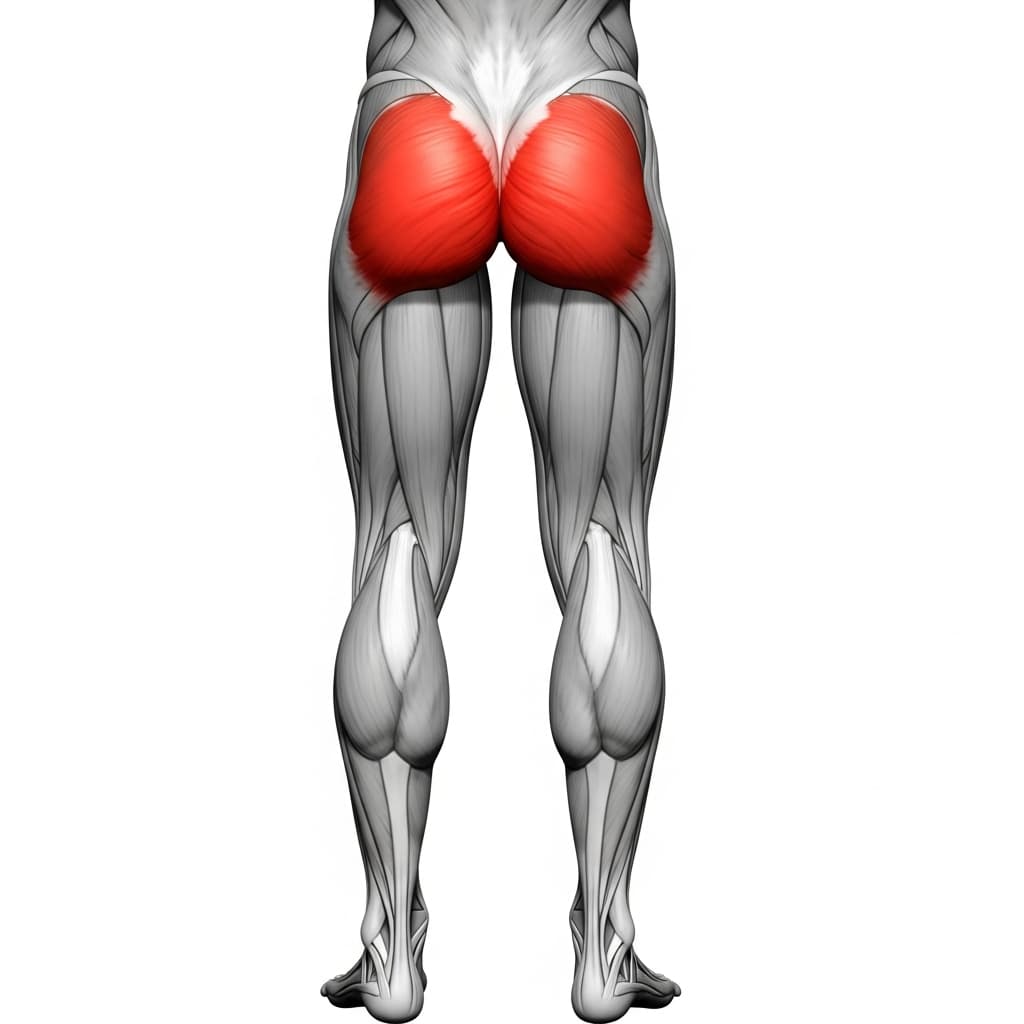
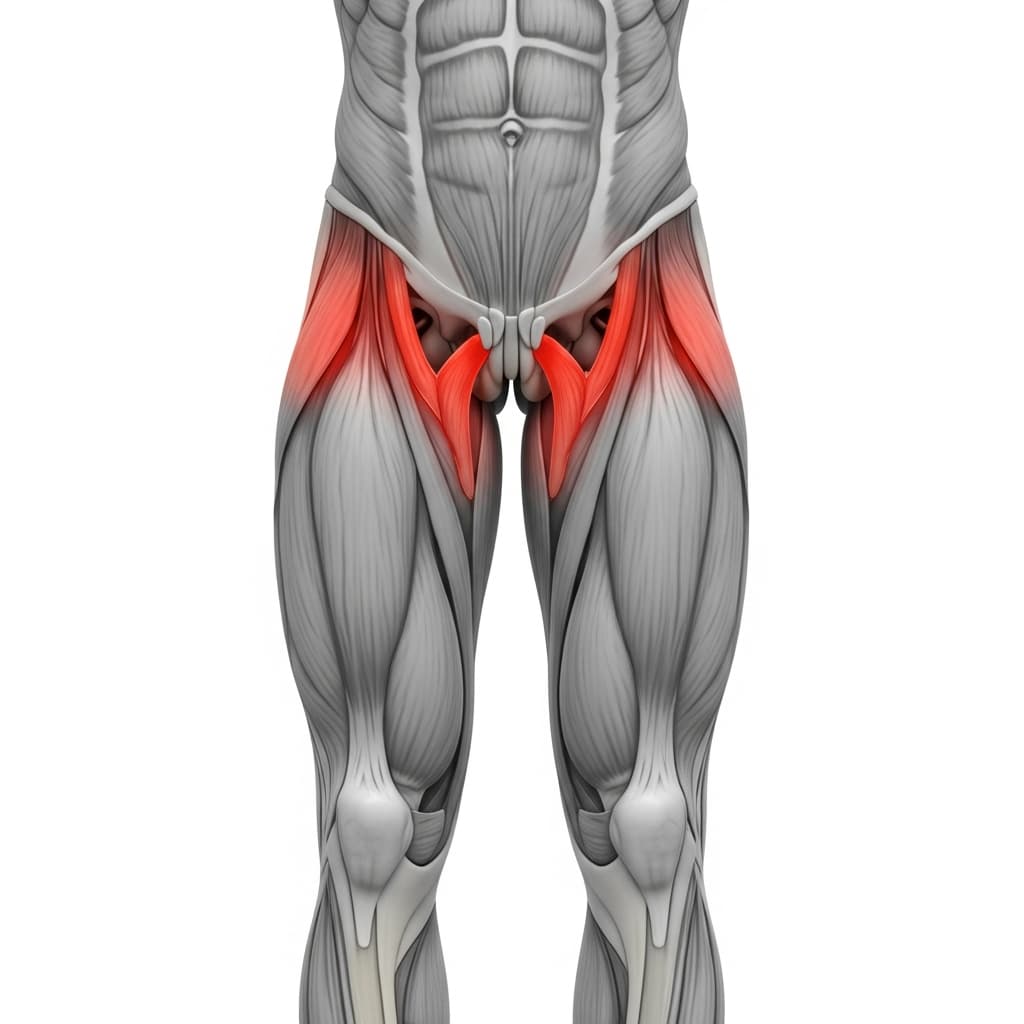
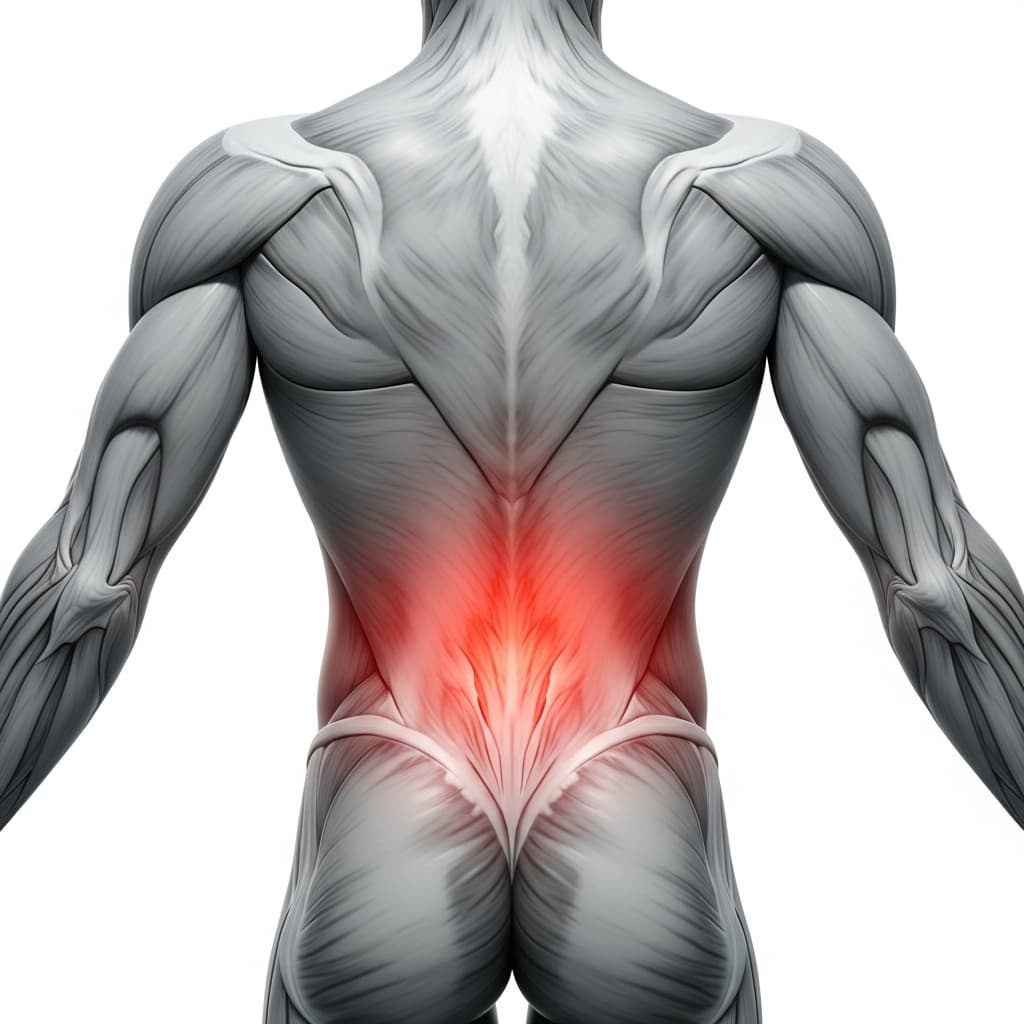
Primary Muscles
Hamstring Group (Hamstrings) - The hamstrings take a large share of the stretch, lengthening further as the pelvis tips forward and the chest lowers over straight legs.
Hip Adductors (Adductors) - The inner thigh adductors are stretched by the wide straddle, and the wider the legs, the more of the stretch moves into them.
Secondary Muscles
Gluteus Maximus (Glutes) - The glutes at the back of the hips are lengthened as you hinge and the torso folds forward over the legs.
Iliopsoas (Hip Flexors) - The hip flexors do the active part of an otherwise passive hold, helping pull the pelvis forward so the fold comes from the hips.
Erector Spinae (Lower Back) - You may also feel it in the lower back, which is fine, but fold from the hips with a straight back rather than rounding it.
Benefits of Seated Pancake Stretch
- Stretches the hamstrings and adductors together in one wide straddle fold.
- Teaches you to fold from the hips with a forward pelvic tilt, rather than rounding the back to reach the floor.
- Trains the exact wide straddle shape your hips and legs need in the handstand press.
- Scales inside the same stretch: start on your elbows and crawl the hands further forward as your range improves.
- Needs nothing but floor space, so it is easy to add at the end of any session.
Who Is This Exercise For?
No strength is needed, but you must be able to sit upright in a wide straddle without tipping backwards. If your lower back rounds and the pelvis cannot tilt forward at all, start with the Elevated Pancake Stretch and work down to the floor. Do it after a warm up or at the end of a session, and ease off at any sharp or pinching pain in the knees, hips or back.
Common Mistakes to Avoid
Rounding the back to get the chest down: If you only round your back, the chest gets closer to the floor but the hips never learn the position. Tilt the pelvis forward first and keep a straight back, even if that means staying higher, up on your elbows.
Pulling yourself down with your arms: Dragging yourself forward with your hands can make the fold look deeper, but then the arms do the work and the pelvis stops tilting. Let the elbows and hands support you and the forward pelvic tilt take you down.
Going straight for your deepest position: Climb down slowly and start with the elbows on the floor. Only crawl the hands further forward if that depth feels okay, and move a little bit at a time.
Expecting the stretch to feel comfortable: The pancake will never feel comfortable, because you are taking the muscles deep into a bigger range of motion, and it will hurt a little bit. A sharp, stabbing or pinching pain is different: that is your cue to come up.
Holding your breath in the hold: Once you are in position, keep breathing slowly and steadily for the whole hold. Holding the breath adds tension and makes it harder to settle into the stretch.