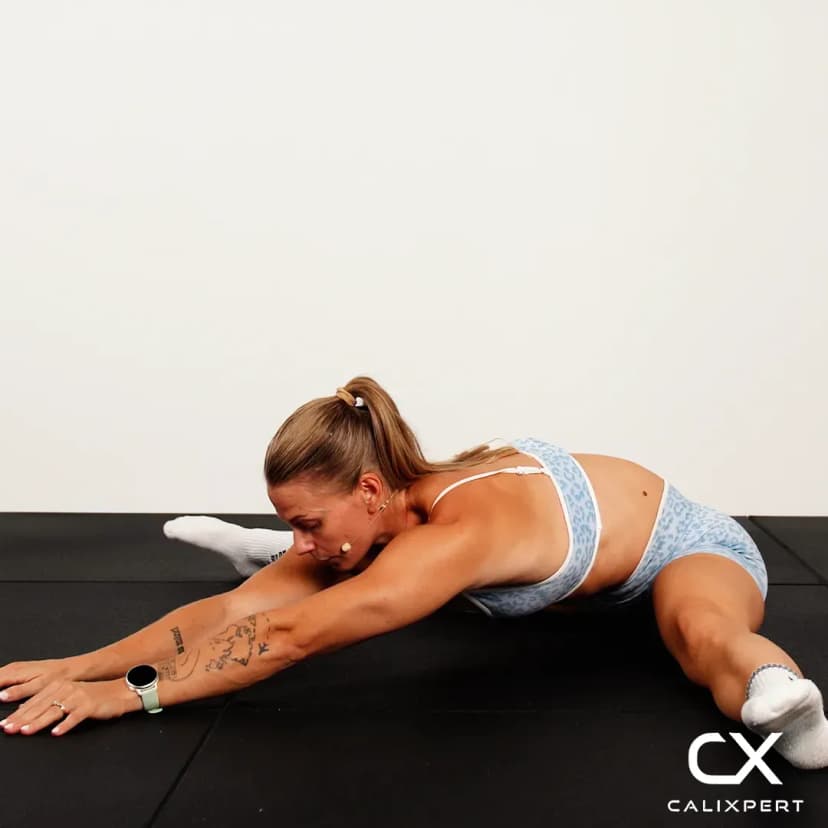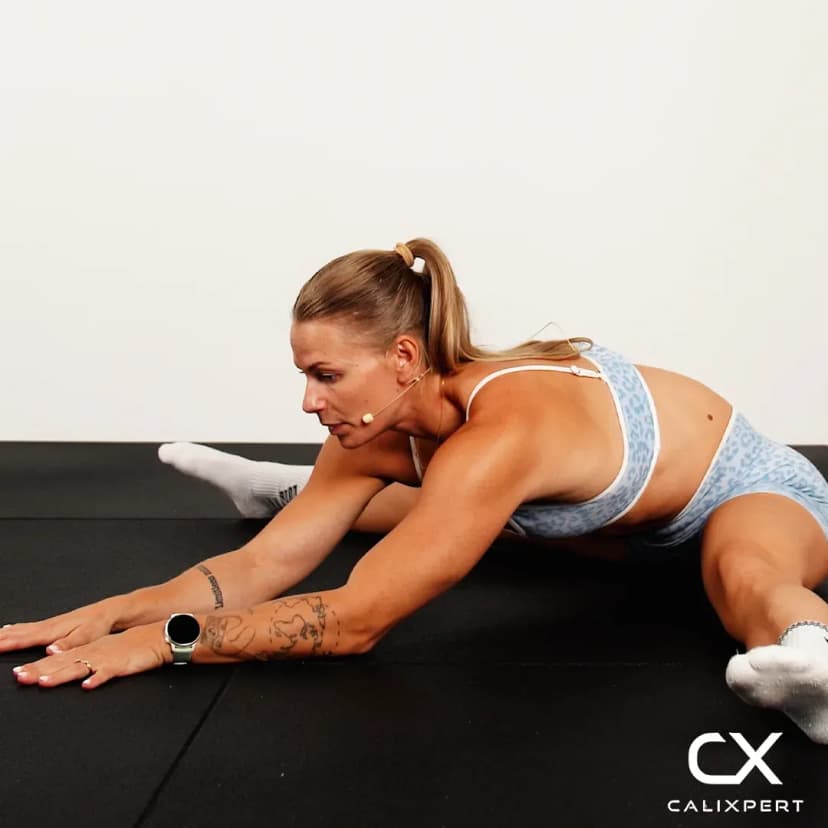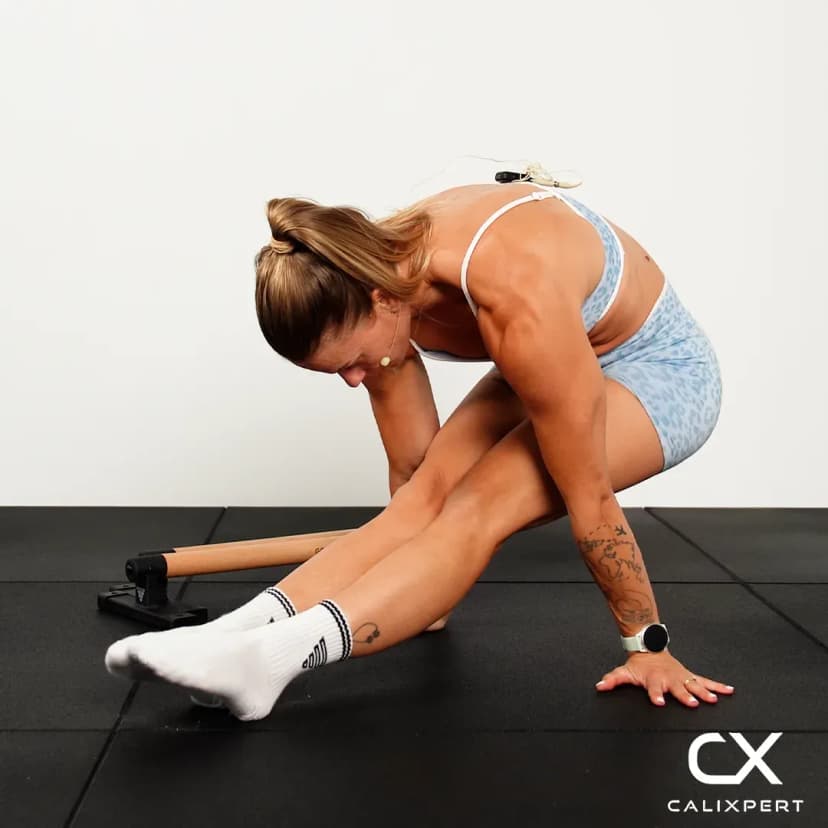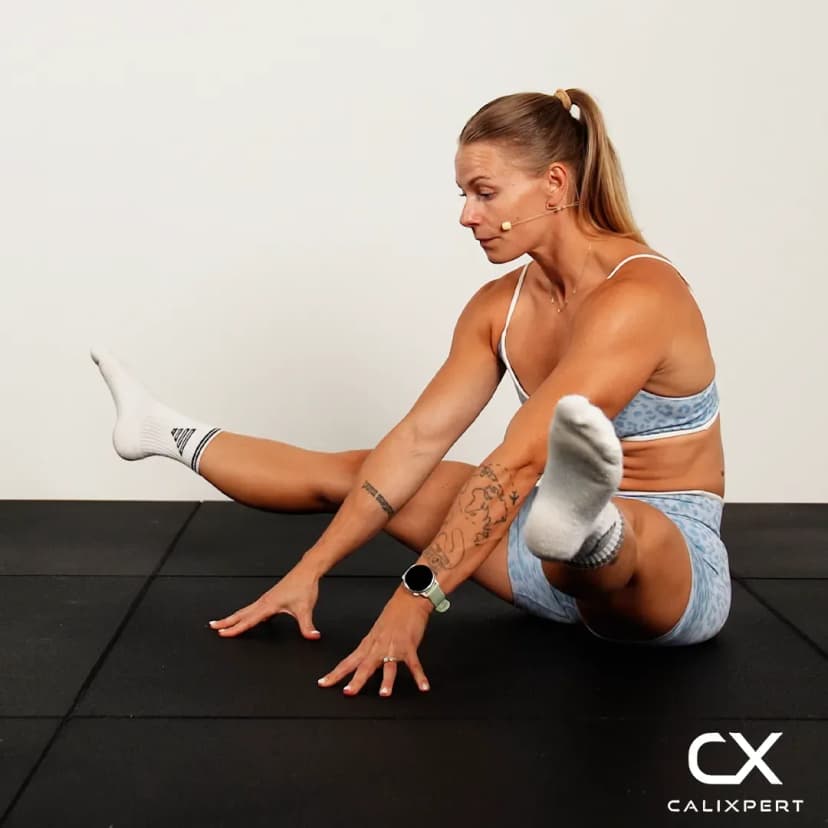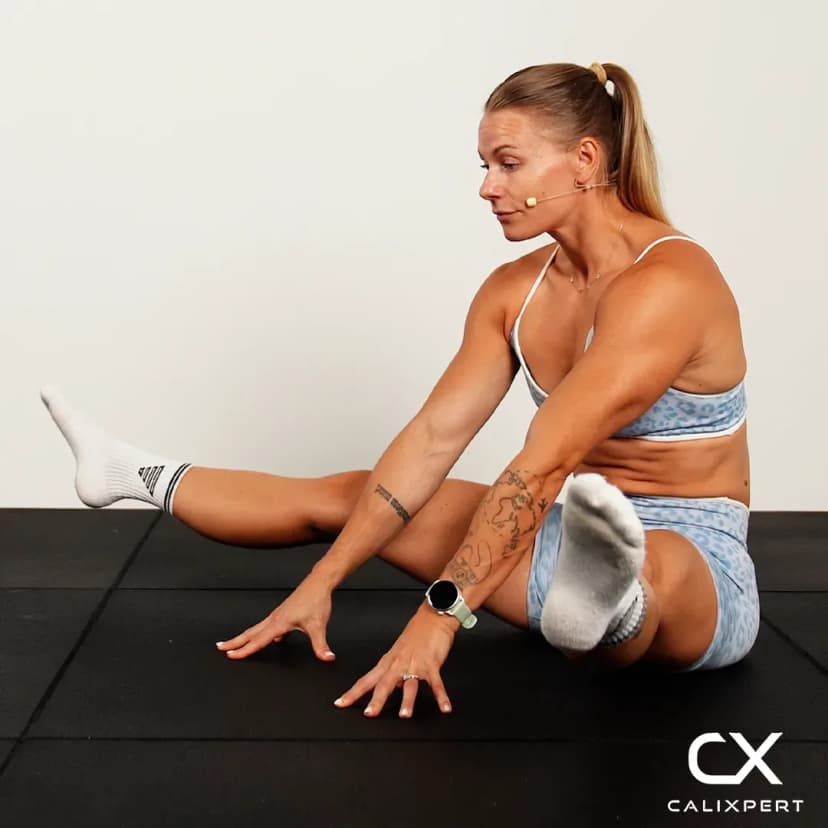
Elevated Pancake Stretch
The Elevated Pancake Stretch is the pancake done with your hips raised on something firm, and you should feel it mostly in the hamstrings, along with the adductors, the hips and maybe the lower back. Sitting higher makes it much easier to tip the pelvis forward, so the fold comes from the hips instead of a rounding lower back. It is an easier version of the floor pancake: work down from a high seat to a lower one, then the floor, as your flexibility improves.

The Elevated Pancake Stretch is the pancake done with your hips raised on something firm, and you should feel it mostly in the hamstrings, along with the adductors, the hips and maybe the lower back. Sitting higher makes it much easier to tip the pelvis forward, so the fold comes from the hips instead of a rounding lower back. It is an easier version of the floor pancake: work down from a high seat to a lower one, then the floor, as your flexibility improves.
How to Do Elevated Pancake Stretch
1. Choose Your Height
Pick something firm to sit on, such as two pretty thick weight plates stacked on top of each other, a yoga block, a folded mat or a small bench. How high depends on how far you have come with the pancake: the tighter you are, the higher you start.
Tighter hips, higher seat
2. Sit On The Front Edge
Sit down on the elevation and slide all the way to its front edge. Do this before you open your legs.
All the way to the edge
3. Split The Legs Wide
Split your legs out to the sides as much as you can. Keep the legs straight with the knees pointing to the ceiling.
Legs straight, knees to the ceiling
4. Tilt The Pelvis Forward
Go into an anterior pelvic tilt, which means tipping the top of the pelvis forward toward the floor in front of you. This is the movement the raised seat makes easier, and it is what makes the stretch come from the hips.
Tip the pelvis forward first
5. Fold Forward With An Upright Torso
Keep the torso upright and let the chest travel down toward the floor. With the elevation as support, reach your hands along the floor as far to the front as you can.
Chest toward the floor, reach far forward
6. Keep The Knees Neutral, Hold And Breathe
Rotating the knees backwards or outwards works more of the external rotation of the hip, and rotating them inwards works more internal rotation. Keep them quite neutral, then hold the position and breathe.
Knees neutral, hold and breathe
Pick the seat by what your pelvis can do, not by how it looks: if you cannot tip the pelvis forward with straight legs and an upright torso, the seat is too low. Sit on the front edge, set the pelvis first, then lower the chest as the hands reach forward. When that feels easy, take a little height away, and keep going until you are on the floor.
Muscles Worked During Elevated Pancake Stretch
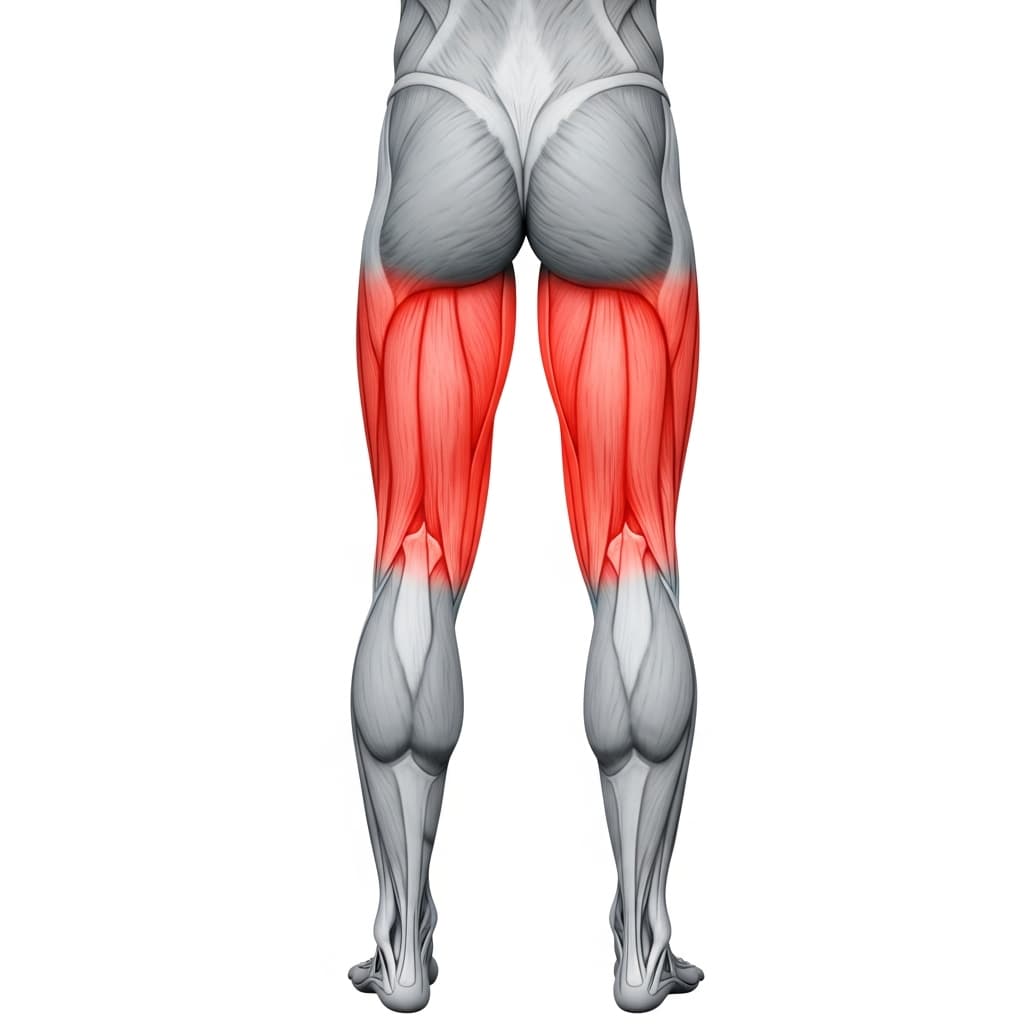
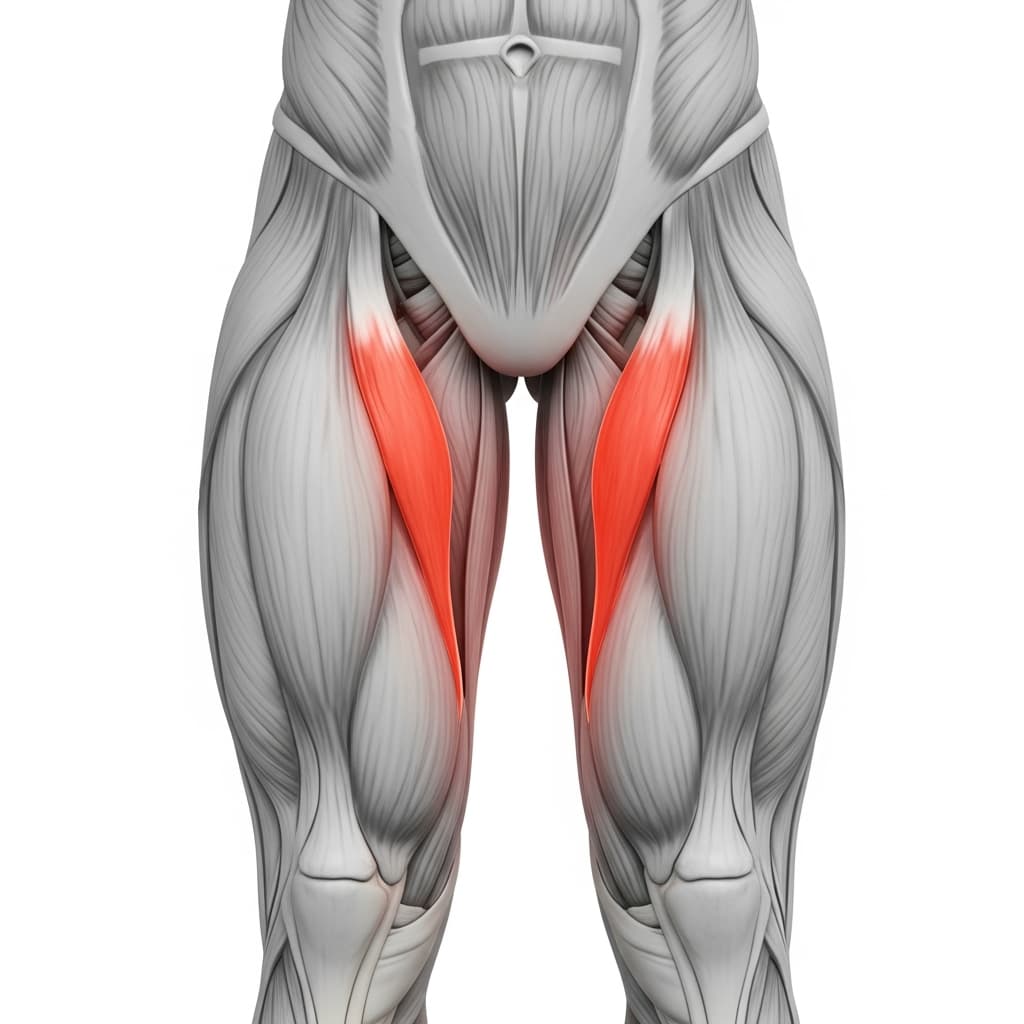
Primary Muscles:
Secondary Muscles:
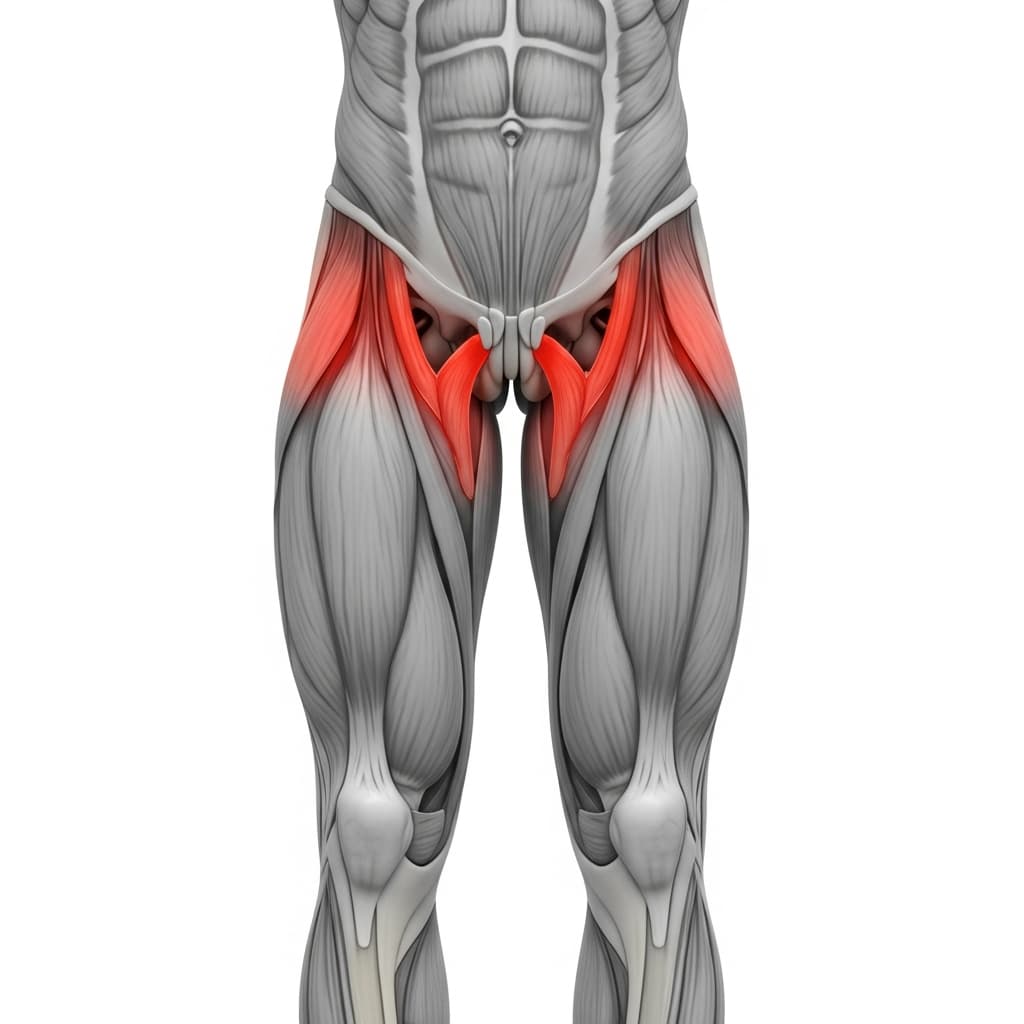
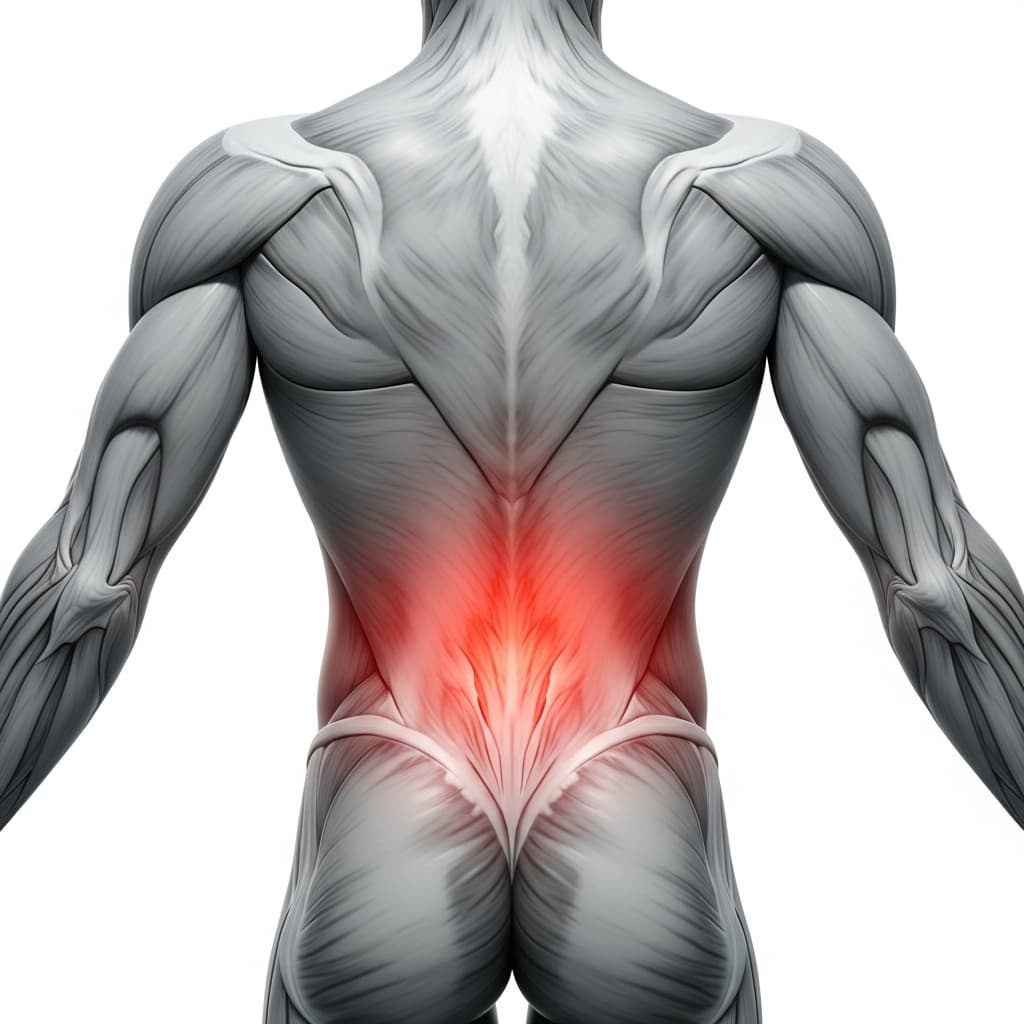
Primary Muscles
Hamstring Group (Hamstrings) - The hamstrings take most of the stretch and are where you should feel it most, lengthening as the pelvis tips forward over straight legs.
Hip Adductors (Adductors) - The adductors are stretched by the wide straddle, and the wider the legs, the more of the stretch moves into them rather than the hamstrings.
Secondary Muscles
Iliopsoas (Hip Flexors) - The hip flexors help pull the pelvis into the forward tilt, which the raised seat makes much easier, and hinge the torso forward.
Erector Spinae (Lower Back) - You might also feel it in the lower back, but fold from the hips with an upright torso rather than rounding it.
Benefits of Elevated Pancake Stretch
- Makes the forward pelvic tilt much easier, because raised hips let the pelvis tip forward instead of the lower back rounding.
- Stretches the hamstrings and adductors in the wide straddle fold that the pancake and the handstand press both ask for.
- Gives tight beginners a pancake they can practise with straight legs and an upright torso.
- Scales with seat height, so you can move from a high seat to a lower one, then the floor, as flexibility improves.
- Lets you feel the difference between folding from the hips and rounding the back, so you learn the real pancake position.
Who Is This Exercise For?
No strength is needed, and this is a good place to start the pancake if the floor version makes you round your back or bend your knees. You must be able to sit in a straight-legged wide straddle on a yoga block, plate, folded mat or small bench, at a height that suits your current range. Do it after a warm-up or at the end of a session, not cold.
Common Mistakes to Avoid
Choosing a seat that is too low: A low seat looks more advanced, but if the pelvis cannot tip forward, the lower back rounds and the hips never learn the position. Pick a height where the legs stay straight and the torso upright, and lower it only once that feels easy.
Rounding the lower back to get the chest down: Often the lower back rounds because the pelvis cannot rotate forward, not simply from tight muscles. Tilt the pelvis forward first, keep the torso upright, lower the chest only as far as the hips allow, and sit higher if you still round.
Letting the knees bend: Keep the legs straight throughout. If your knees start to bend as you reach forward, you have gone past your current range, so come back up until the legs stay straight, or sit a little higher.
Letting the knees roll in or out: Rolling the knees backwards or outwards shifts the work toward external rotation of the hip, and rolling them inwards shifts it toward internal rotation. Start with the knees pointing to the ceiling and keep them quite neutral as you fold.
Holding your breath in the stretch: Once you are in position, hold it and breathe. Keep the breath slow and steady instead of bracing and holding it.
Variations & Progressions
Higher Elevated Pancake
Sit on something higher, such as a small bench or more plates. The higher the hips, the easier the forward pelvic tilt, so start here if the legs will not stay straight and the torso upright on a lower seat.