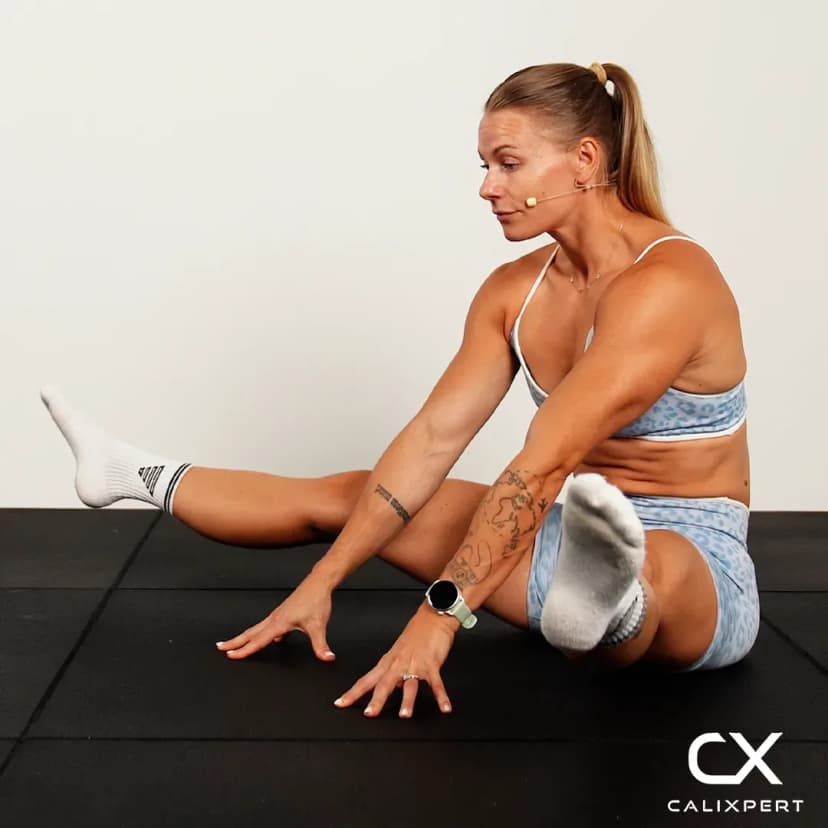
PNF Pancake
The PNF Pancake is the floor pancake with a contract and relax cycle added, stretching the hamstrings and adductors. From your deepest pancake, with the legs wide and the pelvis tilted forward, you push your heels down into the floor at up to about 50% effort for up to around 10 seconds, relax, and try to go deeper. Unlike the plain Seated Pancake Stretch, which is one long hold, it works in short rounds, and nothing visibly moves while you contract.

The PNF Pancake is the floor pancake with a contract and relax cycle added, stretching the hamstrings and adductors. From your deepest pancake, with the legs wide and the pelvis tilted forward, you push your heels down into the floor at up to about 50% effort for up to around 10 seconds, relax, and try to go deeper. Unlike the plain Seated Pancake Stretch, which is one long hold, it works in short rounds, and nothing visibly moves while you contract.
How to Do PNF Pancake
1. Sit In A Wide Straddle
Sit flat on the floor and split your legs as wide as you can, with both legs straight and the knees and toes pointing up to the ceiling. This is the same position as the Seated Pancake Stretch.
Legs as wide as you can
2. Tilt The Pelvis Forward
Start with an anterior pelvic tilt, tilting the pelvis to the front as much as you can. Keep the torso upright and the back straight, so the fold will come from the hips and not from rounding the lower back.
Pelvis tips forward first
3. Lean Into Your Deepest Stretch
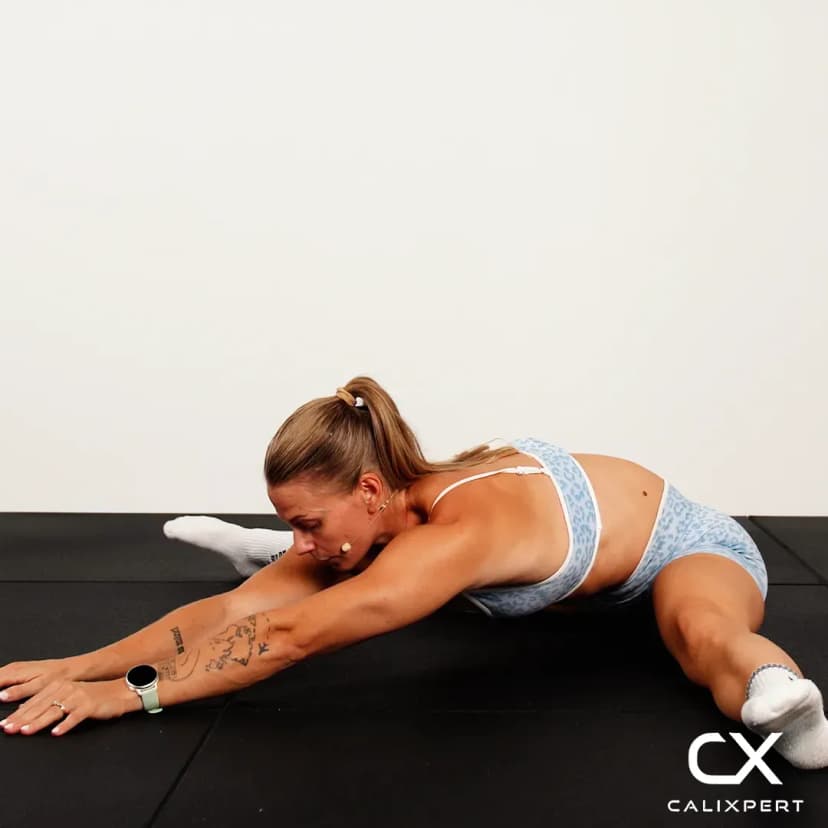
Lean to the front with your chest going toward the floor. Start with your elbows on the ground and keep a neutral head position. Go to your deepest stretch before you do anything else, because the PNF contraction is done while you are already there.
Chest forward, head neutral
4. Push Your Heels Down
From your deepest position, push your heels down into the floor at up to about 50% effort, for up to around 10 seconds. Nothing moves and nobody watching would see it, but you should feel the backs of your legs working.
Heels down, up to half effort
5. Relax And Go Deeper
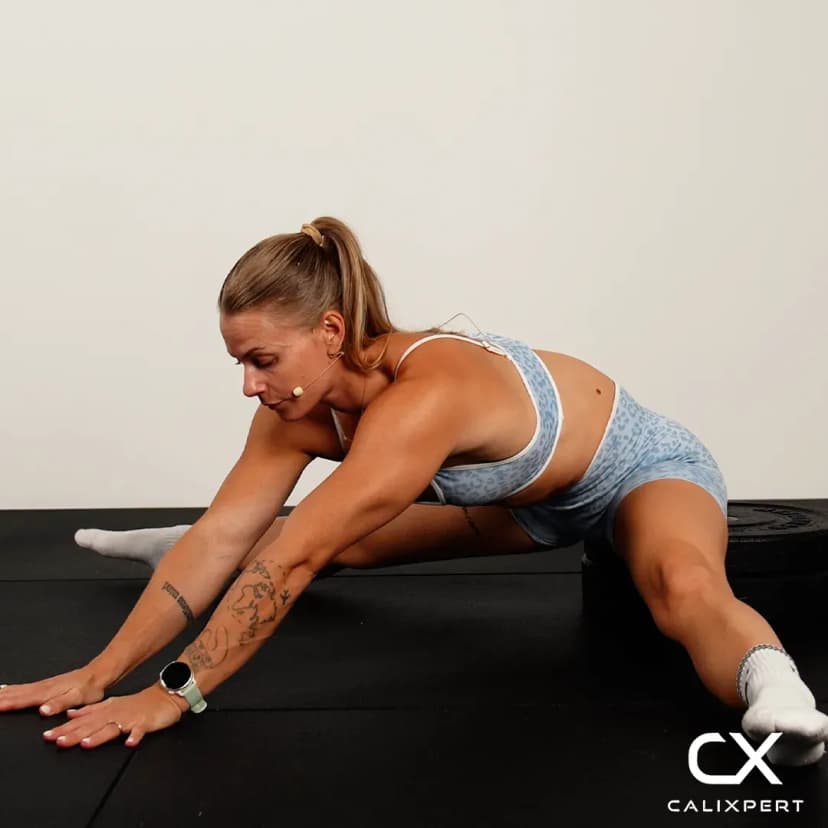
Stop pushing, let everything relax, and then try to go deeper by reaching your arms forward and putting your hands flat on the floor further ahead. Hold that new position for a few seconds.
Let go, then sink
6. Repeat The Contraction
From the new position, repeat the heel press and the relax. A good dose is to push for about 5 to 10 seconds, relax, move slightly deeper, and repeat 2 to 3 times.
Contract, relax, deeper
The contraction is invisible, so judge it by effort, not movement: from your deepest pancake, press the heels down at up to about half effort for up to around 10 seconds. Do not rush the release: let everything go, then ease a little further forward and hold a few seconds. Aim for a few calm rounds, not a fight with your hamstrings.
Muscles Worked During PNF Pancake
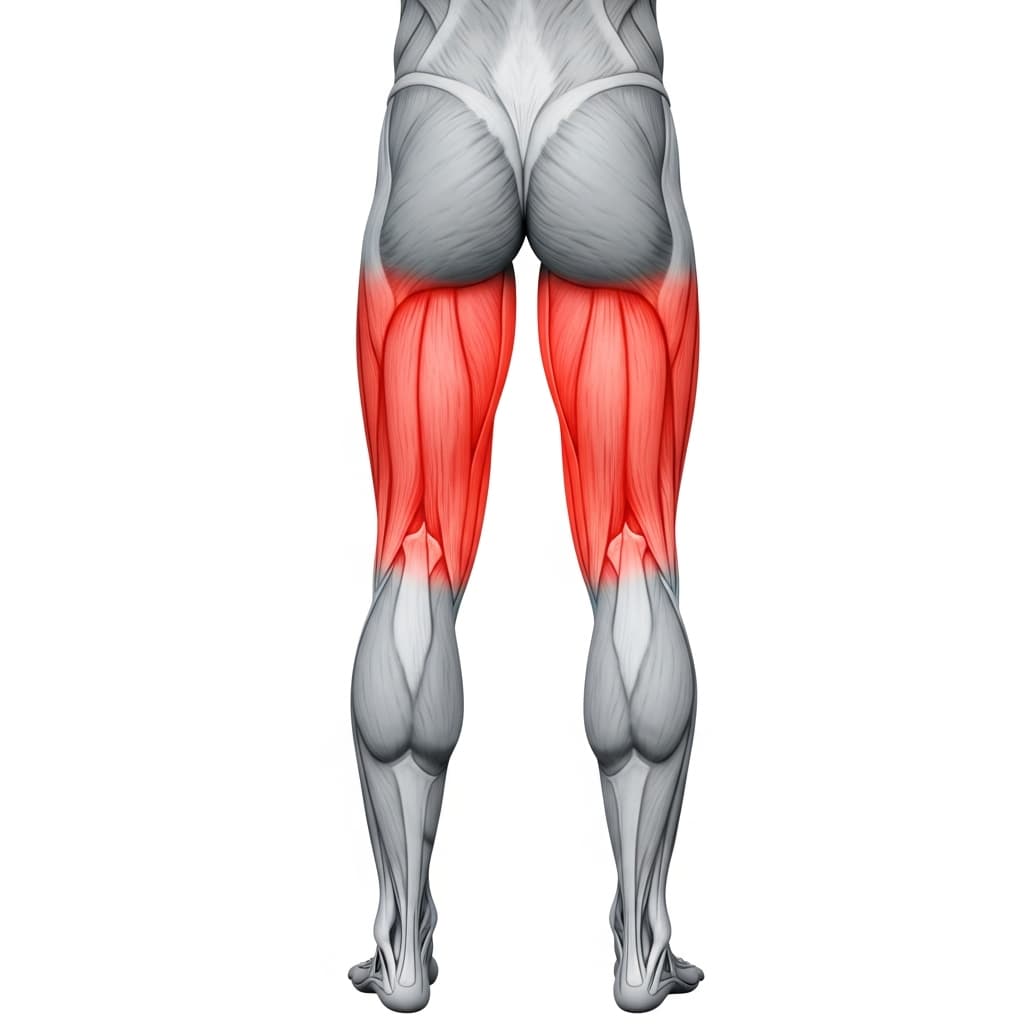
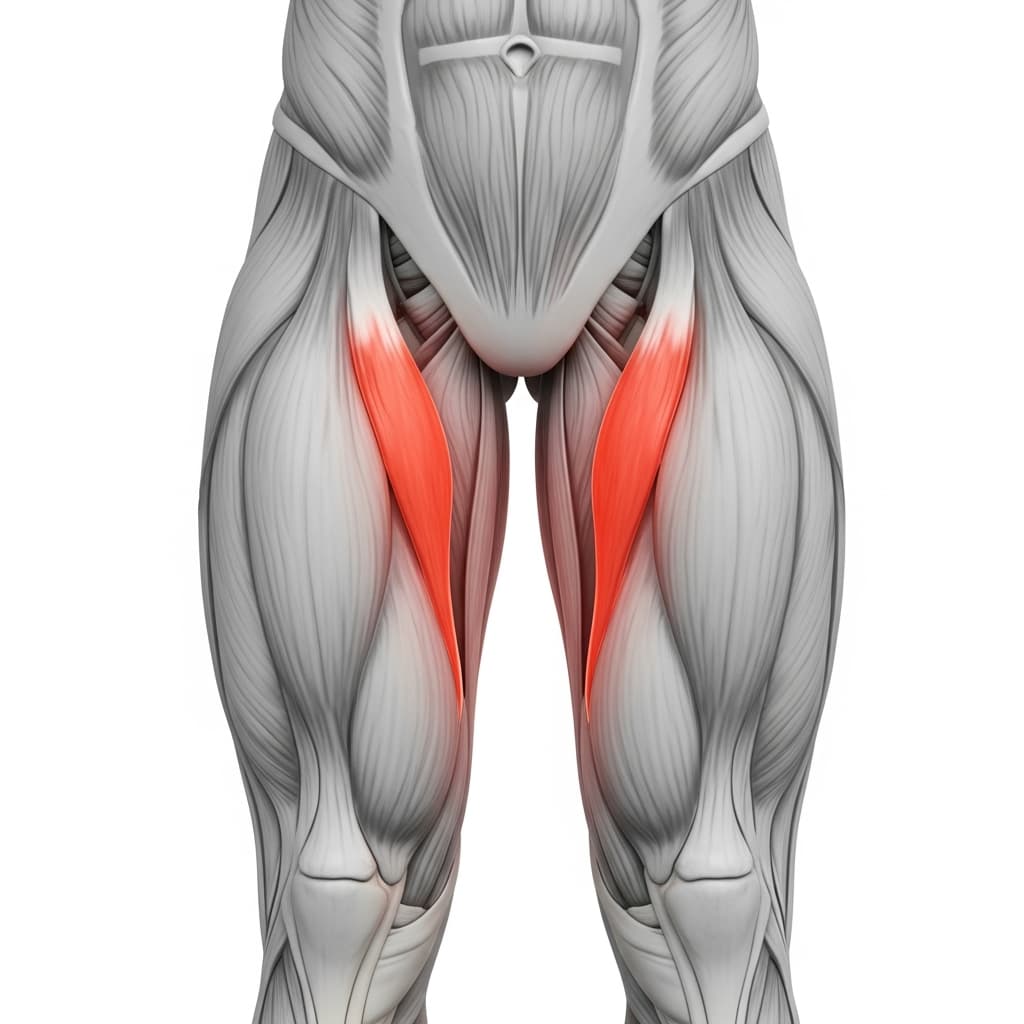
Primary Muscles:
Secondary Muscles:
Primary Muscles
Hamstring Group (Hamstrings) - The hamstrings are stretched as the pelvis tips forward over straight legs, and pressing the heels into the floor contracts them for each cycle.
Hip Adductors (Adductors) - The adductors are stretched by the wide straddle and set how wide it goes, so open the legs fully before folding to keep them on stretch every round.
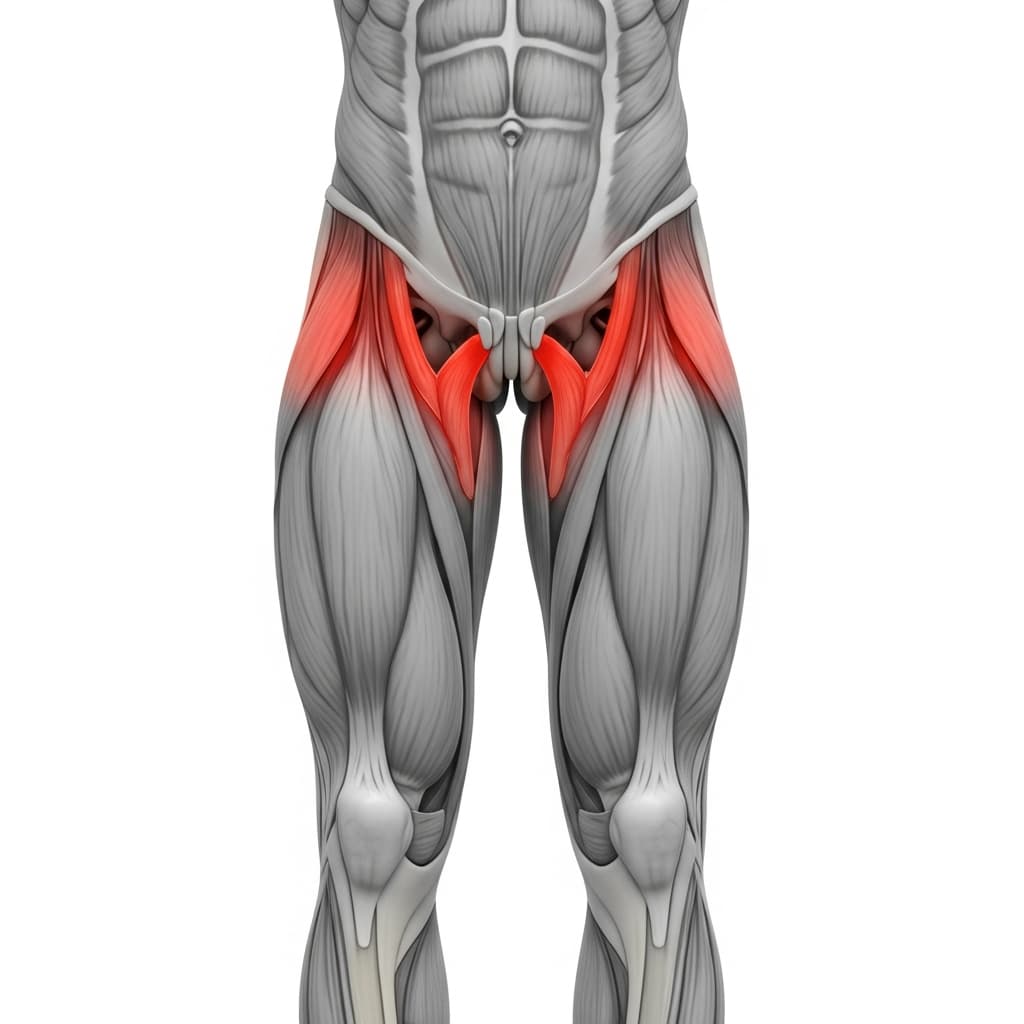
Secondary Muscles
Iliopsoas (Hip Flexors) - The hip flexors help tip the pelvis forward at the start of each round, so the fold comes from the hips, not a rounding back.
Benefits of PNF Pancake
- Gives the floor pancake a clear structure of contract, relax and move deeper, so each round adds a little range.
- Stretches the hamstrings and adductors in the wide straddle fold your hips and legs need in the straddle handstand press.
- Needs no partner and no equipment, because the floor gives the resistance for the heel press.
- Teaches you to relax fully at the end of your range, since the extra range appears right after you let go.
- Uses a well-studied method: research finds contract-relax stretching improves hamstring flexibility about as well as static stretching.
Who Is This Exercise For?
You need a straight-legged wide straddle and enough forward pelvic tilt to lean the chest toward the floor with a straight back, but no strength base. Get comfortable in the Seated Pancake Stretch before adding the contraction, and start with the Elevated Pancake Stretch if the floor rounds your back. Do it after a warm-up or as part of a flexibility session, not right before heavy strength or power work.
Common Mistakes to Avoid
Contracting before you reach your deepest stretch: The heel press belongs at the end of your range, not on the way into it. Tilt the pelvis forward, lean as far as you can with a straight back, and only then start pushing the heels down.
Pushing the heels down as hard as you can: Push at up to about 50% effort, firm but controlled, for up to around 10 seconds. The press does not need to be maximal, and research finds lighter contractions work about as well as all-out ones.
Trying to go deeper while still tense: The extra range appears right after you let go, so if you stay tense you walk straight past it. Stop pushing, relax the legs fully, then ease forward.
Forcing a big jump in range after each round: Move slightly deeper each round, not as deep as you can possibly get. You are adding a little at a time, then holding the new position for a few seconds before the next contraction.
Rounding the back to get the chest lower: Keep the torso upright and the back straight with the pelvis tilted forward. If the chest only gets lower because the lower back rounds, the hips never learn the position, so return to a shallower fold where the back stays straight.