Half Pancake
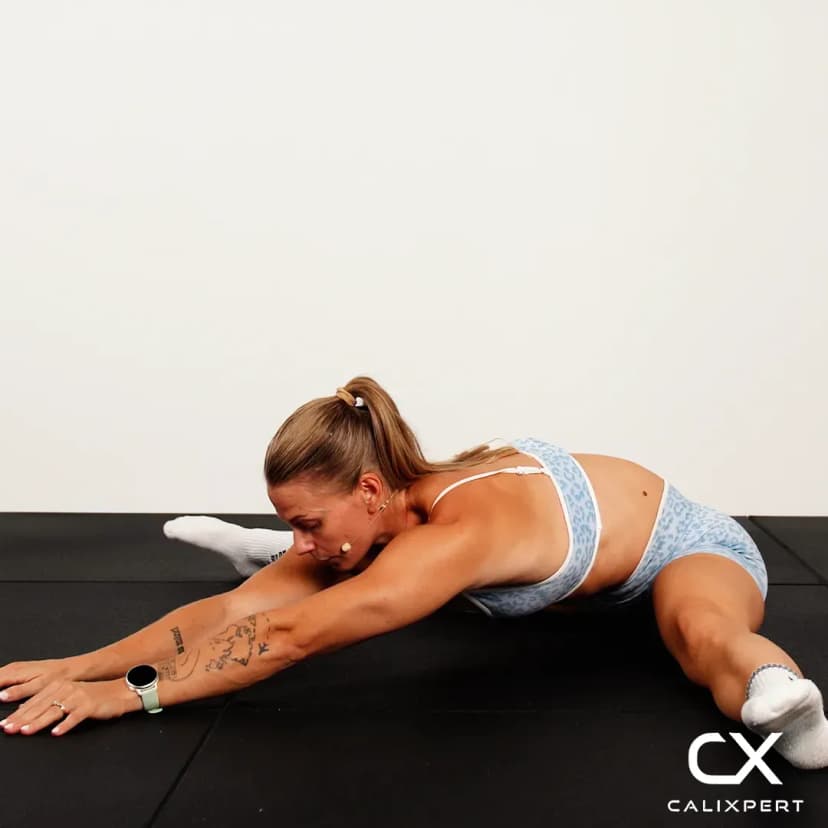
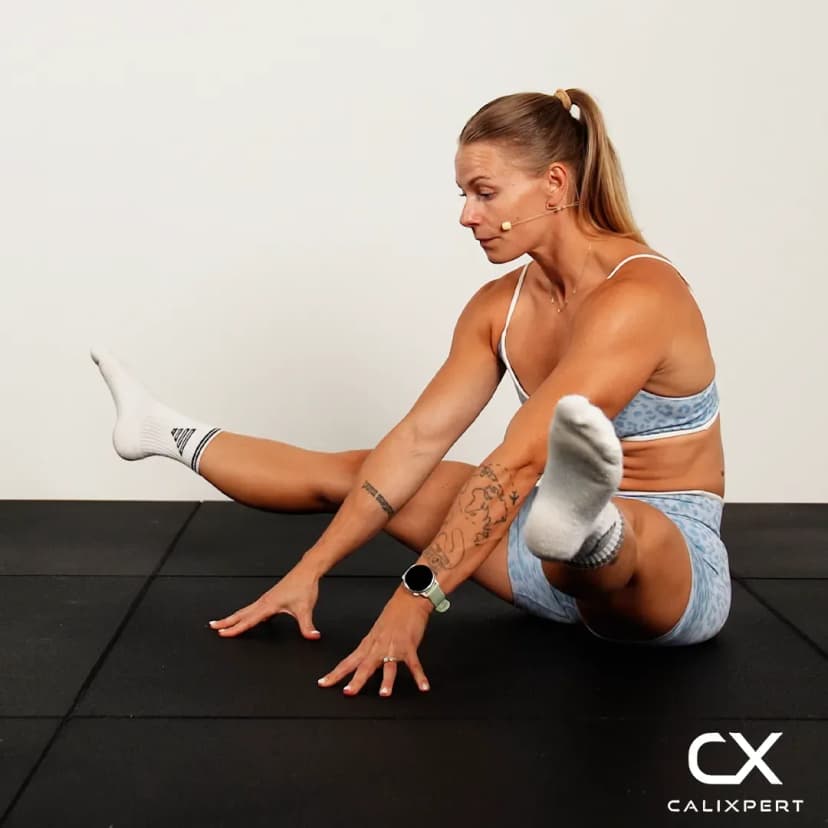
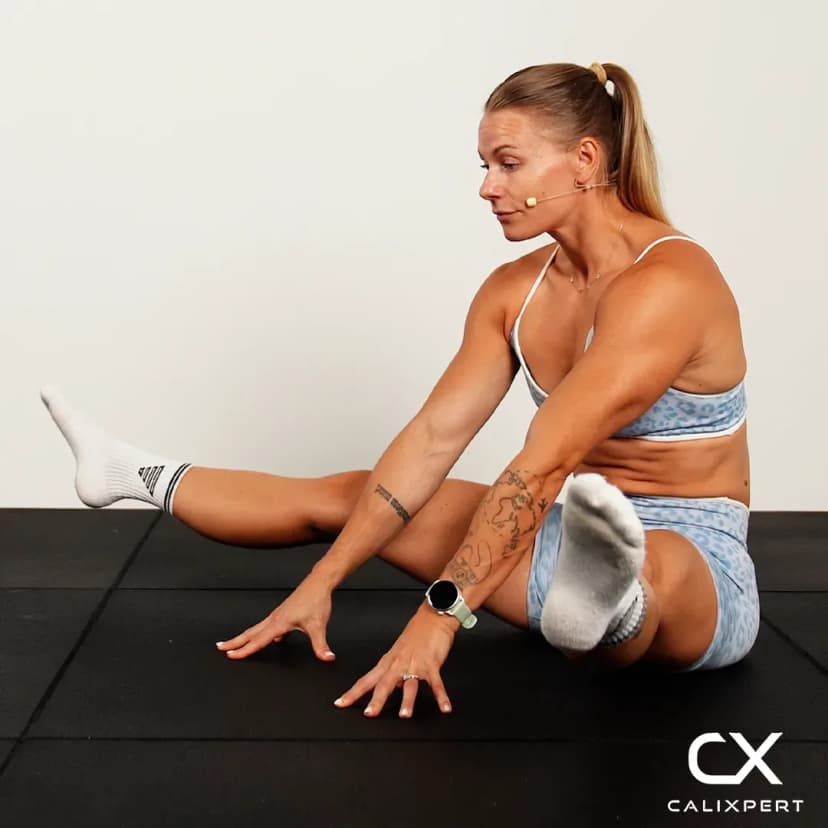
The half pancake is a seated straddle stretch done one side at a time, working the adductors on the bent leg side and mostly the hamstrings on the straight leg. One leg stays straight, the other bends with the foot behind your glutes, and you tilt the pelvis forward to lean the chest toward the floor, straight ahead or rotated over the straight leg. Each side works alone, so the tighter side cannot hide behind the looser one as it can in the full pancake.

The half pancake is a seated straddle stretch done one side at a time, working the adductors on the bent leg side and mostly the hamstrings on the straight leg. One leg stays straight, the other bends with the foot behind your glutes, and you tilt the pelvis forward to lean the chest toward the floor, straight ahead or rotated over the straight leg. Each side works alone, so the tighter side cannot hide behind the looser one as it can in the full pancake.
How to Do Half Pancake
1. Open Your Straddle As Wide As You Can
Sit on the floor and open your legs into a straddle as wide as you can. One leg stays straight out to the side for the whole hold. The other leg is the one you are about to fold back, so pick the side you want to work first.
Straddle as wide as you can
2. Fold The Other Leg Back, Toe Pointed
Bend the other leg and place the foot behind your glutes, with the toe pointed. This is very important: an unpointed foot can put some unnecessary load on your knee, because your shin and thigh are going in opposite directions. Once the foot is in place, open the straddle as much as you can again.
Point the toe, foot behind the glutes
3. Tilt The Pelvis Forward
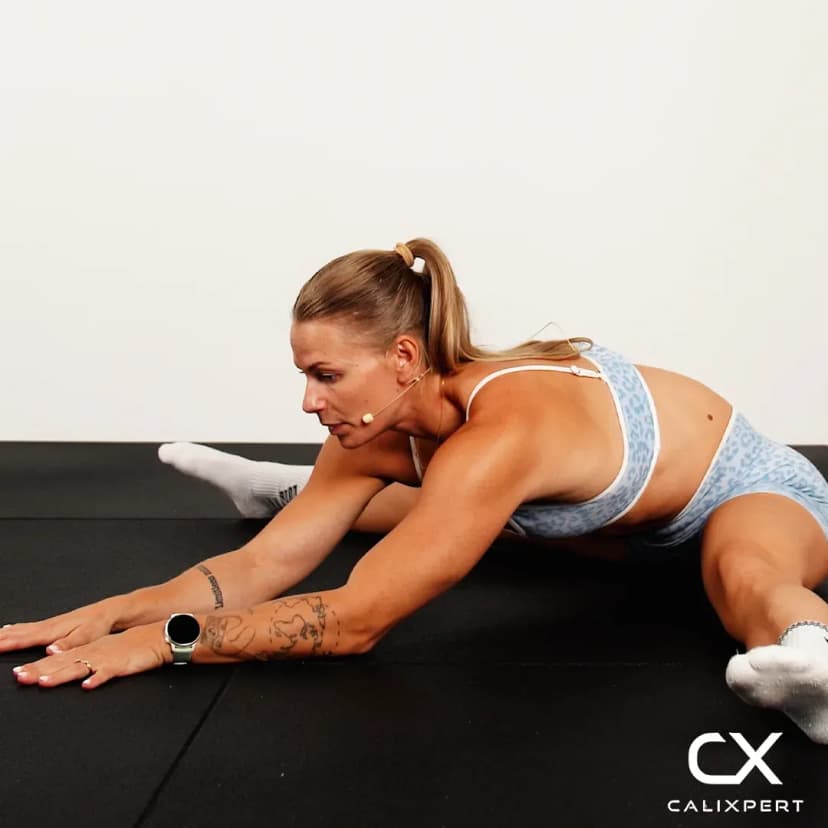
Before you lean, tilt the pelvis to the front into an anterior pelvic tilt, so the top of the pelvis tips forward. This is what lets you fold from the hips instead of just rounding your back, so set it first and hold on to it as much as you can while you lean.
Pelvis tips forward first
4. Lean Forward With An Upright Torso
Lean as far forward as you can with an upright torso, the chest going toward the floor, the head neutral and the hands resting on the floor in front of you. You should feel the adductors stretch on the bent leg side and mostly the hamstrings on the straight leg side.
Chest toward the floor, back long, head neutral
5. Or Rotate And Lean Over The Straight Leg
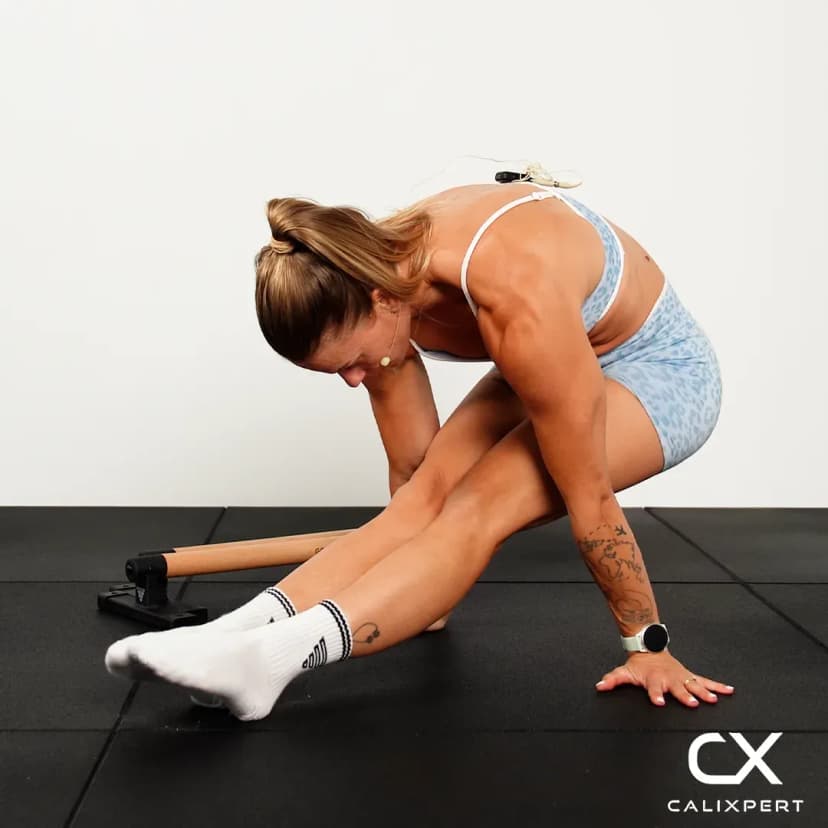
For the second version, keep the setup but rotate your torso to face the straight leg, which puts more of the stretch into that hamstring. Hold the pelvic tilt as much as you can, keep the toe pointed and the torso upright, and lean the chest toward the leg, head neutral, hands on the floor on either side.
Turn to the leg, chest toward it
6. Hold, Breathe And Switch Sides
Hold the position and breathe, as with any stretch. Then switch sides: bring the other foot back behind your glutes with the toe pointed, open the straddle as much as you can again and repeat. Give both sides the same time, even if one feels very different from the other.
Hold, breathe, same time both sides
Set the bent leg's foot first: point the toe, place it behind the glutes, tilt the pelvis forward, and only then lean. Reach for the floor first and it is easy to end up folded over a rounded back, with the knee taking load it does not need. Go only as far as a long torso allows, give both sides the same time, and keep breathing.
Muscles Worked During Half Pancake
Primary Muscles:
Secondary Muscles:
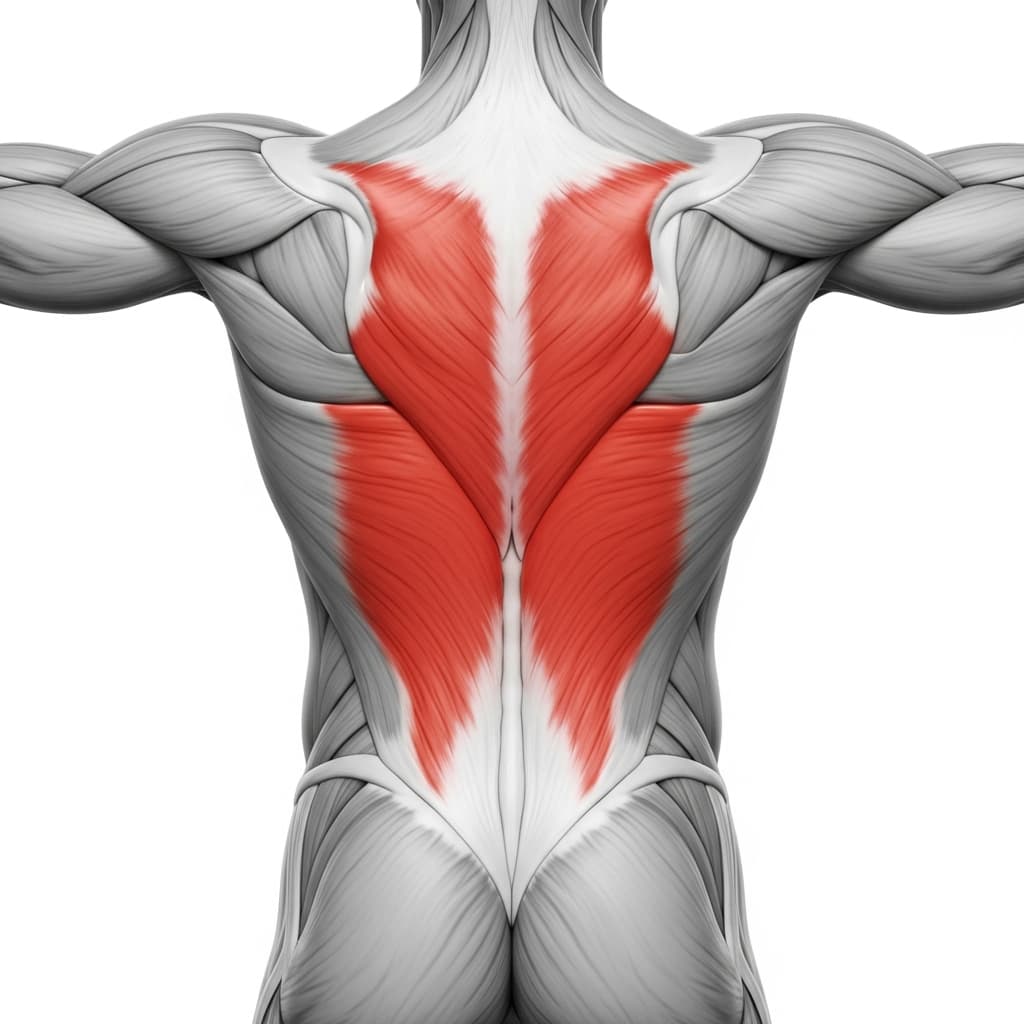
Primary Muscles
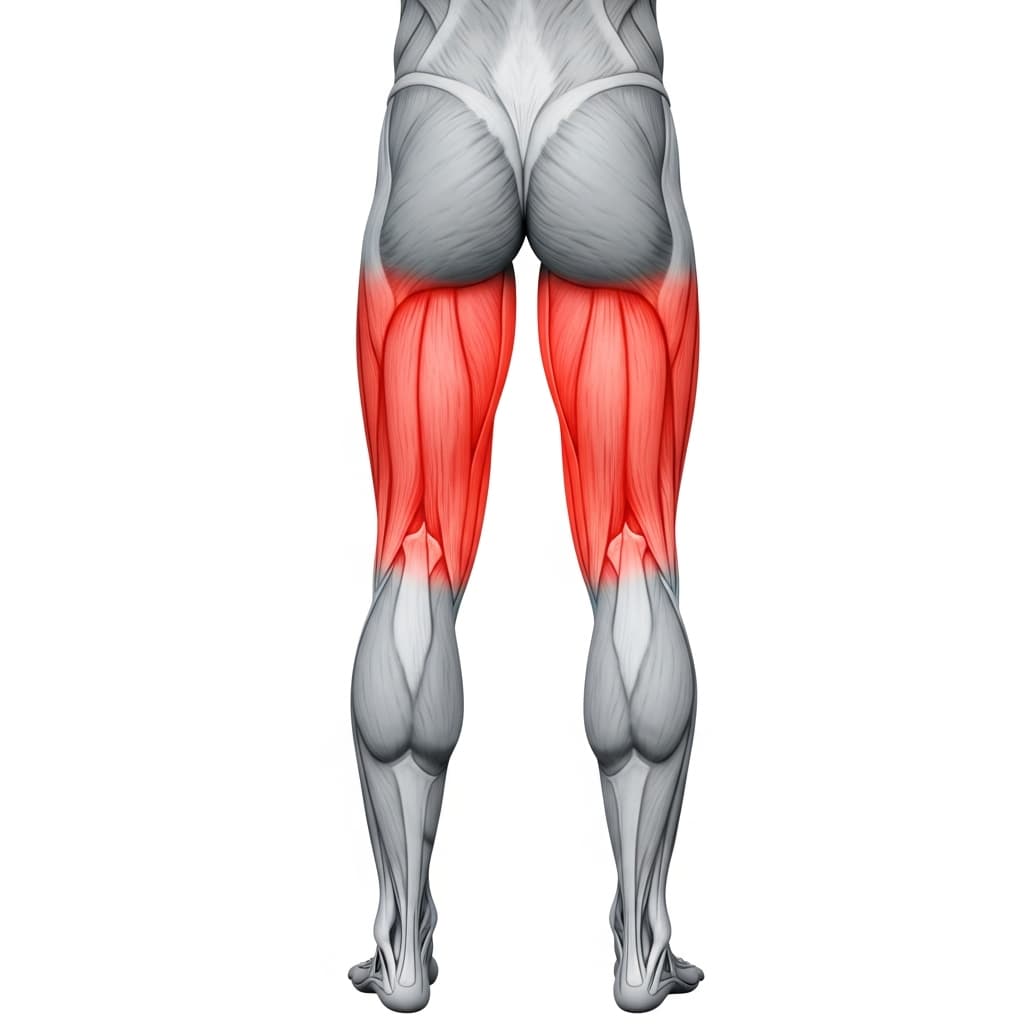
Hamstring Group (Hamstrings) - The straight leg's hamstrings take most of the stretch on that side, and turning the torso toward that leg puts even more of it there.
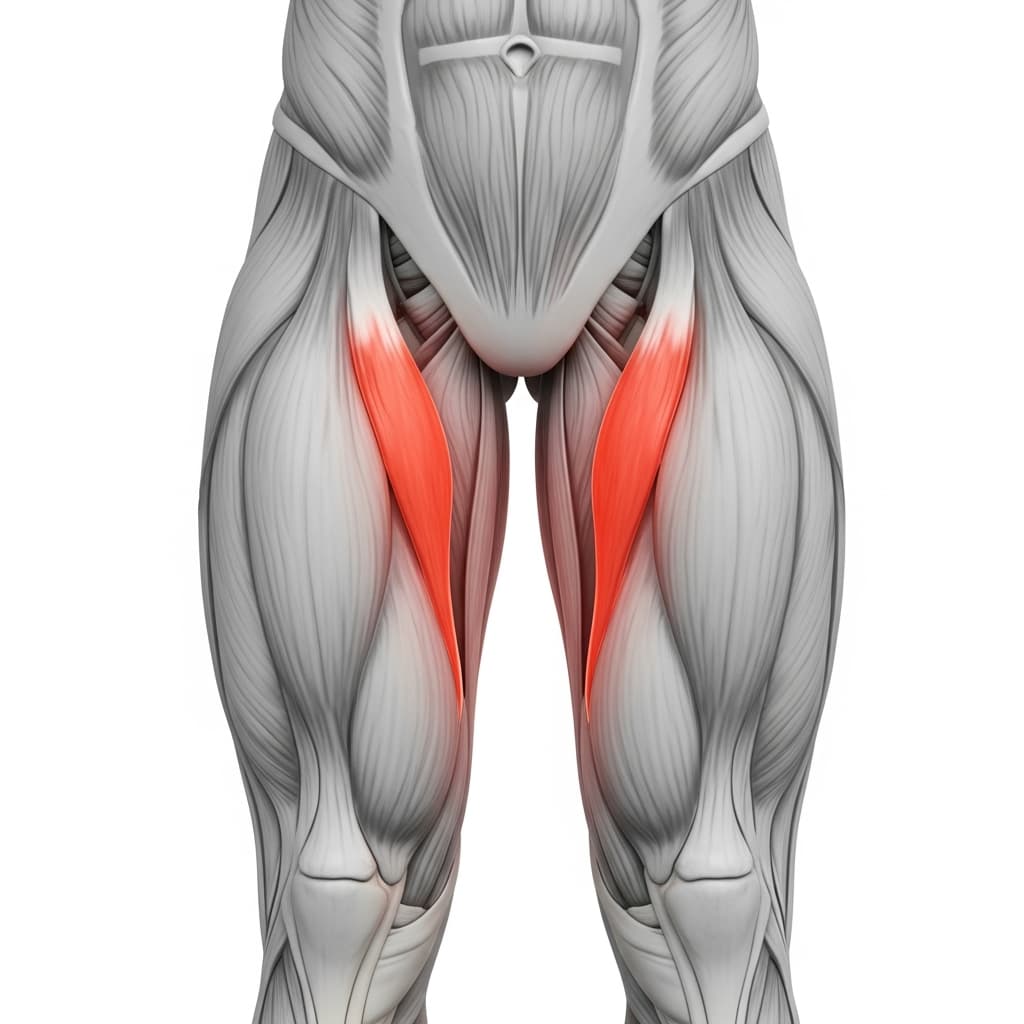
Hip Adductors (Adductors) - On the bent leg side, the adductors are where you should feel the stretch as you lean forward with the straddle wide open.
Secondary Muscles
Erector Spinae (Spinal Erectors) - The spinal erectors hold the torso upright and long as you lean, helping the pelvis follow into the forward tilt rather than the back rounding.
Benefits of Half Pancake
- Stretches the hamstrings on the straight leg side and the adductors on the bent leg side in the same hold.
- Works each side on its own, so the tighter side gets the time it needs, especially useful when the hamstrings limit your pancake.
- Gives you a gentler place to practise the forward pelvic tilt the full pancake is built on, with only one leg straight.
- Offers two lean directions from one setup, forward between the legs or rotated over the straight leg for more hamstring.
- Builds toward the wide straddle and forward fold used in the full pancake and the straddle handstand press.
Who Is This Exercise For?
No strength is needed, but you must be able to sit with legs apart and fold one knee back, foot behind your glutes, toe pointed. Check that knee before you lean: you should feel the thigh muscles stretch, not a pinch inside the knee, and if it complains even with the toe pointed, this setup is not for you yet. Do it after a warm up or at the end of a session.
Common Mistakes to Avoid
Leaving the bent leg's foot unpointed: Point the toe: with the shin and thigh going in opposite directions, an unpointed foot can put some unnecessary load on the knee. If the knee still complains with the toe pointed, ease out instead of pushing on.
Rounding the back to get the chest down: A rounded back gets the chest lower without the hips ever learning the position. Tilt the pelvis forward first and lean only as far as an upright, long torso allows, since less depth with a long back is the better stretch.
Sitting in a narrow straddle: Open the legs as much as you can before you fold the leg back, and again once the foot is in place. The wider the legs, the more the adductors stretch, so a narrow straddle gives the bent leg side less stretch.
Reaching for the floor with the head: Keep the head in a neutral position, in line with the spine, and let the chest lead the lean. Reaching for the floor with the head rounds the upper back instead of keeping the torso upright.
Cutting the tighter side short: One side often feels very different from the other, and it is tempting to give the harder side less time. Keep the same time on both sides, and breathe through each hold instead of bracing against the stretch.
Variations & Progressions
Elevated Half Pancake
Do the same half pancake sitting on a folded mat, a low block or a weight plate. Raising the pelvis makes the forward tilt much easier, so you can feel the right position before you have the range on the floor.