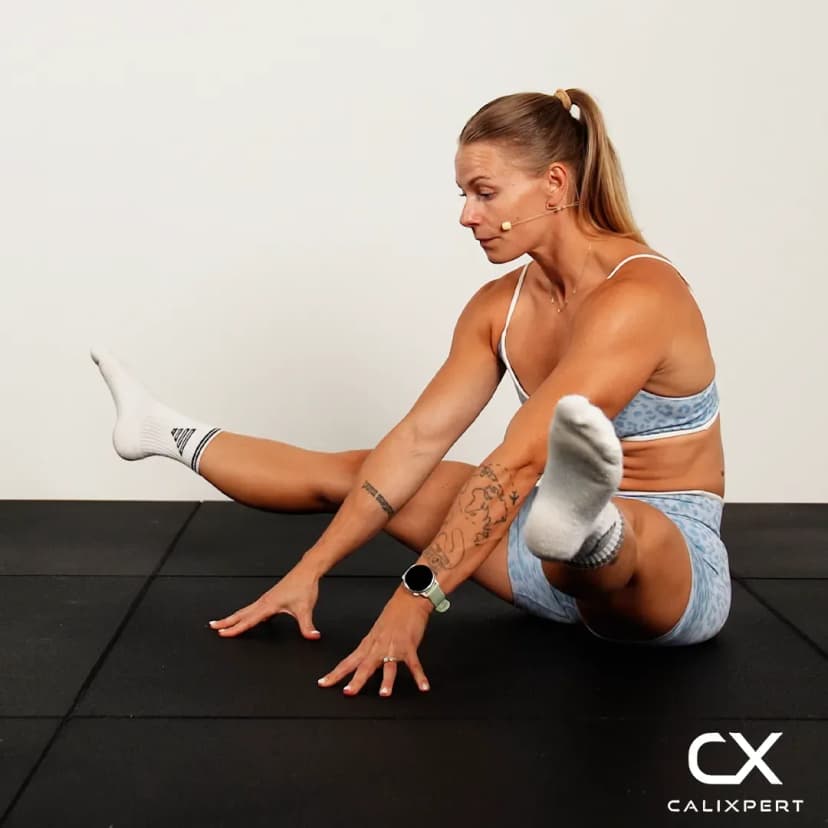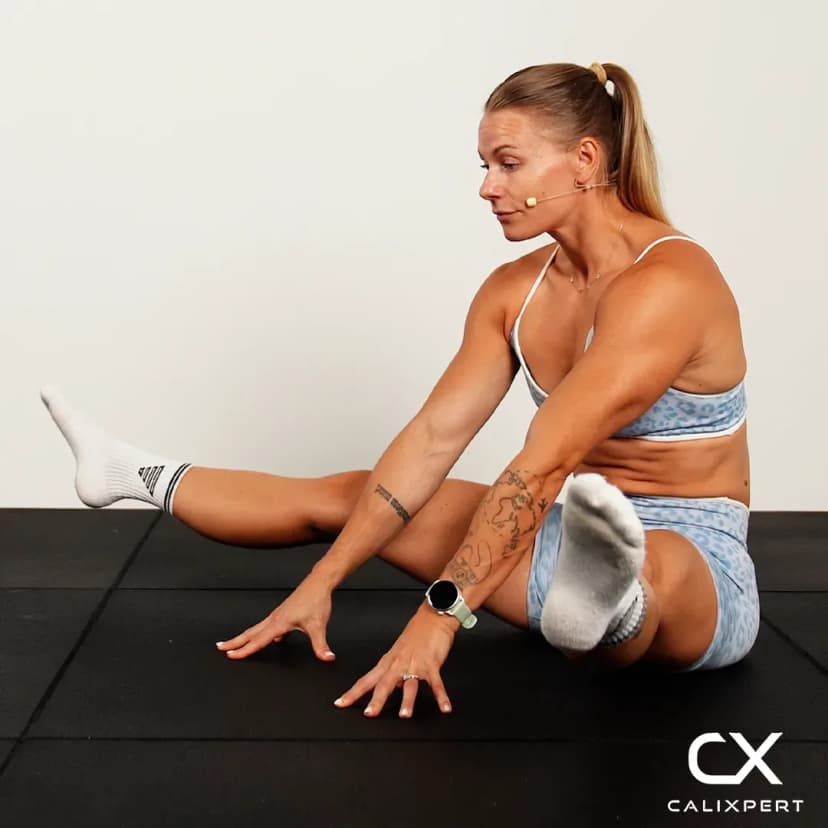
Bench Shoulder Flexion Stretch
The bench shoulder flexion stretch is a kneeling mobility drill for the lats and the back of the upper arms, where you rest your elbows on a bench, hands pressed together, and let your chest sink toward the floor. It works by keeping the ribs down with the pelvis tilted back, which stops the lower back from arching so the chest only goes as low as your shoulders allow. It opens shoulder flexion, the arms overhead range you need at the top of a handstand.

The bench shoulder flexion stretch is a kneeling mobility drill for the lats and the back of the upper arms, where you rest your elbows on a bench, hands pressed together, and let your chest sink toward the floor. It works by keeping the ribs down with the pelvis tilted back, which stops the lower back from arching so the chest only goes as low as your shoulders allow. It opens shoulder flexion, the arms overhead range you need at the top of a handstand.
How to Do Bench Shoulder Flexion Stretch
1. Kneel In Front Of The Bench
Kneel on the floor facing a flat bench, or something similar such as a sturdy box or a chair. Start with your knees fairly close to it so you can reach the top comfortably.
A bench or something similar
2. Place Your Elbows And Press The Hands Together
Place your elbows on the bench about shoulder width apart, bend your arms and press your hands together with the thumbs or fingers pointing upwards. Not turned out and not turned in, upwards. Keep this hand position for the whole stretch.
Thumbs up, not out, not in
3. Walk Your Legs Back
Keeping your elbows and hands where they are, move your feet and knees backwards as far as you can while holding that position. This gives the chest room to drop below the bench. Finish with your hips roughly above your knees.
Arms stay put, legs walk back
4. Tilt The Pelvis Backwards
Before you sink, apply a posterior pelvic tilt by tilting the pelvis backwards. Squeeze your glutes and pull the front of your ribs toward your hips. This is what stops the lower back from arching when the chest goes down.
Tuck the pelvis, ribs down
5. Push The Chest Toward The Floor
Push your chest as far down toward the floor as you can without arching the lower back. Your head drops between your arms, below the level of the bench. Sink only as far as you can keep the pelvis tucked.
Chest down, lower back still
6. Exhale And Hold
Take a deep exhale and use it to go as deep as possible, then hold this position. Keep the pelvis tucked and the thumbs pointing up for the whole hold.
Breathe out, sink, hold
Judge it by the shoulders, not how low the chest goes: depth from flared ribs and an arched lower back is borrowed from the spine. Set the pelvic tilt and ribs before you sink, keep the thumbs up and settle deeper on a long exhale. If the lower back starts to arch, you are past today's shoulder range, so come up a little and hold.
Muscles Worked During Bench Shoulder Flexion Stretch
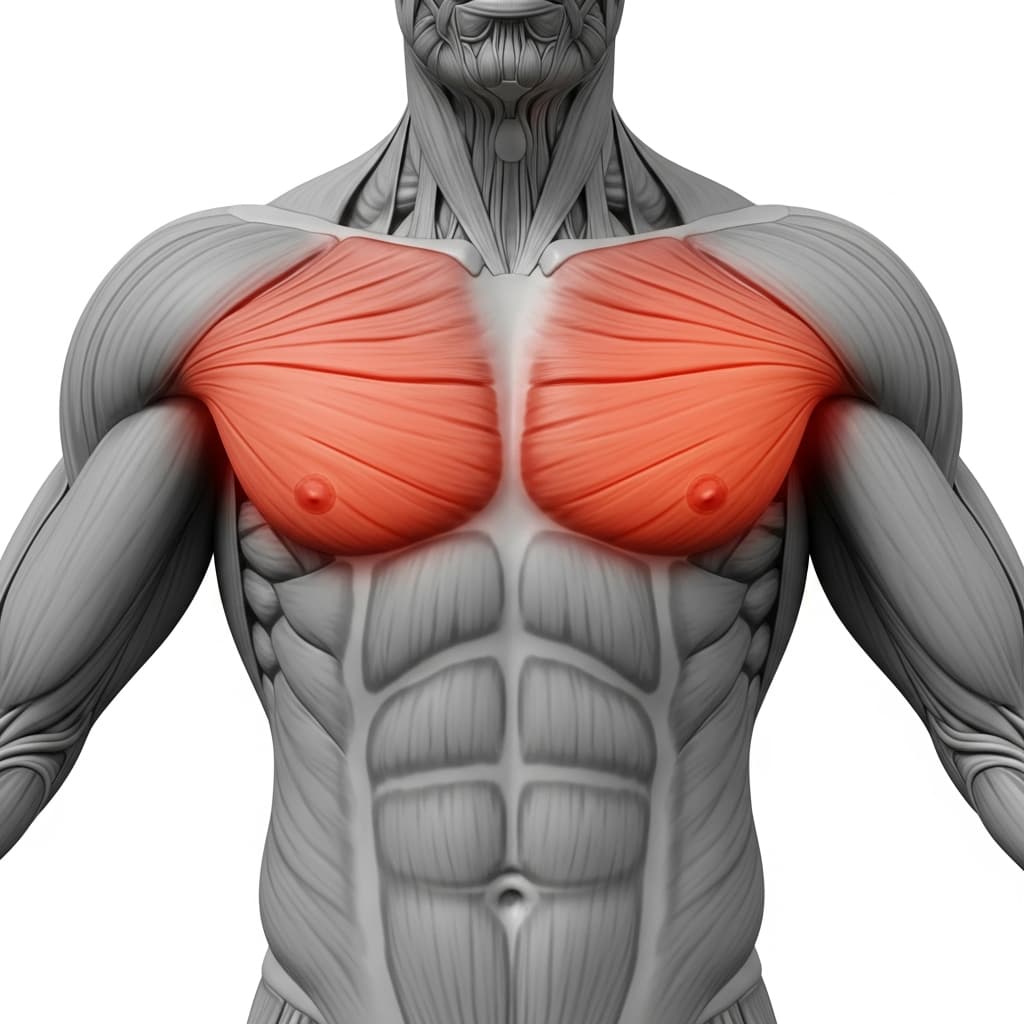
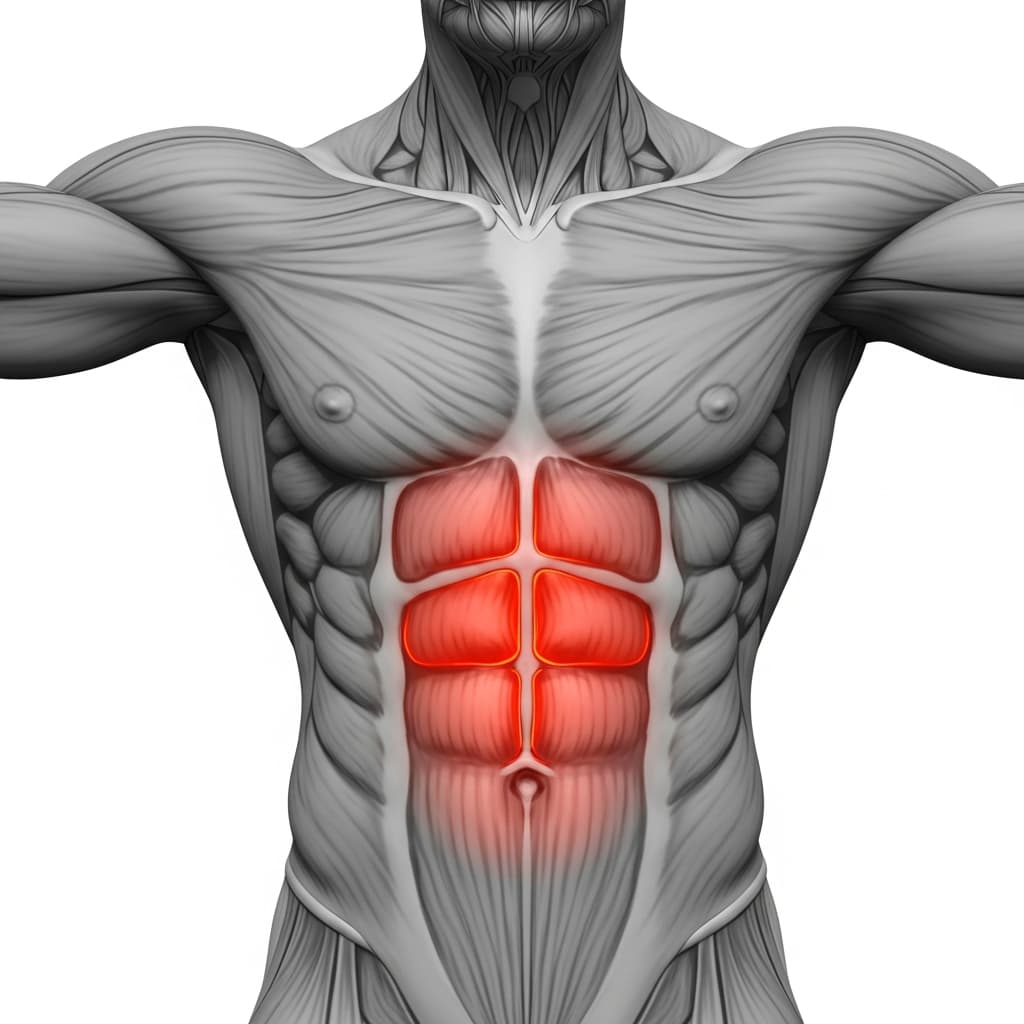
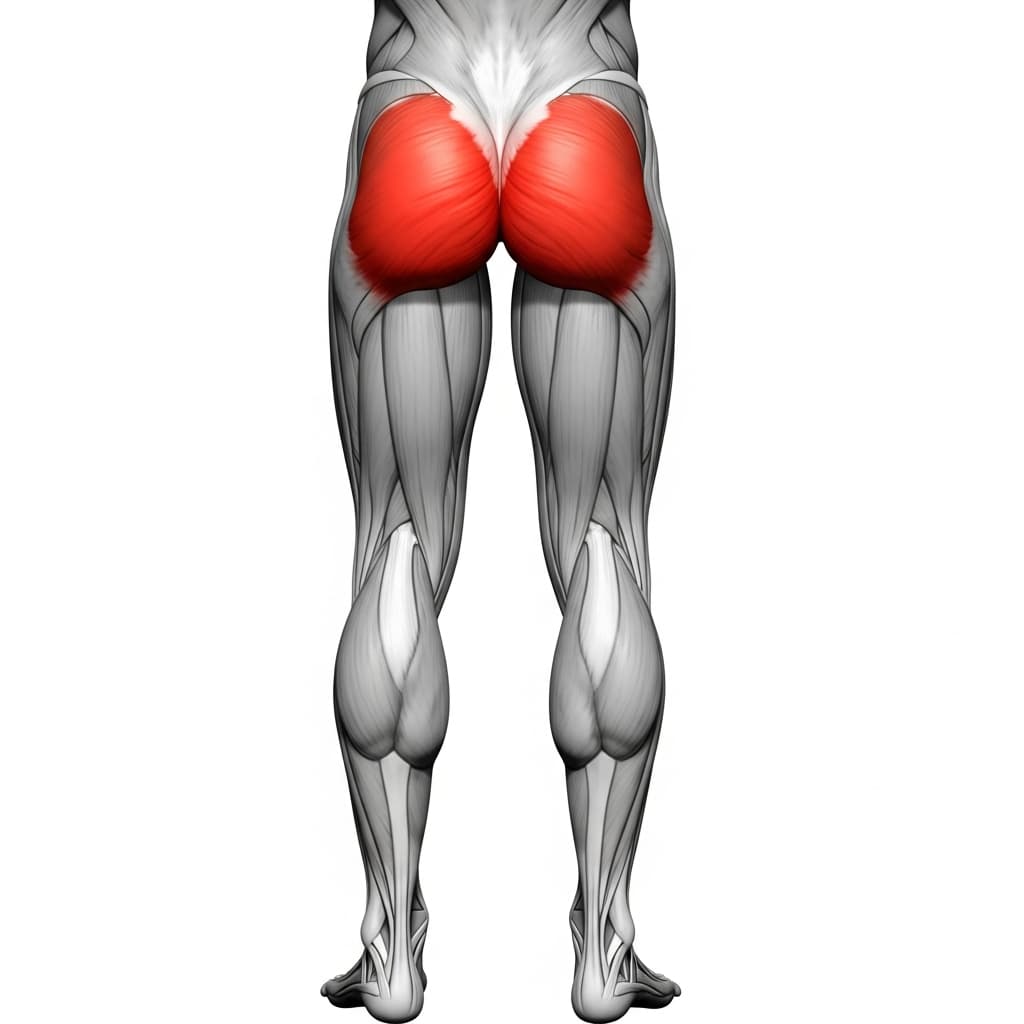
Primary Muscles
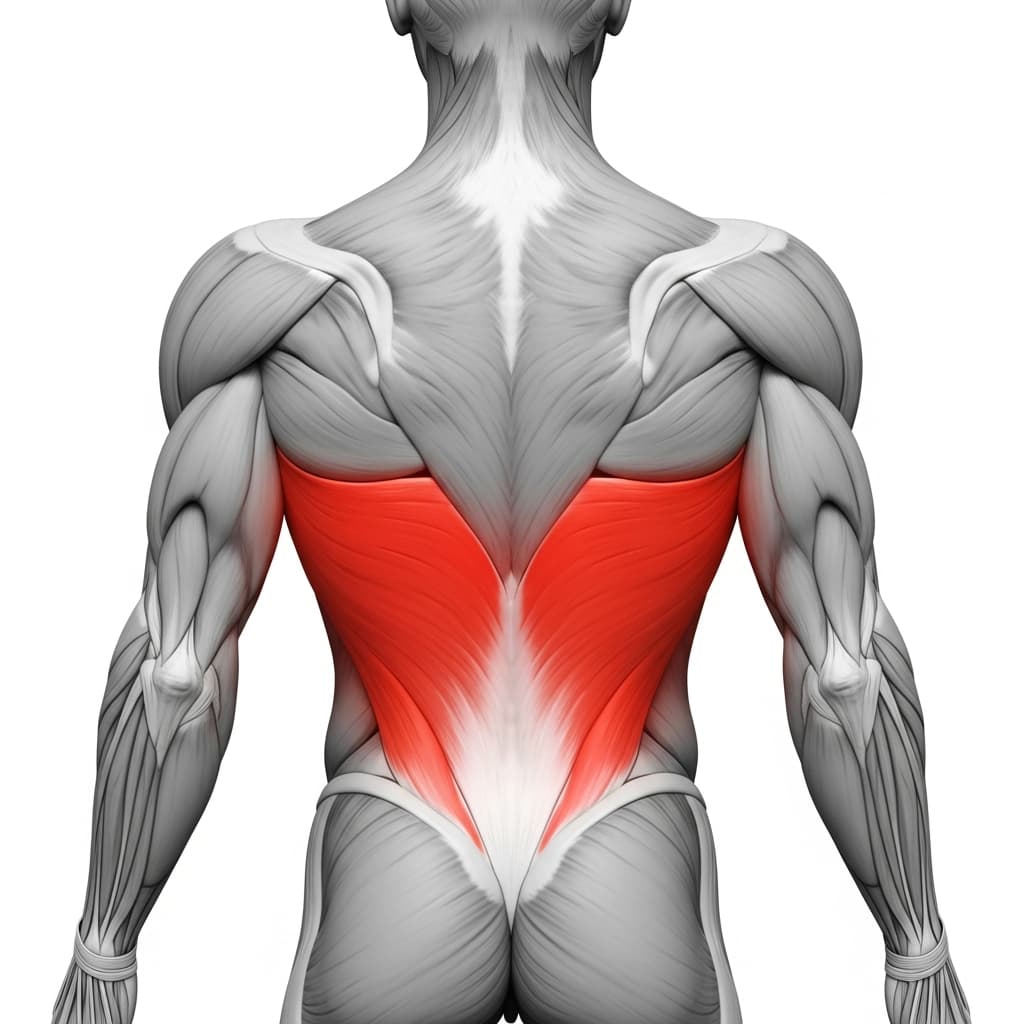
Latissimus Dorsi (Lats) - The lats, the main muscle stretched, pull the arm down and turn it inwards, so the thumbs-up overhead position lengthens them along the sides of your back.
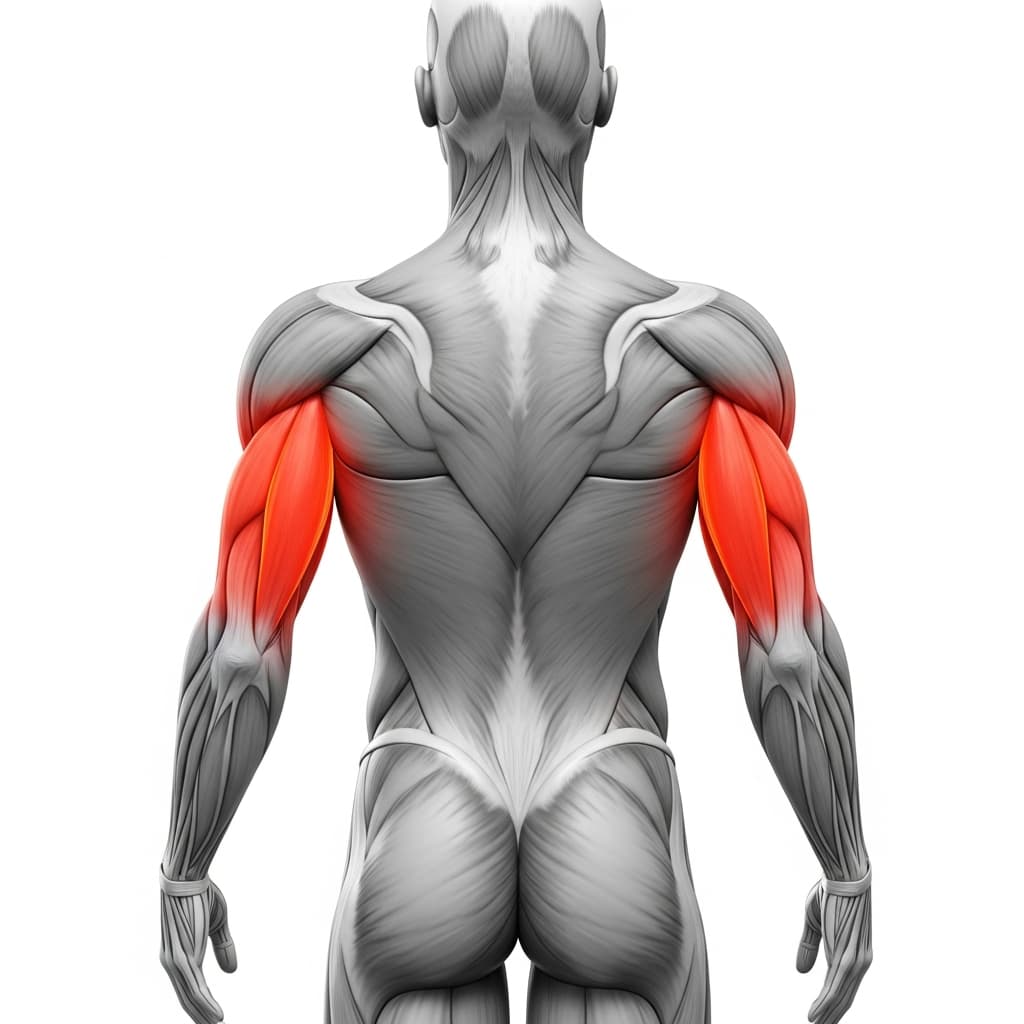
Triceps Brachii (Triceps) - The triceps long head crosses the shoulder and elbow, so bent arms overhead stretch it at both ends, which many people feel down the back of the upper arm.
Secondary Muscles
Pectoralis Major (Chest) - The chest muscles also resist the arms going fully overhead, and they get a lighter stretch as the chest sinks below the level of the elbows.
Rectus Abdominis (Abs) - The abs pull the front of the ribs toward the hips and help hold the posterior pelvic tilt, which stops the lower back from arching as you sink.
Gluteus Maximus (Glutes) - Squeezing the glutes helps tilt the pelvis backwards before you sink, so the lower back stays out of the stretch.
Benefits of Bench Shoulder Flexion Stretch
- Opens shoulder flexion, the arms overhead range you need at the top of a handstand and at the finish of a handstand press
- Stretches the lats, one of the two muscle groups that most often limit overhead range, and the long head of the triceps
- Teaches you to keep the ribs down and pelvis tucked with arms overhead, so your range comes from the shoulders, not the lower back
- The bench holds your arms, so you can relax into the stretch and use a long exhale to go deeper
- Needs only a bench, a box or a chair, so it fits easily into a mobility session at home or in the gym
Who Is This Exercise For?
There is no strength requirement, but you need to kneel comfortably and control your pelvis. If you are unsure what a posterior pelvic tilt feels like, practice it on all fours first: squeeze the glutes, tuck the tailbone under and pull the front of the ribs toward the hips. If raising your arms overhead is painful rather than just tight, get that looked at before you stretch into the range.
Common Mistakes to Avoid
Arching the lower back to get the chest lower: Flaring the ribs and arching the lower back drops the chest further, but that depth comes from your spine, not the shoulders. Tilt the pelvis back, pull the ribs toward the hips and sink only as far as you can hold that.
Letting the thumbs turn out or in: Keep the thumbs or fingers pointing straight up. Thumbs up keeps the upper arm turned outwards, which is the opposite of what the lats do, so it keeps the stretch on them.
Staying too close to the bench: With the knees near the bench the torso stays angled upwards and the chest has nowhere to go. Move your feet back as far as you can while the elbows and hands stay where you placed them.
Letting the arms drift apart as you sink: Keep the hands pressed together and the elbows where you set them. If they slide as you sink, come up, reset and start again.
Pushing through a pinch in the shoulder: The stretch should pull along the sides of the back and the back of the arms. A pinch at the top of the shoulder or tingling in the fingers means you should come out and go back in with less depth, not push harder.