Ring Triceps Extension
Ring triceps extension turns your own bodyweight into an overhead triceps exercise. You lean forward into the rings with straight arms, bend at the elbows until your hands reach your head, then push back out. The elbow is the only joint that is meant to move, so the triceps take the whole job, and the long head gets loaded in a stretch that push ups and dips never reach. How far back you put your feet decides how heavy that is.
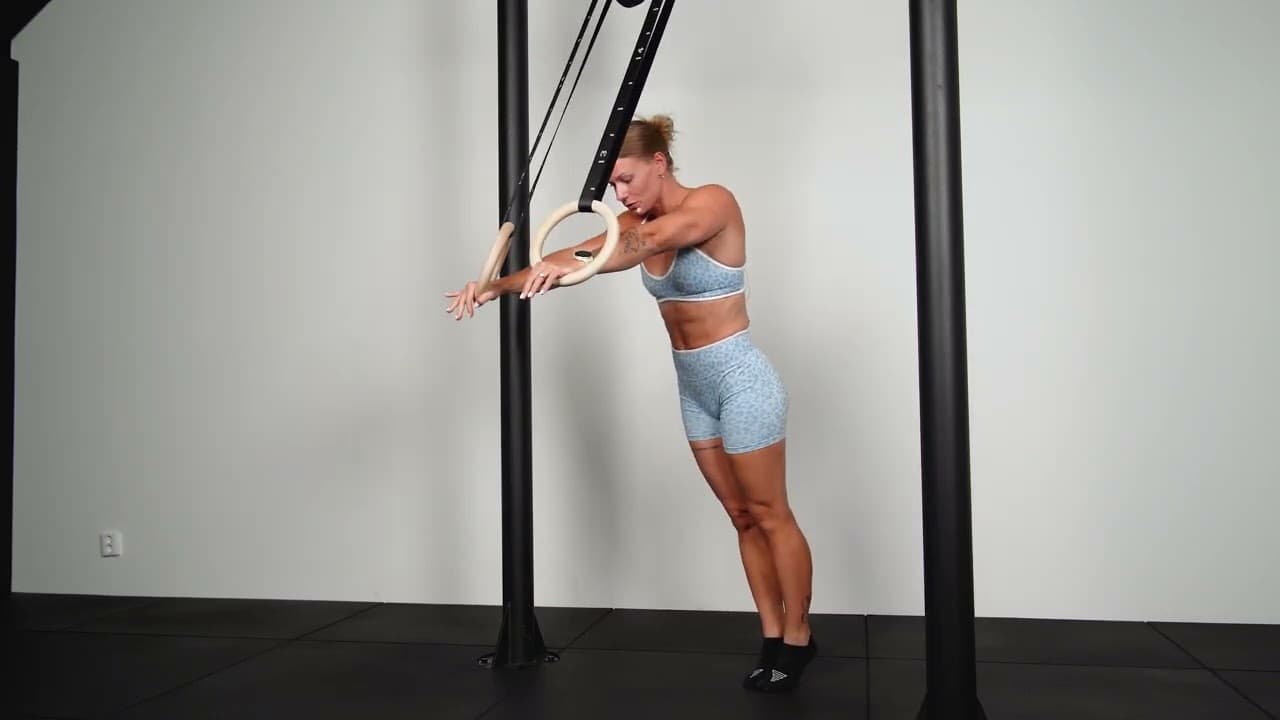
Ring triceps extension turns your own bodyweight into an overhead triceps exercise. You lean forward into the rings with straight arms, bend at the elbows until your hands reach your head, then push back out. The elbow is the only joint that is meant to move, so the triceps take the whole job, and the long head gets loaded in a stretch that push ups and dips never reach. How far back you put your feet decides how heavy that is.
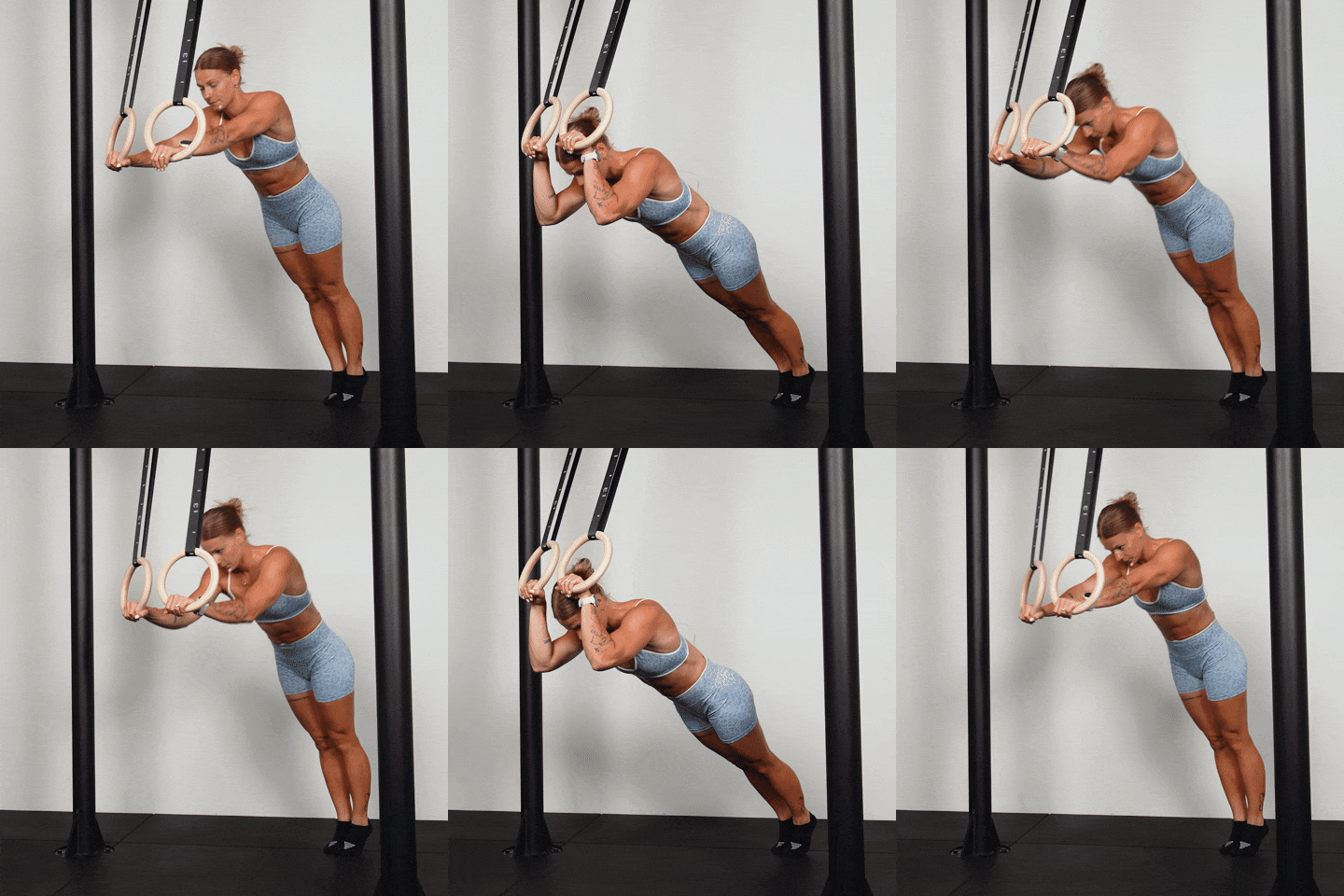
How to Do Ring Triceps Extension
1. Set The Rings And Your Feet
Ring height and foot position together decide how heavy this is. Start with the rings around chest height and your feet close to the anchor point, so your body stays fairly upright. That is the easy version, and it is where a first session belongs.
Rings high, feet close in, for your first sets.
2. Take A Strong Neutral Grip
Grab the rings roughly shoulder width apart with the thumbs in a pronated position, pointing in towards each other at all times. Keep a strong neutral wrist and do not let it slip down so the ring rolls into your palm. A collapsed wrist leaks force and drags the elbows out of line.
Thumbs pointing towards each other, wrist straight.
3. Lean In With Straight Arms
Step back and lean forward into the rings with the arms straight. Keep full body tension, core tight and the hip in extension, with no flexing at the hip. The body should already be one straight line before the first rep starts.
One line from head to heels before rep one.
4. Bend The Elbows Towards Your Forehead
Bend only at the elbows and aim to get the rings, or your hands, to your head or forehead. Keep the elbows tucked in the whole way down, with no flaring out to the sides. The upper arms stay where they are and the forearms do the travelling.
Hands to your head, elbows tucked in.
5. Squeeze At The Bottom
At the bottom, try to squeeze your forearm to your biceps and get them as close to each other as possible. This is the deepest part of the range and the hardest point of the rep. Hold the body line here and do not let the hips drop.
Forearm to biceps, as close as you can get.
6. Push Back Up With The Elbows
Push back up by straightening the elbows until the arms are long again. The shoulders and hips should not change position on the way out, so shrugging or piking to escape the bottom means the angle is too hard for today. Finish every rep at full extension so each set covers the same range.
The elbows straighten, nothing else moves.
7. Walk Your Feet Back To Progress
When the reps feel controlled, take a few steps backwards, lean into the rings and do exactly the same thing. The further back your feet, the more of your bodyweight the triceps carry. Add the distance a step at a time, and step back in the moment the elbows start to flare or the hips drop.
A few steps back, same movement.
People pick the angle first and then wonder why their elbows hurt. Do it the other way round. Start with the rings high and your feet close in, and only walk back a step once you can keep the elbows tucked on every rep of every set. Keep the wrist straight so the ring never slips down into your palm, aim your hands at your forehead, and let the elbows push you back up.
Muscles Worked During Ring Triceps Extension
Primary Muscles
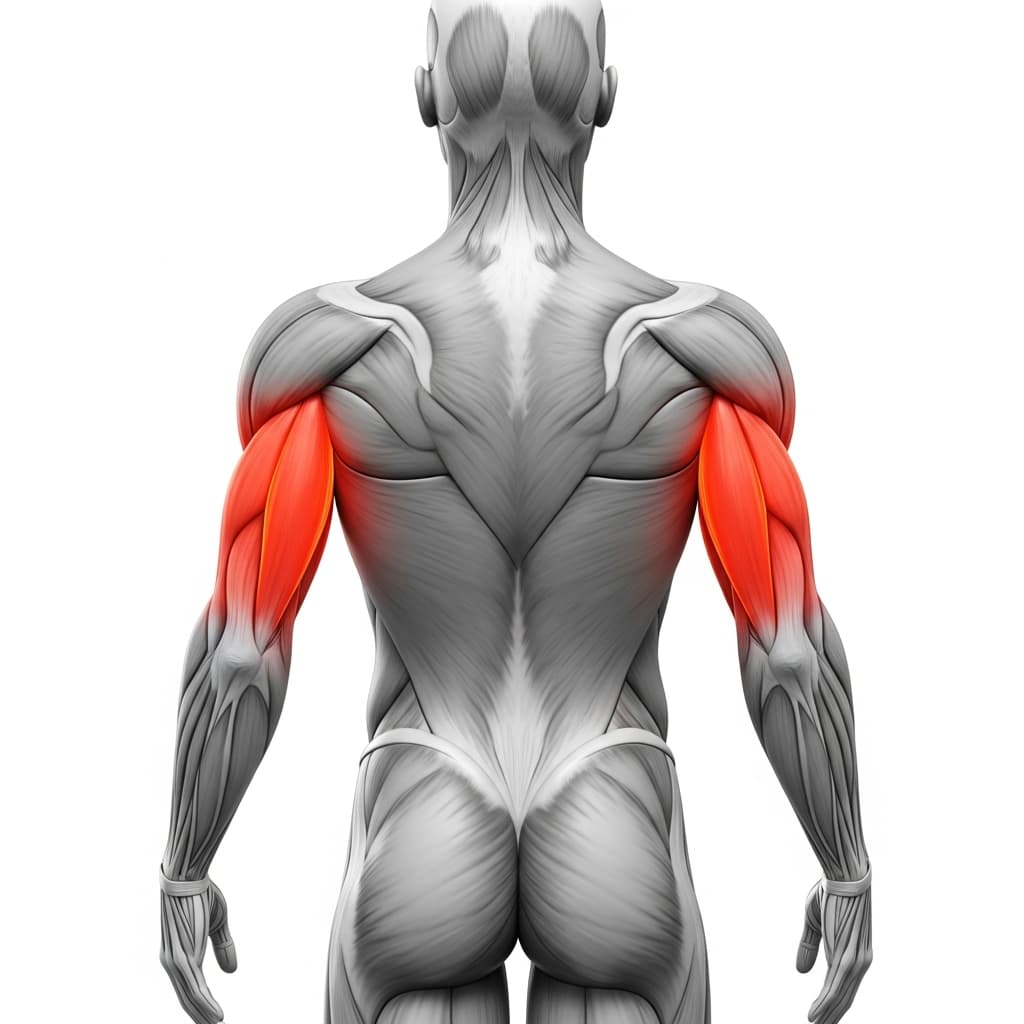
Triceps Brachii (Triceps) - The triceps are the only muscle actually moving you here, straightening the elbow from a deep bend back out to a long arm, with the long head under the most stretch because your hands finish beside your head.
Secondary Muscles
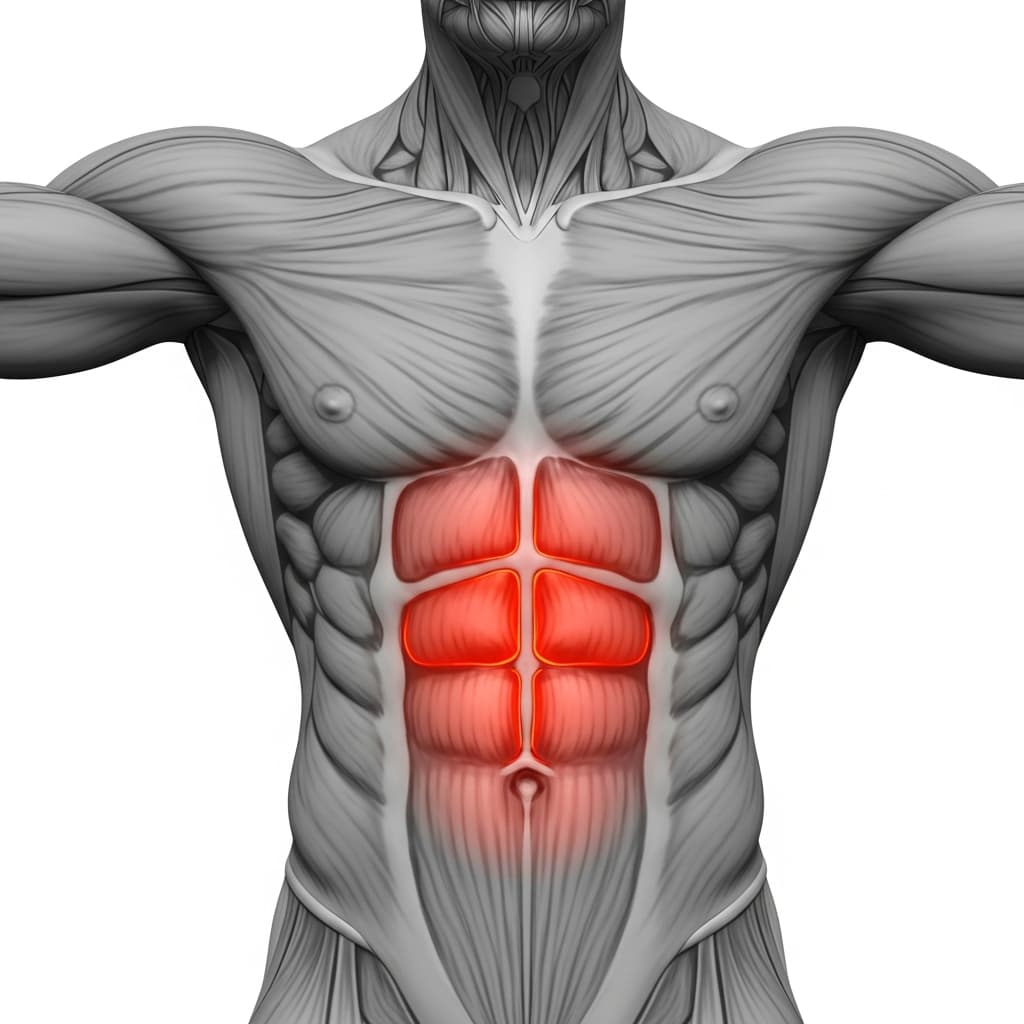
Rectus Abdominis (Abs) - The abs hold the ribs down so the lean does not turn into an arched lower back, and they work for the whole set rather than rep by rep.
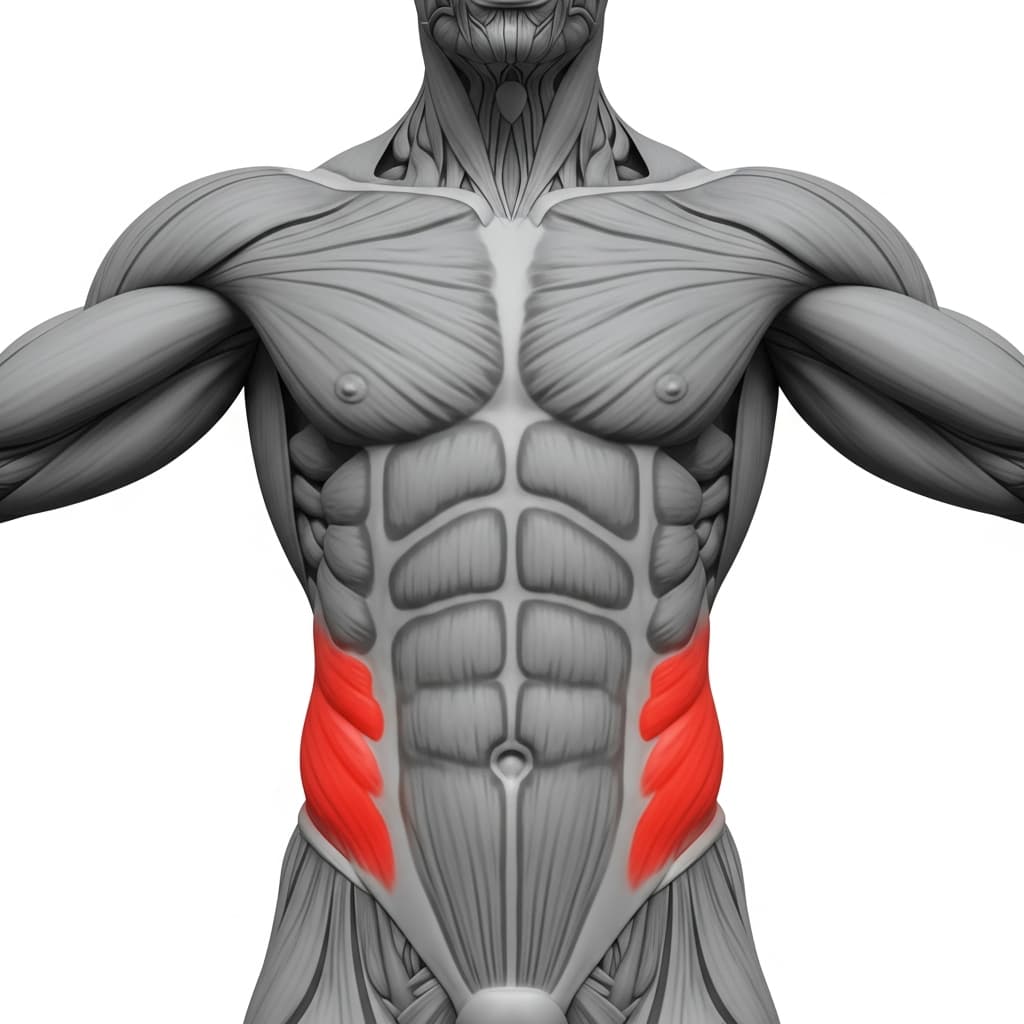
Obliques (Obliques) - The obliques stop the torso twisting when one arm presses slightly harder than the other on rings that are free to move.
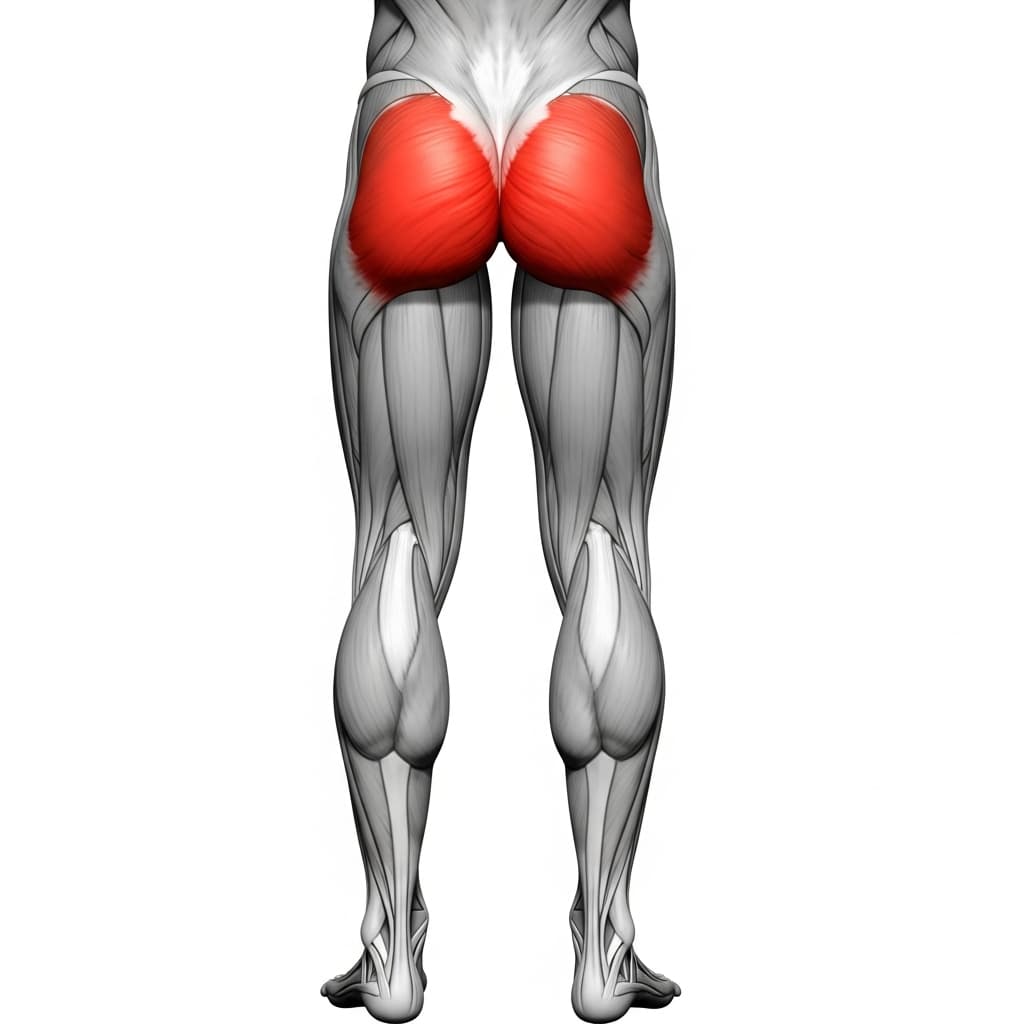
Gluteus Maximus (Glutes) - Squeezing the glutes keeps the hips in line with the shoulders, so the body stays one straight plank instead of hinging in the middle.
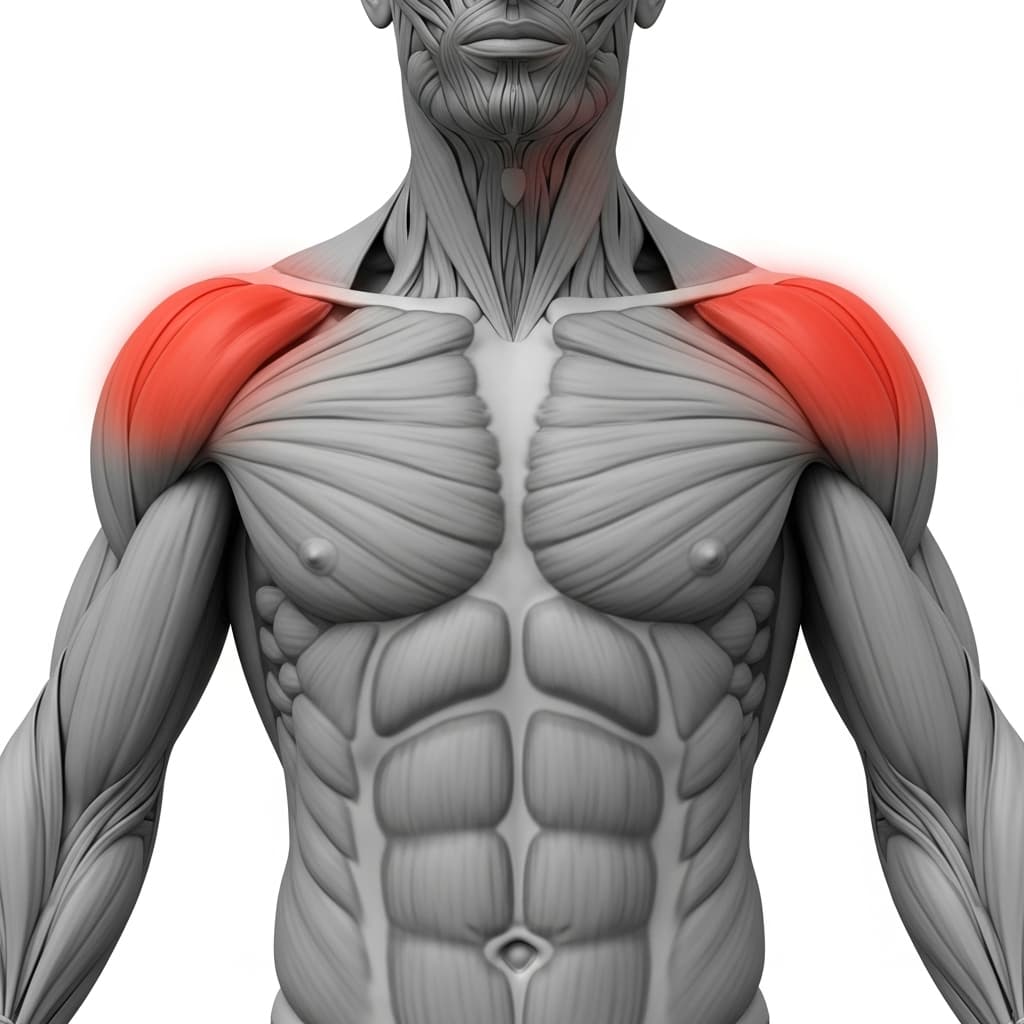
Anterior Deltoid (Front Deltoid) - The front deltoids hold the upper arms in place against the pull of the rings, which is what keeps the movement at the elbow.
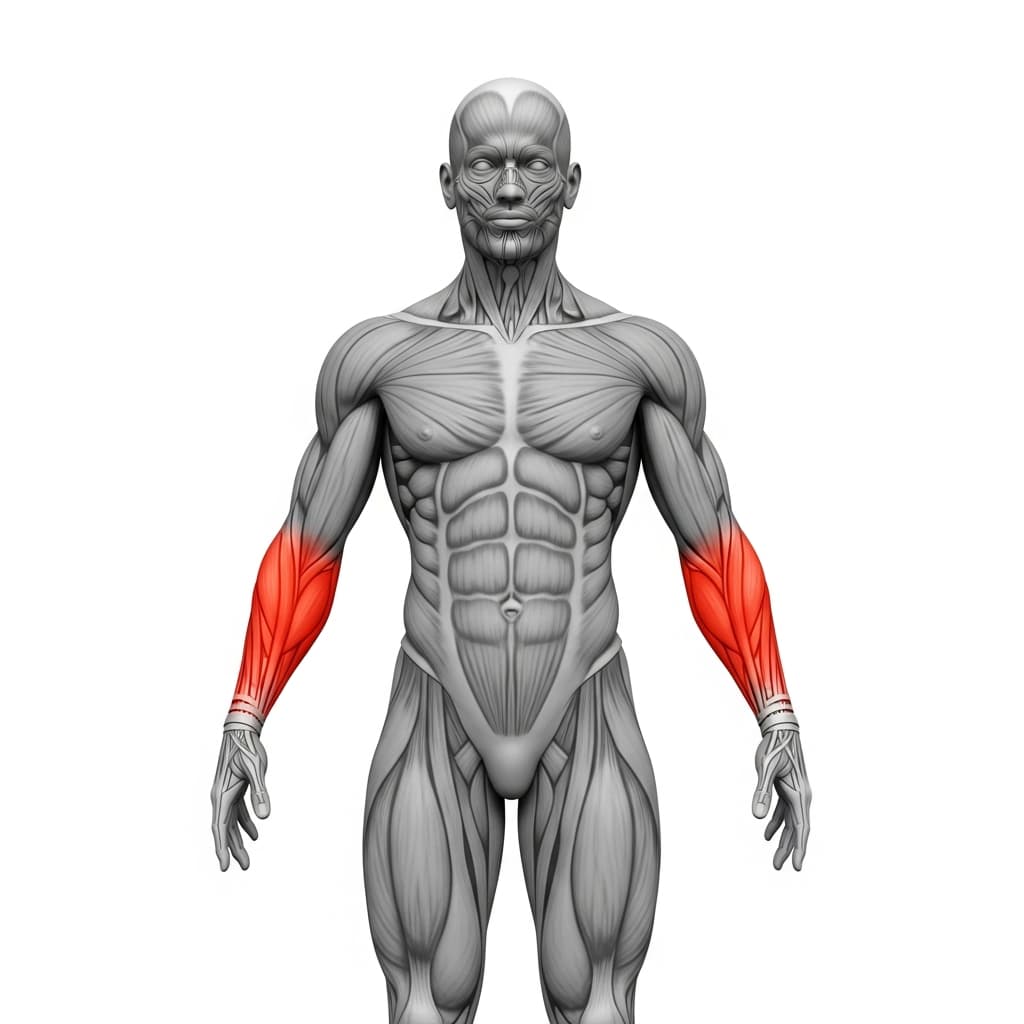
Forearm Flexors & Extensors (Forearms) - The forearms grip the rings and hold the wrists straight so the ring does not roll down into the base of the palm.
Benefits of Ring Triceps Extension
- Loads the long head of the triceps in a stretch that push ups and dips never produce, which is the part most pressing work leaves behind.
- Overhead elbow extension has the strongest evidence for triceps growth: a 12 week study found around 1.4 times more whole triceps growth than the same work done with the arms down.
- Builds the lockout end of your dips, ring dips and handstand push ups, because that is where the triceps finish the job.
- Trains the abs, obliques and glutes to hold a straight body line under load, which carries over to every other straight body ring exercise.
- Scales in very small steps with no extra weight at all, just walk your feet back or set the rings lower.
Who Is This Exercise For?
Before you try this, you want controlled ring push ups and elbows that are pain free in your dips and push ups. This movement sends a lot of torque through a deeply bent elbow while the arms travel overhead, so an elbow that already complains in other pressing work will complain here, louder. You also want a plank or hollow body hold you can keep for 30 to 45 seconds with the glutes squeezed and the ribs down, because the lower back is the first thing to give way when the core cannot hold the line. Enough time on the rings that the wobble is not the whole workout helps as well.
Common Mistakes to Avoid
Setting your feet too far back on day one: The lean angle is the load, and it is easy to set it far too high straight away because the set up looks like a push up. The further back your feet go, the more torque runs through an elbow that is already deeply bent, and that is where this exercise starts to feel sore in the joint rather than the muscle. Begin with the rings high and your feet close in, then add distance a step at a time and only while the elbows stay tucked and the body holds one line.
Elbows flaring out to the sides: Flaring shortens the lever and makes the rep easier the moment the triceps start to fail, so it creeps in at the end of a set without you noticing. Keep the elbows tucked in and pointing forward, where you can still see them. If you cannot hold them there any more, that is the real end of the set.
Letting the wrist collapse on the ring: At the bottom the ring wants to roll down into the base of your palm and take the wrist back with it. Keep a strong neutral wrist and grip the ring instead of hanging off it. That also keeps the thumbs pointing towards each other, which is what keeps the elbows tracking straight.
Bracing the abs but forgetting the glutes: Abs alone do not hold the line. The hips sag, the lower back takes the lean, and you finish the set with a heavy lower back instead of tired triceps. Squeeze the glutes and tuck the pelvis slightly so the ribs stay down, and the whole body should feel like one solid plank from shoulders to heels.
Variations & Progressions
Bar Triceps Extension
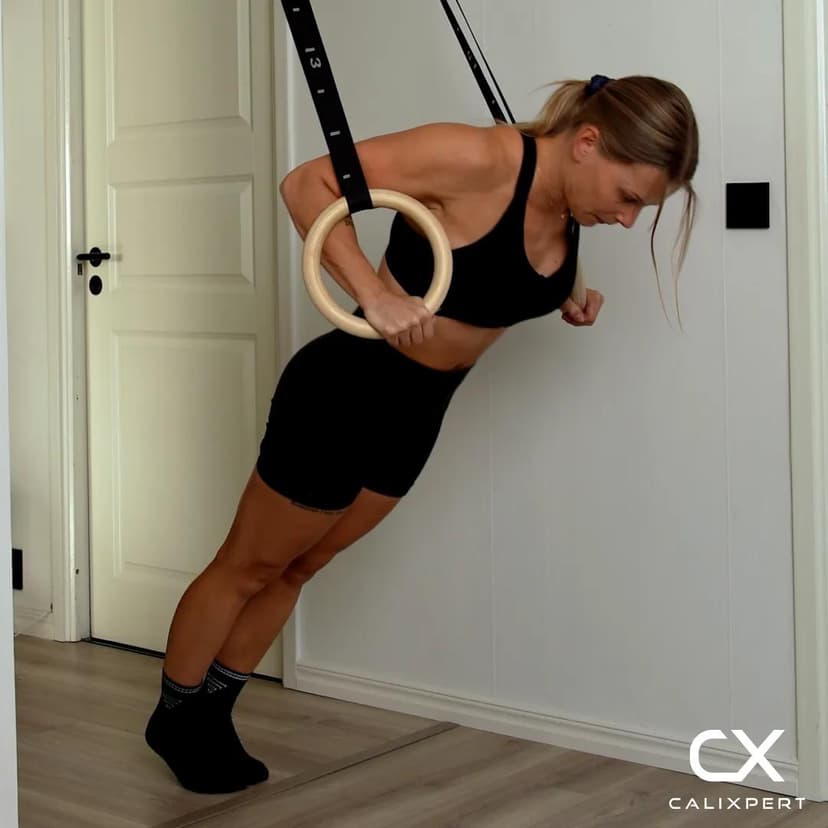
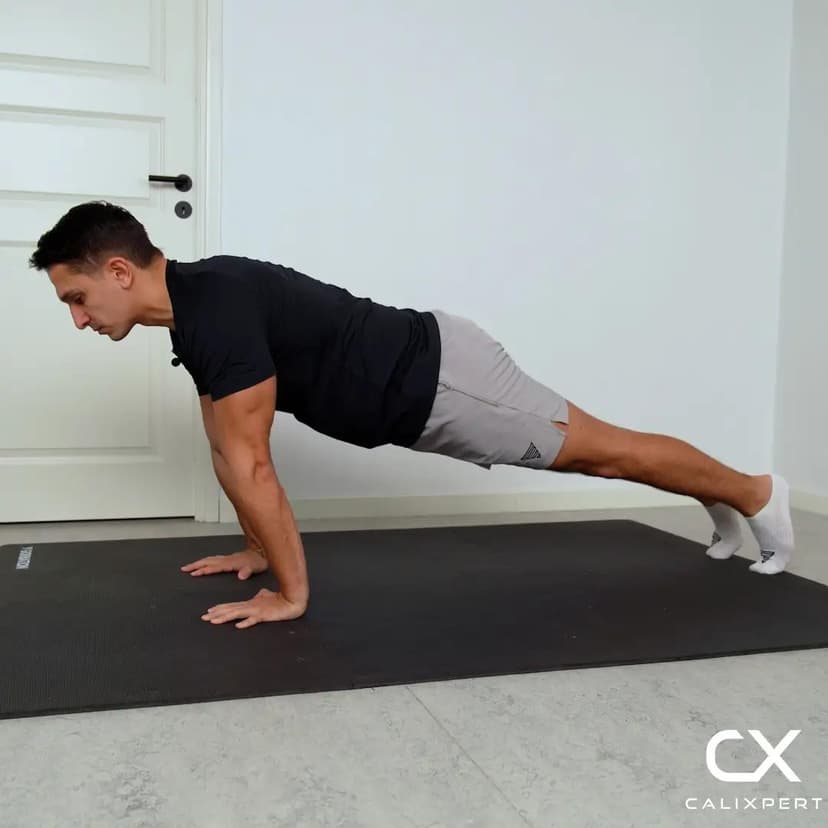
Hands on a fixed bar or rail at chest height instead of rings, so you can learn the elbow path without paying a stability tax.
Feet Elevated Ring Triceps Extension
Feet up on a box with the body close to horizontal, which is as heavy as this movement gets before you start thinking about extra weight.