Explosive Dips
Explosive dips are a power version of the parallel bar dip where you lower slowly under full control, then push up as fast as you possibly can. The chest and triceps are the prime movers, with the front deltoids assisting through the bottom while the core and shoulder blades hold your body rigid during the acceleration. Training the push at maximum speed builds pressing power that strict, steady reps never touch, and it carries straight over to clapping dips and the push half of a muscle up.
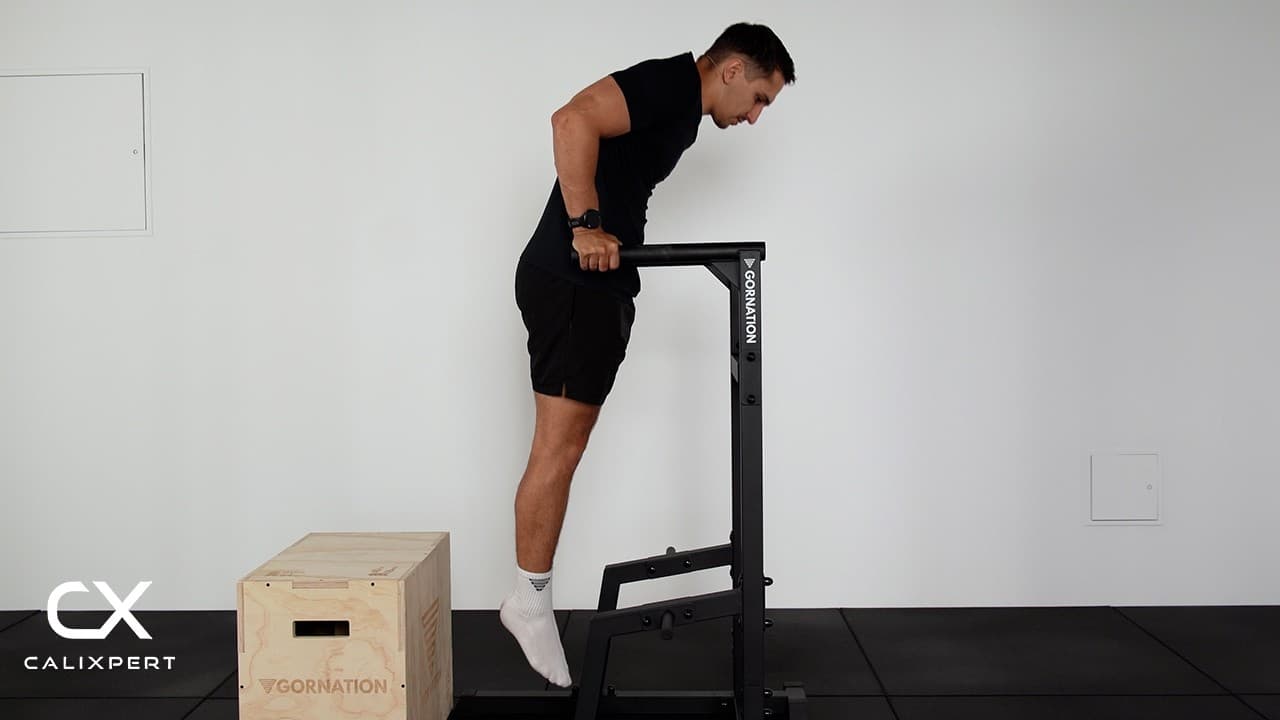
Explosive dips are a power version of the parallel bar dip where you lower slowly under full control, then push up as fast as you possibly can. The chest and triceps are the prime movers, with the front deltoids assisting through the bottom while the core and shoulder blades hold your body rigid during the acceleration. Training the push at maximum speed builds pressing power that strict, steady reps never touch, and it carries straight over to clapping dips and the push half of a muscle up.
How to Do Explosive Dips
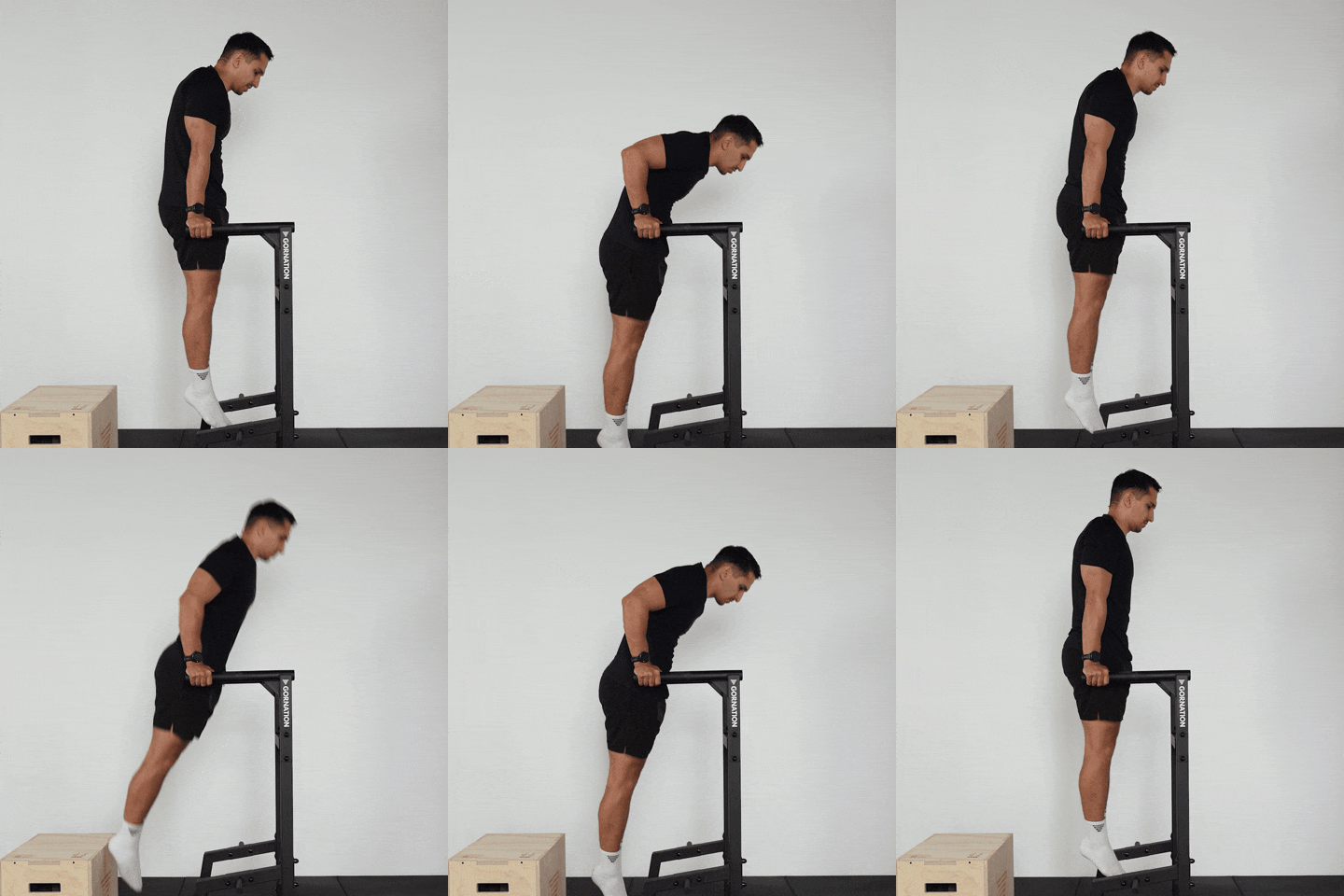
1. Step Up Into the Support
Use a box beside the bars to step up into position rather than jumping into it. Take a firm grip on both bars, press to straight arms, and let your legs hang still before you start the first rep.
Step in, do not jump in
2. Set the Support Position
Depress your shoulders so they sit down away from your ears, straighten your legs and squeeze them together, then brace your core so the body is one solid piece. Everything is tensioned before you move.
Shoulders down, legs together, everything tight
3. Pick Your Torso Angle
Start from a normal dip position with the shoulders depressed, or bring your shoulders slightly forward so the chest closes. Both work, so choose one and keep it the same for every rep in the set.
Normal dip position, or shoulders forward to close the chest
4. Lower Slowly
Bend your elbows and lower under full control, staying deliberately slow the whole way down. This is the opposite of a normal dip tempo, and the slow descent is what sets up the push.
Slow, slow, slow, no bouncing
5. Reach 90 Degrees or Slightly Lower
Lower until your elbows reach 90 degrees or a little past it, and stop there. Going deeper than you can control does not add power, so build the range up gradually rather than sinking as far as possible.
Ninety degrees or slightly lower
6. Explode
From the bottom, push as fast as you possibly can with everything you have, with no pause to gather yourself. The goal is the speed itself, and at a high enough speed the hands may lift off the bars as a by-product.
No hesitation, all power
7. Catch and Reset
If your hands leave the bars, meet them again with soft, bending elbows so they absorb the landing instead of taking it on locked arms. Re-set your shoulders down and your core tight, then begin the next slow descent.
Soft catch, reset, go again
The whole exercise lives in the change of speed. Go down slow, slow, slow, and the second you hit 90 degrees, explode with everything you have and do not hesitate. If you catch yourself moving at the same tempo up and down, you are doing normal dips, not explosive dips.
Muscles Worked During Explosive Dips
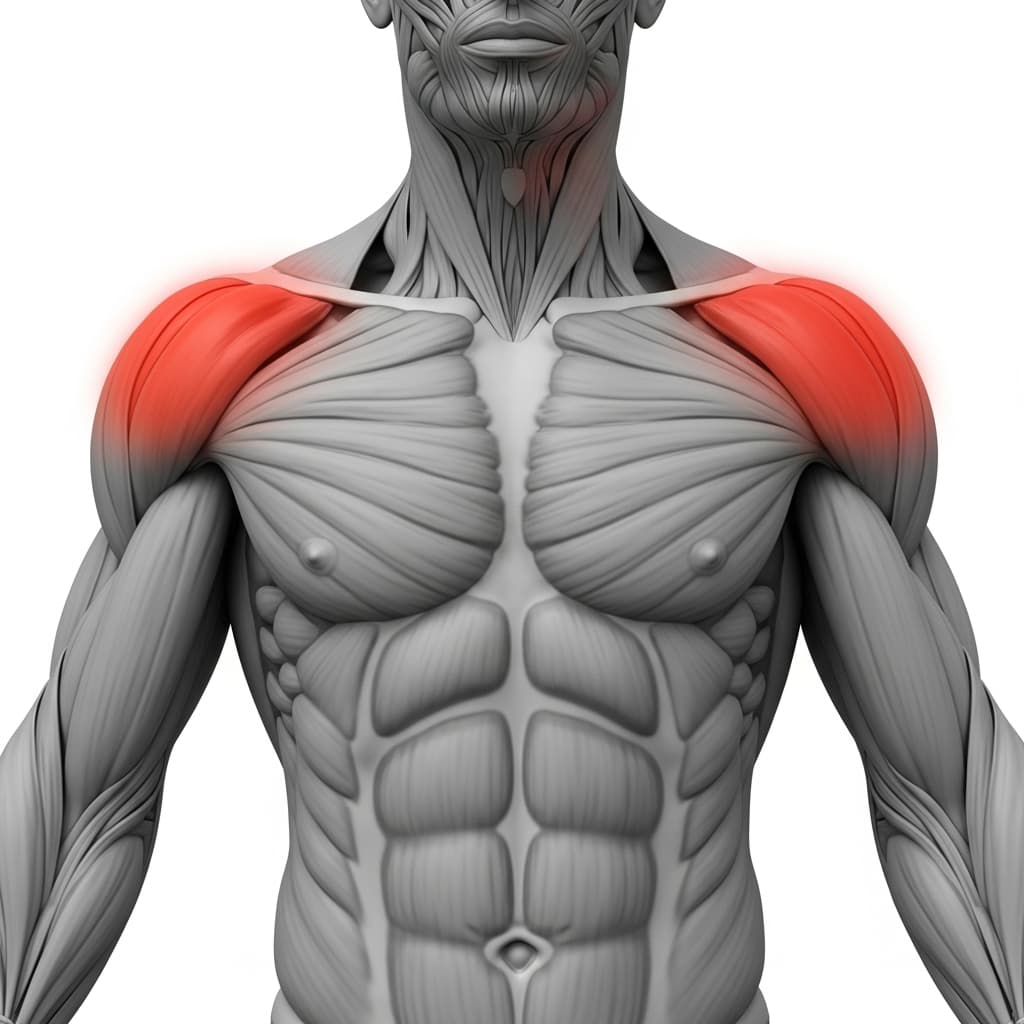
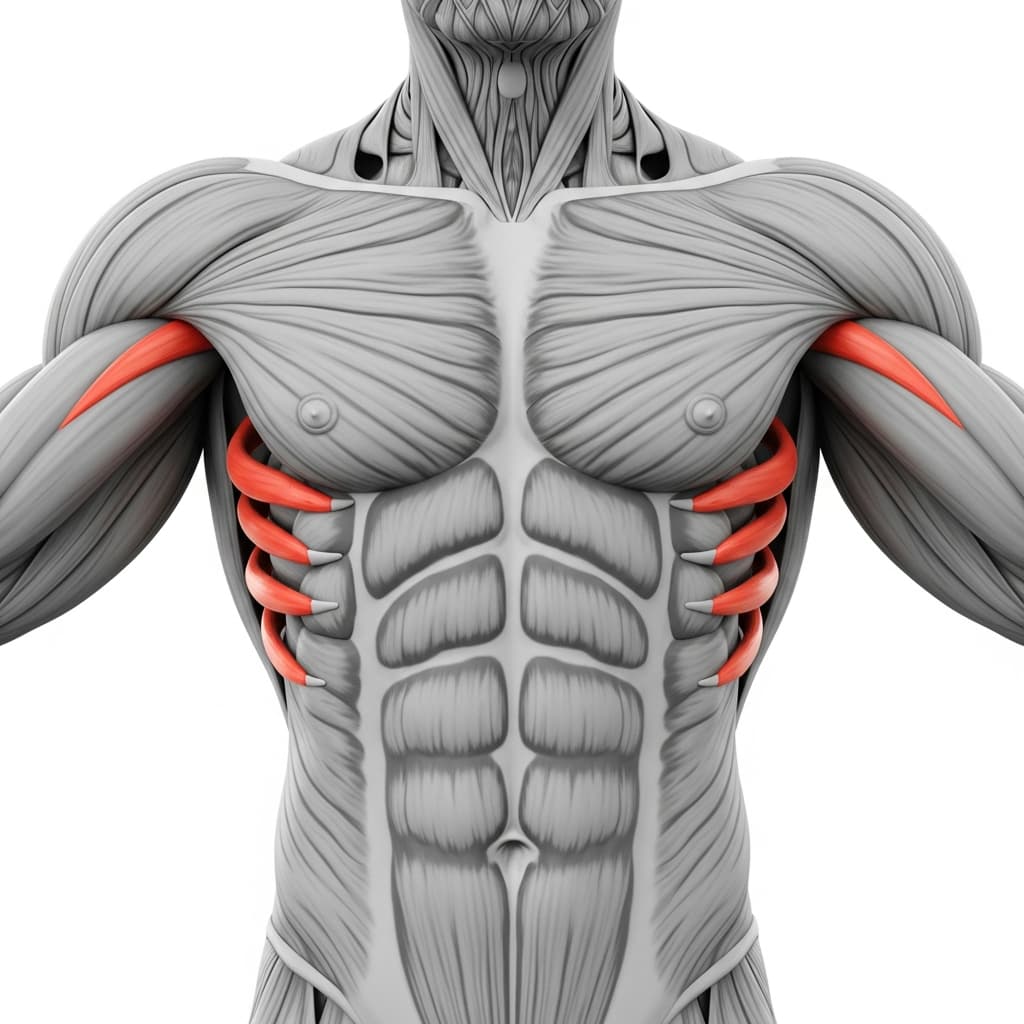
Secondary Muscles:
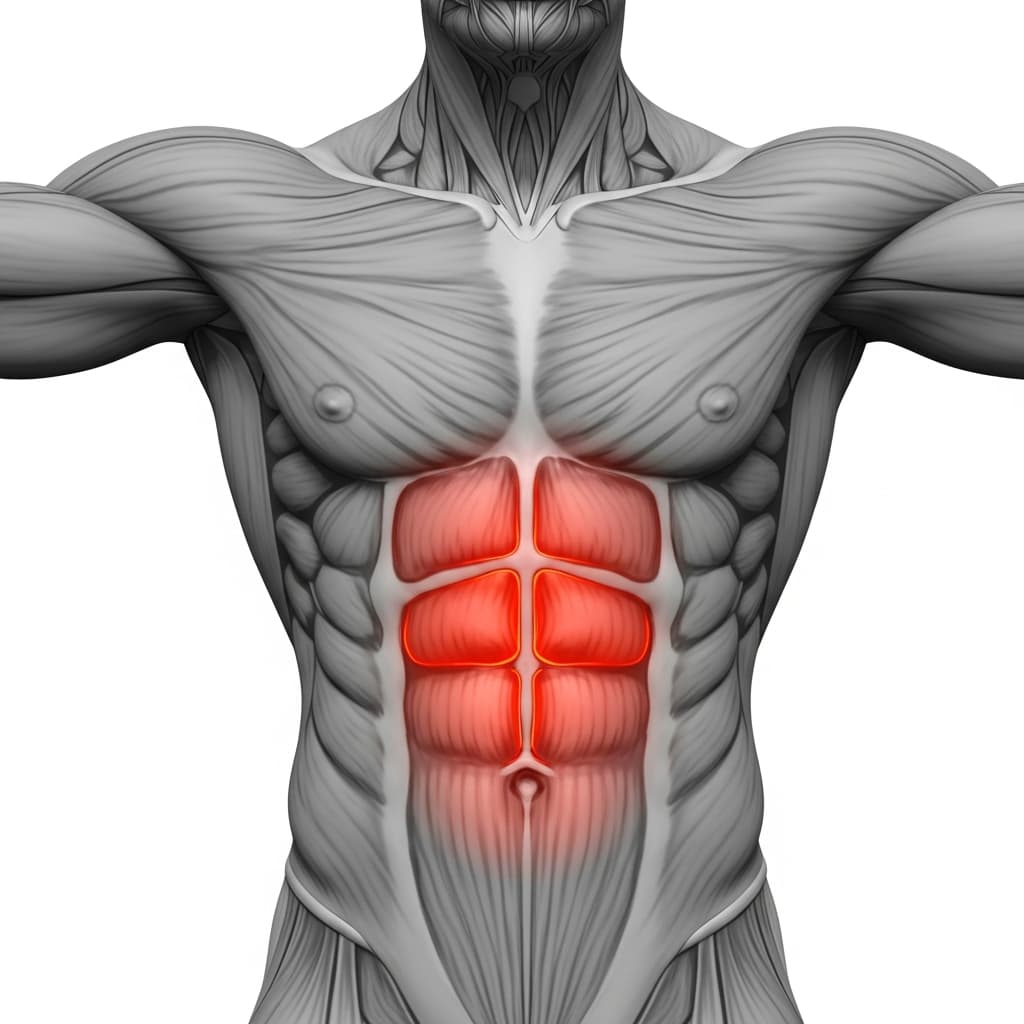
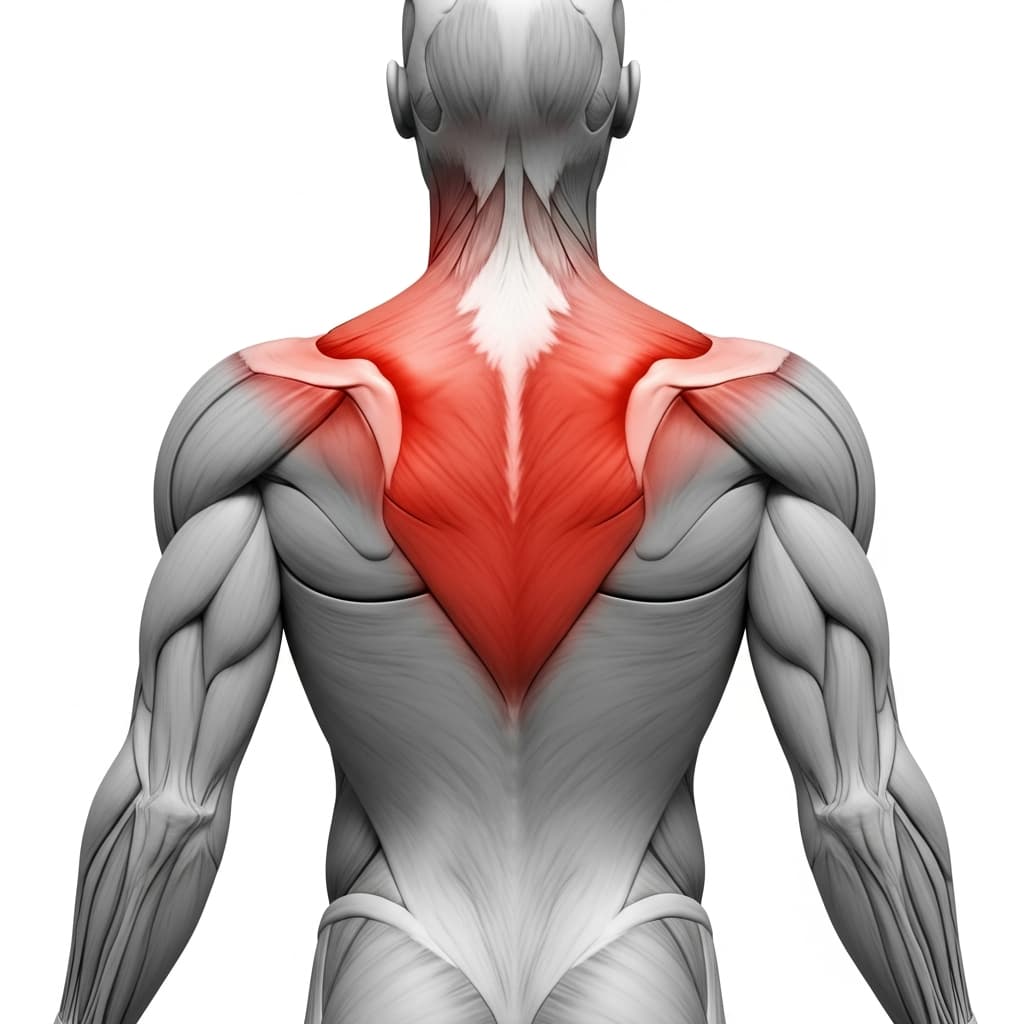
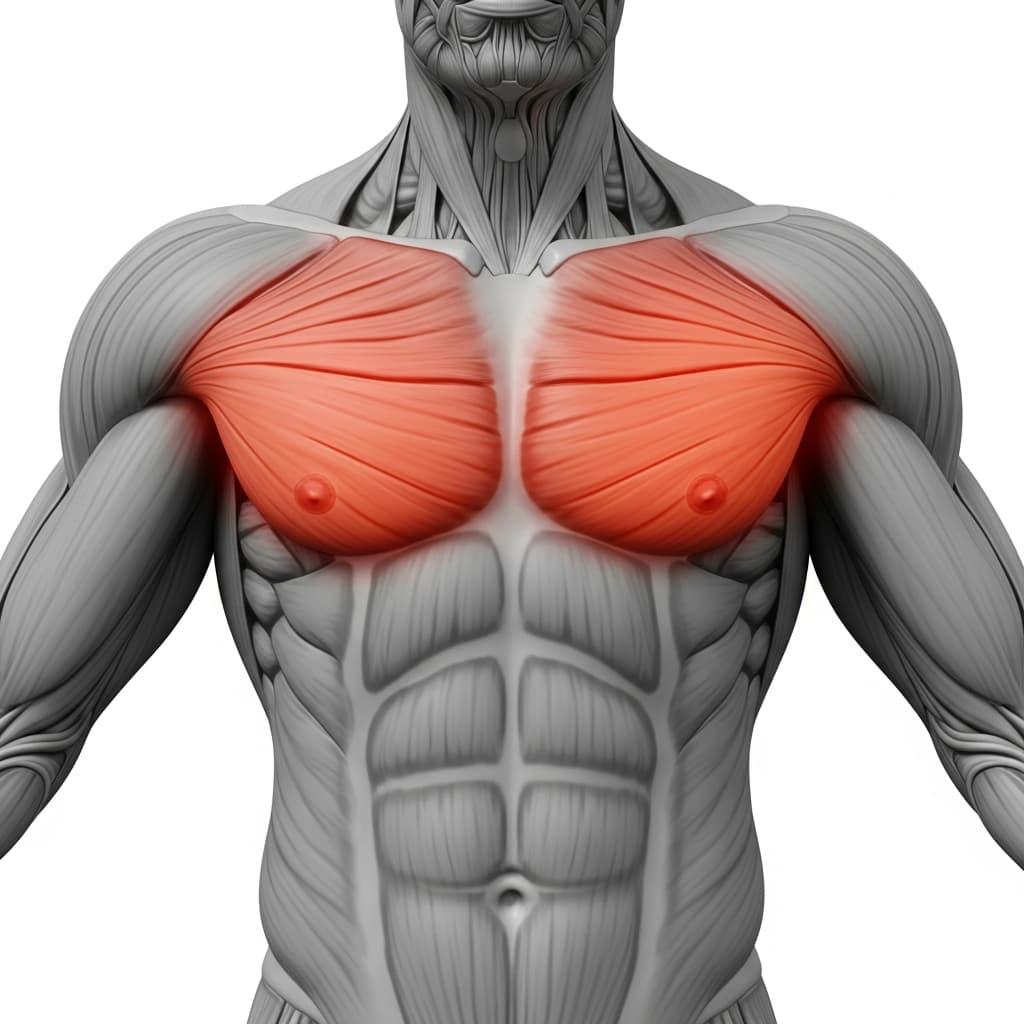
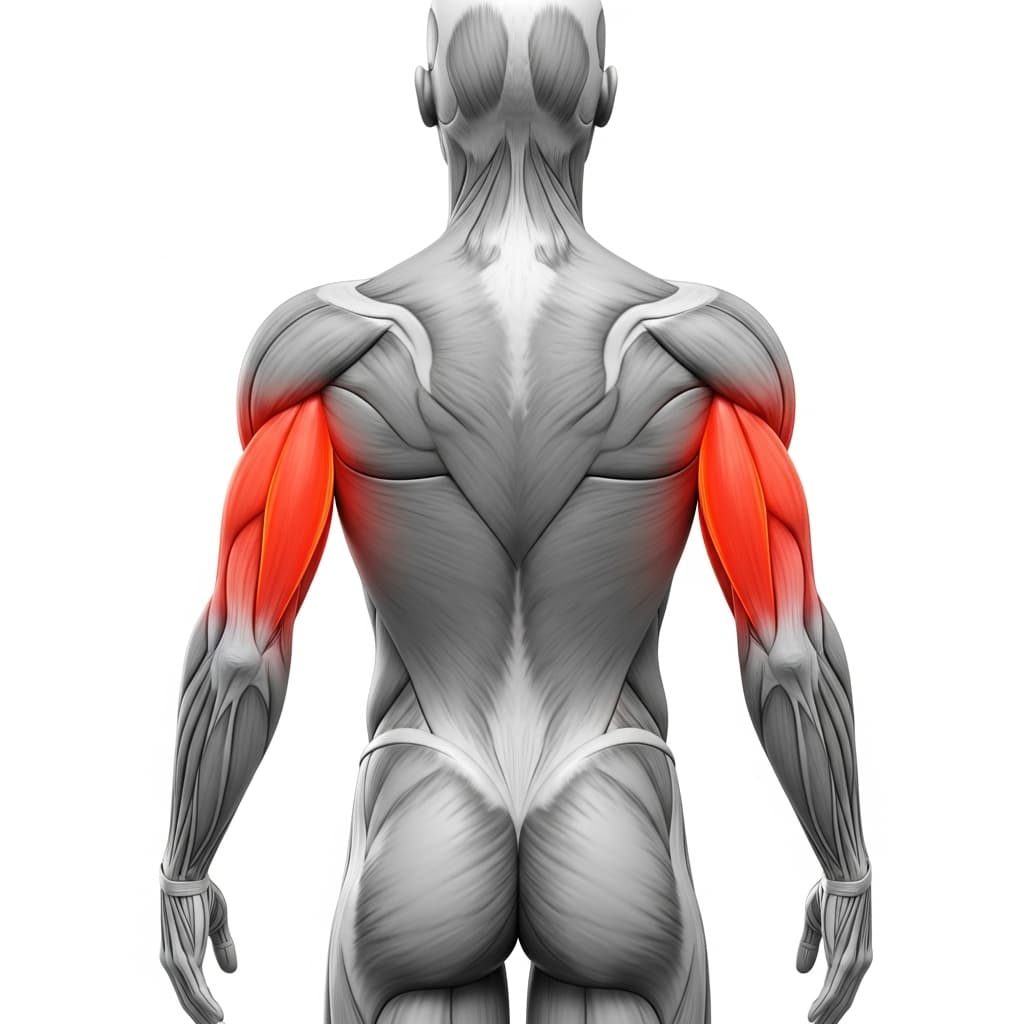
Primary Muscles
Pectoralis Major (Chest) - The chest is a prime mover out of the bottom position, and bringing the shoulders slightly forward so the chest closes puts even more of the push on it.
Triceps Brachii (Triceps) - The triceps extend the elbows and drive the top half of the push, which is where most of the speed on an explosive rep is produced.
Secondary Muscles
Anterior Deltoid (Front Deltoid) - The front deltoids assist the chest through the bottom of the dip, where the shoulder is most extended and the load on the press is highest.
Serratus Anterior (Serratus Anterior) - The serratus anterior keeps the shoulder blades pinned flat against the ribcage so the shoulder stays stable when you accelerate.
Rectus Abdominis (Abs) - The abs brace to keep the legs together and the whole body rigid, so the body stays one solid piece and the speed comes from the push.
Trapezius (Trapezius) - The lower traps hold the shoulders depressed away from the ears, which keeps the shoulder in a stable, controlled position at the bottom of the rep and when you meet the bars again.
Benefits of Explosive Dips
- Builds real pressing power by training the chest and triceps to produce force fast, recruiting the fast twitch fibers that slow, strict reps leave alone
- Develops the push half of the muscle up, so the transition over the bar becomes a technique problem rather than a strength problem
- Builds confidence pushing at full speed out of the bottom position, which carries over to clapping dips and other dynamic calisthenics skills
- Keeps a slow, controlled eccentric on every rep, so the chest and triceps still get time under tension alongside the speed work
- Progresses your dips using speed instead of added load, which keeps them challenging without any extra equipment
Who Is This Exercise For?
You should own the standard dip before adding speed, ideally around 8 to 12 clean reps to 90 degrees with your shoulders depressed and your body still. Every rep starts from a solid support hold with straight legs squeezed together and a braced core, so you also need enough shoulder and elbow mobility to sit in the bottom position comfortably. If your depth still shortens or your shoulders shrug up toward your ears as you fatigue, keep building strict dips first.
Common Mistakes to Avoid
Bouncing up and down at one speed: Explosive dips are not fast reps in both directions. Lower slowly and under control, then explode. If the tempo looks the same up and down, you are doing normal dips.
Hesitating at the bottom: A pause at the bottom kills the rep before it starts. Reach 90 degrees and commit instantly at full speed, so the switch from slow into explosive is immediate rather than a slow grind out of the hole.
Cutting the depth short: As you tire, the bottom of the rep is the first thing to disappear. Hold the same 90 degrees or slightly lower on every rep, and end the set when depth or speed drops rather than adding sloppy reps.
Starting the descent before the body is tight: Every rep is set the same way before it starts: legs together and straight, core tensioned, shoulders depressed, everything tight, and only then down. Drop into the descent before that is set and the shoulders creep up toward the ears while speed leaks out of the push.
Variations & Progressions
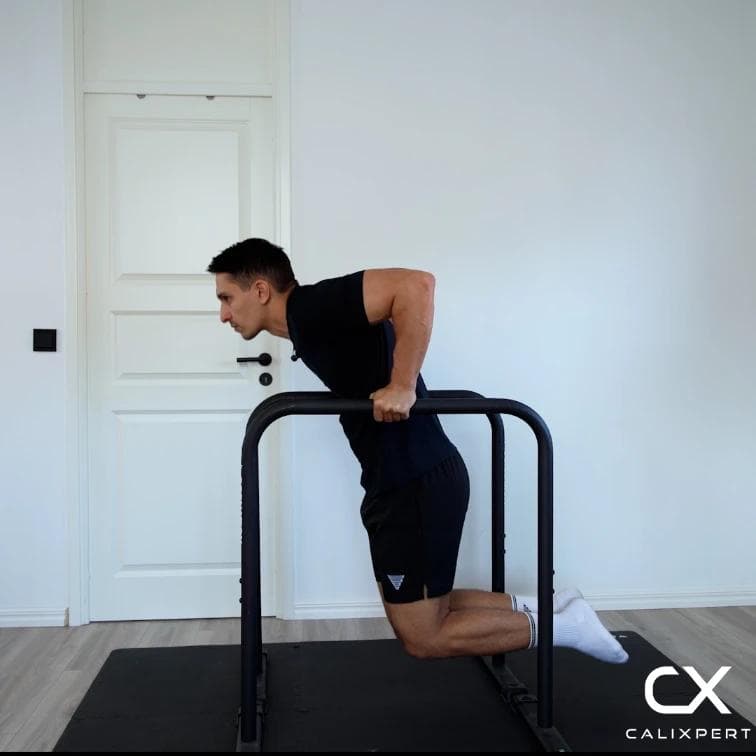
Clapping Dips
Once you can push your hands clear of the bars on every rep, adding a clap at the top demands more height, better timing, and a more confident catch.