

Start with the easiest version of each exercise that you can do with clean form, and train 3 times a week. That is enough. You will feel a difference within a few weeks and see it after a few months, and how fast depends more on how consistent you are than on anything else.
That is what I tell everyone who starts with us. I have also started over myself: after I had our daughter, I began again with light band work and short workouts. So I know what it is like to start again.
This is for you if you cannot do a push-up or a pull-up yet, or if you are coming back after a long break. Below I share where Daniel and I start our members, how to find your level, a plan you can repeat, and what to expect from your first months. It all comes from what we see in our community and on our coaching calls.
Where to start if you cannot do a push-up or a pull-up yet
Every exercise has an easier version, and that is where you start. Not being able to do a push-up today only tells you which version to begin with.
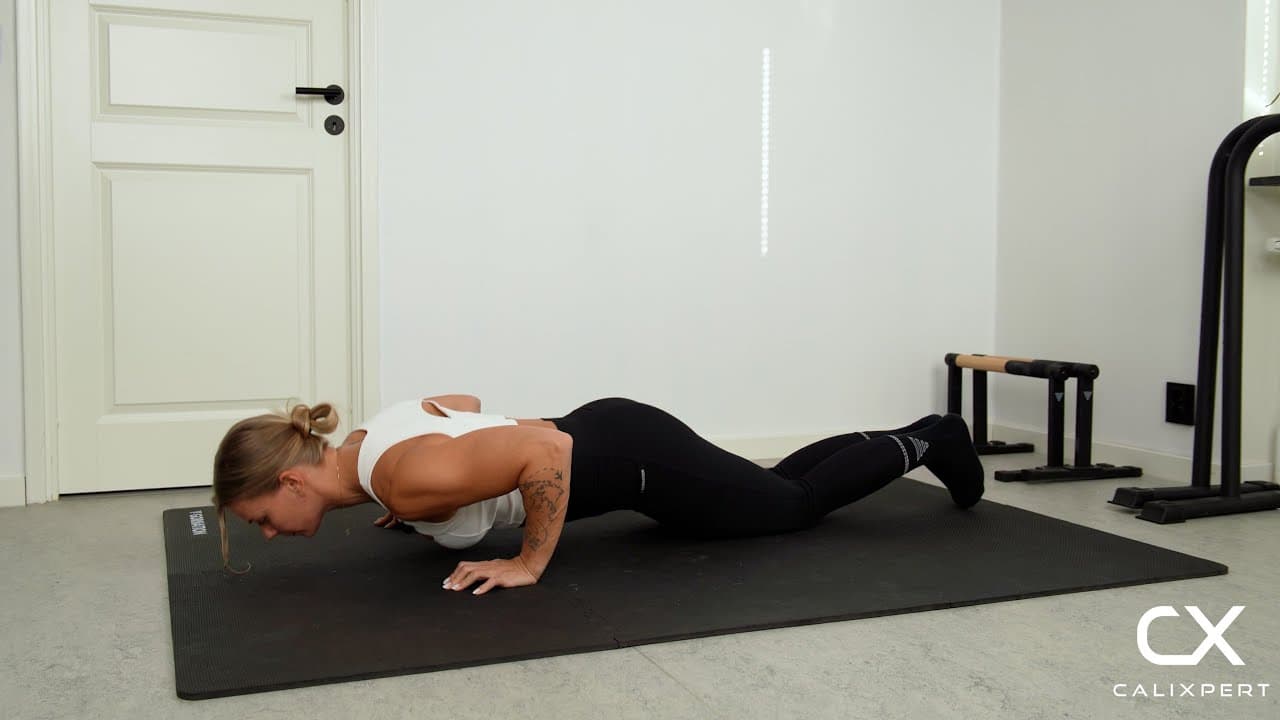
For pushing, I start people with their hands on a table or the wall, then knee push-ups, then the full push-up. When you can do 3 sets of 12 clean knee push-ups with 3 seconds on the way down, you are ready for the floor.
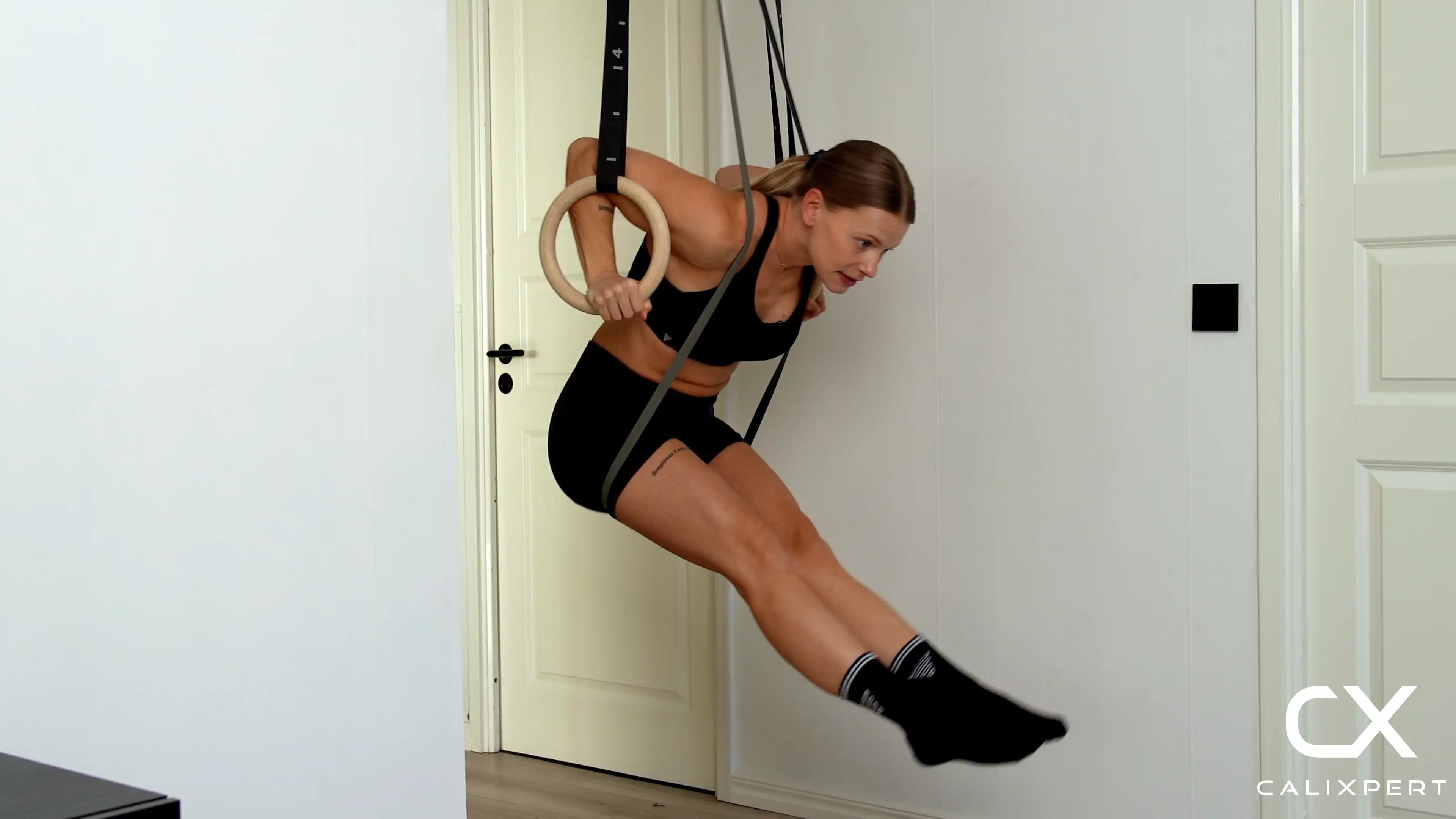
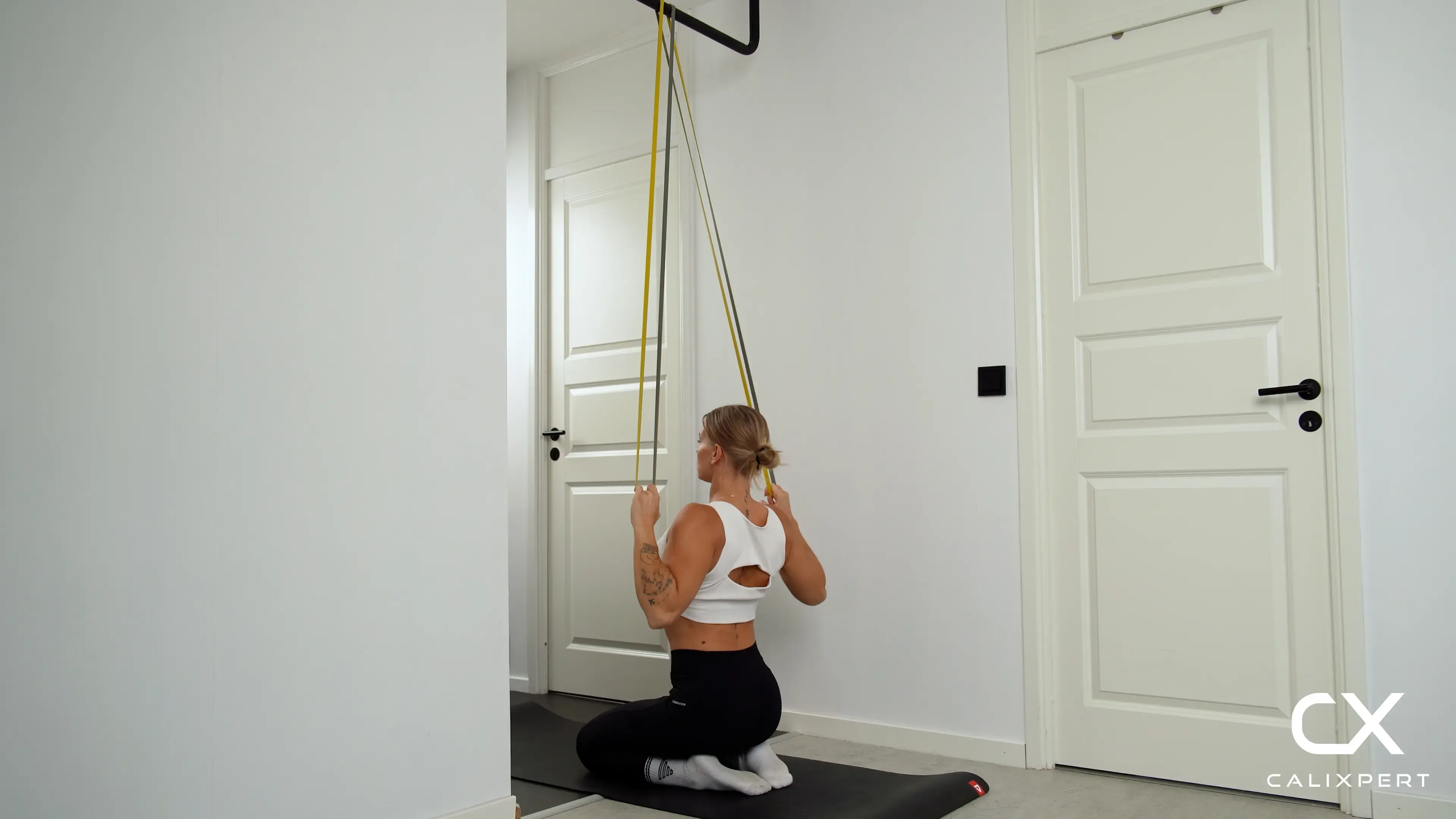
For pulling, start by hanging. A dead hang builds the grip that usually gives out first. Then come scapula pull-ups, rows and slow negative pull-ups, where you step up to the top and lower yourself as slowly as you can. A resistance band takes part of your weight so you can practise the real movement.
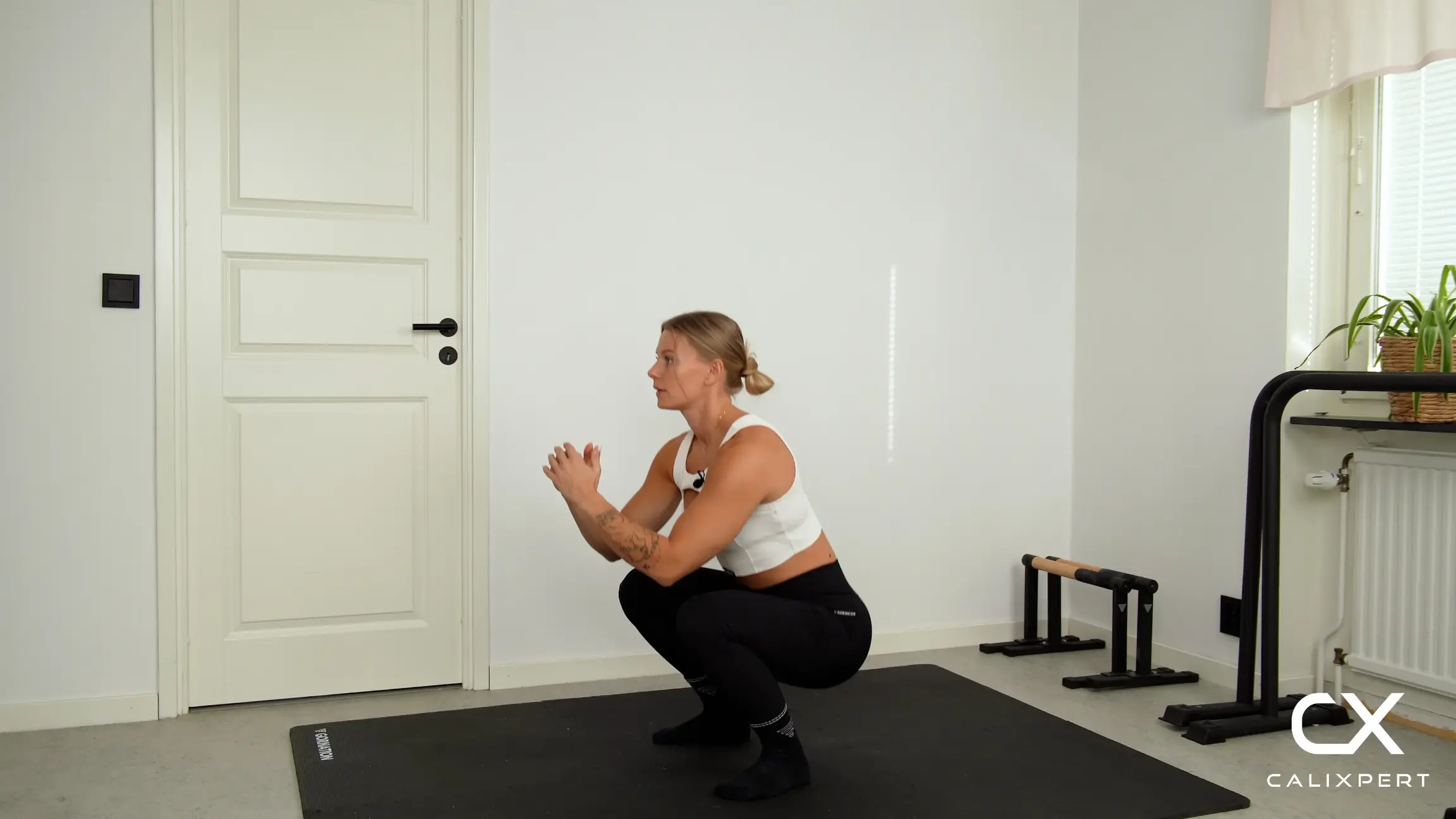
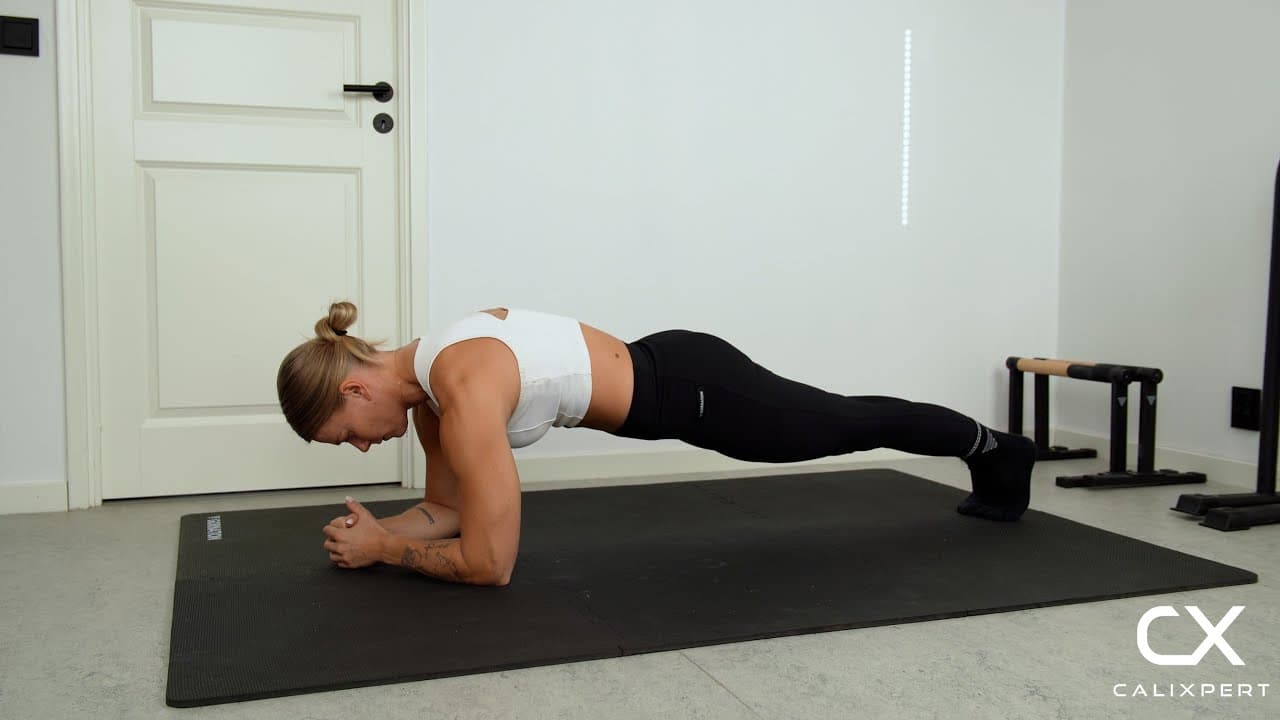
For legs and core, squats, glute bridges, the plank and the dead bug are enough at the start. Do them slowly. Most people rush the easy exercises and miss what they are there to teach.
Find your level with a max test
Before you start, test what you can do today. A max test is simple: as many clean, full-range reps as you can in one set. Half reps do not count.
Test the hardest version you can do of each:
- Push-ups, or knee push-ups if the floor is not possible yet
- Pull-ups, or how many seconds you can hang if you cannot do one yet
- Bodyweight squats
- The plank, in seconds
Write the numbers down. They tell you where to start, and they are how you will see progress later. Test again every few weeks, after an easier week of training, not when you are tired. A number tested on tired muscles is lower than what you can really do.
A simple plan you can repeat
Train 3 times a week, on days with rest between, for example Monday, Wednesday and Friday. Sessions of about 20 to 40 minutes are enough. You do not need 5 or 6 workouts a week to make progress, and for most beginners more is not better.
Pick one exercise for each part of the body at your level from the max test: one push, one pull, one for the legs and one for the core. Do the same exercises for several weeks, so you can see them get better.
Once you can do a few clean reps, there is a simple way to do more of them without failing every set: an EMOM, every minute on the minute. When a member could do one set of 8 pull-ups, I told them to do 2 every minute for 10 minutes. That is 20 reps in total, far more than in one tired set, and every rep stays clean. When it feels too easy, go up to 3 a minute.
I used the same method when I came back after giving birth. 3 times a week, 8 to 12 minutes, 3 to 5 pull-ups at the start of each minute and rest for the rest of it. After about two months I tested my max. I thought maybe 10 or 12, and I did 16 pull-ups in a row. Short workouts work, as long as you show up.
Write down what you did each session. A notebook or your phone is fine. Over weeks the log shows progress you would not notice from day to day. Filming yourself helps too: a video from week 1 next to one from week 12 says more than any mirror.
How long until you see results
Think in phases, not miracles. This is what Daniel and I usually see in people who start from zero, or come back after a long break, and train 3 times a week. It is not a promise with a date. Every body is different.
First 2 weeks: you will not look different, but you feel better. More energy, less stiff, maybe better sleep.
Week 3 to 4: you feel stronger. The exercises are not easier yet, but they feel less strange. Movements start to make sense.
Week 6 to 8: you move better. Maybe you hold the plank longer or do your first real push-up. Clothes may fit differently.
Month 3 and beyond: you have built a habit, and now your body shows it. Strength goes up, skills start to show up and you feel in control.
Muscles get stronger before they get bigger. That is why you feel stronger before you look stronger, and in the beginning feeling it is what matters most.
What it depends on: where you start, how often you really train, how well you sleep and recover, and whether you stay with one plan. Age changes the pace for some people, not whether it is possible. We coach people from their 20s to their 60s.
What to do when progress feels slow
Week 3 is where many people quit, because they think it is not working. It is working. You just cannot see it yet. Look at your log instead of the mirror.
Progress is not a straight line either. A great week can be followed by a slow one, and some weeks you only maintain because of sleep, stress or work. That still counts. Do not judge a session by how you feel before it. Daniel still has days where he feels terrible on the way in and then has one of his best workouts.
When a member tells us they are stuck, Daniel asks them what their first workout looked like. One member answered that six months earlier they could not do a knee push-up, and now they do more than 20 push-ups. Zoom out and look at months, not days.
Stay with one plan for at least 6 to 8 weeks. Switching programs every few weeks is one of the most common reasons people stall, because nothing gets the time it needs to work.
Do not move up too early either. Moving to a harder version before your max test says you are ready is the most common cause of stalled progress I see. Repeat the block and test again. That is not failing, that is how strength is built.
And look at the basics: sleep, water and focus in the session. If a workout feels easy every time, it is probably too easy. Some sessions should feel hard.
Where to go from here
Do your max test this week, write down the numbers and pick your four exercises. If you would rather have the order, the weeks and the tests planned for you, our beginner program starts from no push-ups and no pull-ups and trains 3 times a week. If pull-ups are your first goal, our pull-up program is built for exactly that.
Are you over 30 and struggling with pull-ups, handstands or muscle-ups? We have helped thousands of people master these skills, and we will help thousands more. If you want a systematic and supportive approach to your calisthenics goals, start a 7-day free trial of Calixpert.