

You need less than you think. To start calisthenics at home you need resistance bands, chalk and something to hang from. Everything else can wait until your training asks for it.
You can learn push-ups, the L-sit and even a handstand with no equipment at all, and a chair gets you surprisingly far. But to keep progressing, sooner or later you need a few things. Below is what I would get first, what can wait, what fits a rented flat and how to buy gear you will not have to replace. It is the same advice I give our members in my equipment lesson, from what Malin and I use ourselves.
All the calisthenics equipment we use is on our calisthenics equipment page. Some links on this page are affiliate links: if you buy through them, we may earn a commission, and the code CALIXPERT gives you 10% off.
What to get first
Resistance bands
If you are starting out, get these. A band takes part of your weight, so you can practise a pull-up or a dip before you can do one. I prefer it over the knee machine in a gym, because you still do the real movement with your whole body: core tight, legs straight.
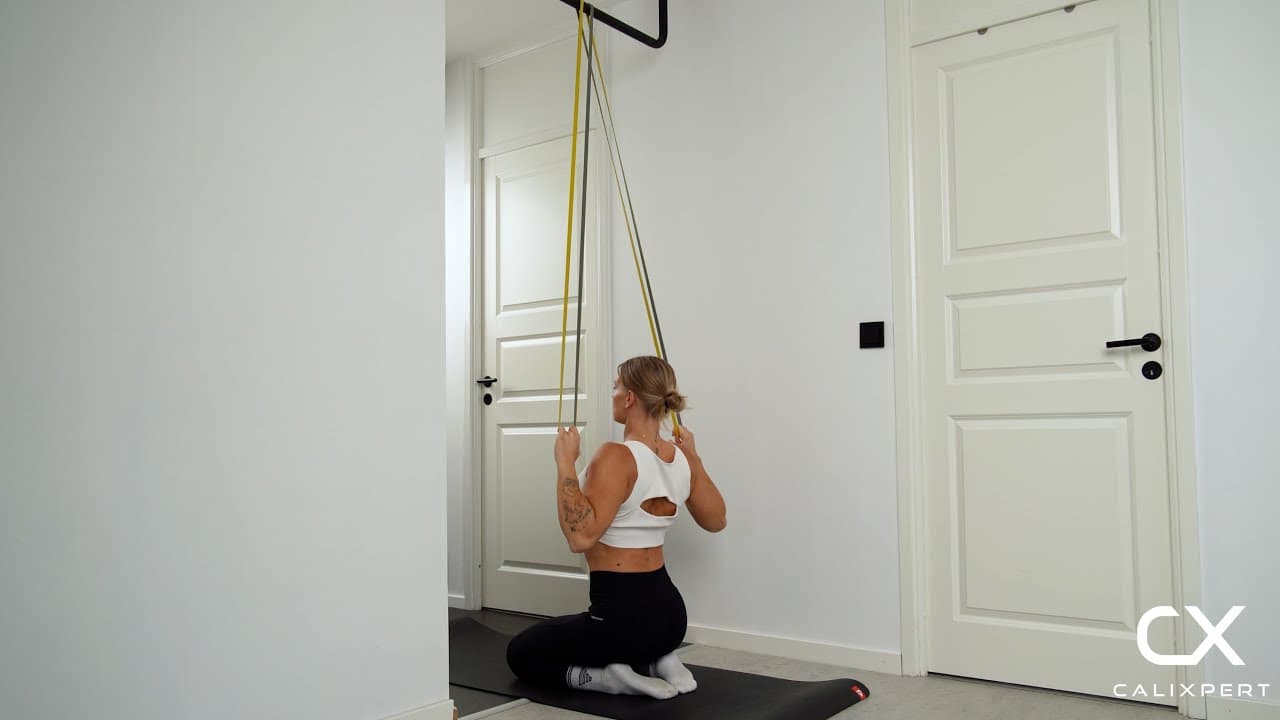
Bands also save you from testing your max every session. If you can do 1 pull-up, a medium or light band that takes away a few kilos lets you do 3 to 5 reps instead. I use bands in every warm-up, for stretching and for advanced skills like the planche and front lever, so this is gear you keep for years.
Buy the whole set, not one band. You will move from thick to thin as you get stronger. Do not stay on the thickest band for long: I have told many members to drop it once they are stronger, because it gives so much help that it does little for you besides a boost in confidence.
Our resistance band set page shows what is in it, and here is the set I use.
Chalk
Chalk sounds like a detail. It is not, once you start hanging. Sweaty hands make it hard to hold a bar for 15 or 20 seconds, and then you think about your grip instead of the exercise. Chalk keeps your hands dry, so you slip less and your forearms tire less.
Liquid chalk is the easiest at home, and many gyms do not allow powder because of the mess. Put a little on your hands, let it dry for about 20 seconds, and it stays on for most of the workout. Here is the liquid chalk I use.
A pull-up bar
If you want pull-ups, you need a bar. There is no other way to learn them. Hanging, scapula pull-ups, negatives, hanging core work and in the end pull-ups all start here, and the hanging also builds your grip.

A bar in a doorway works fine. The door pull-up bar Extend-It locks between the door posts with no screws and no holes. It fits doorways with an inner width of 74 to 90 cm, so measure yours before you order. The foam grip is soft on the hands at first, and with daily use it wears down over a few months. You find it here.
Not every home has room for a bar. Then use one in a park or at the gym. The first thing to do on it is simple: hang. Our dead hang page explains why your grip is usually what gives out first. To learn your first pull-up, our pull-up program asks for exactly this: a resistance band and a high bar.
If you could only buy one thing
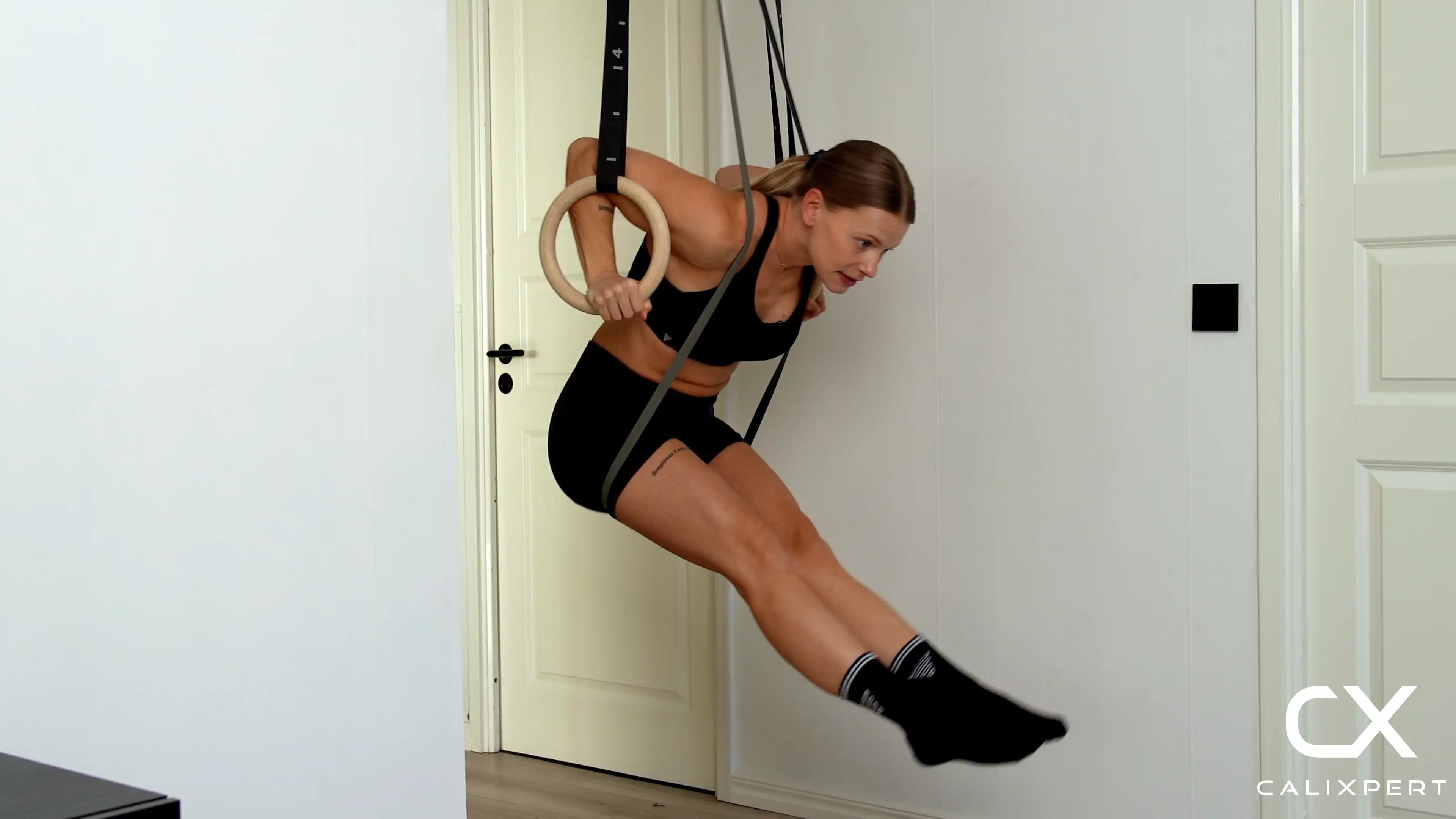
My answer is workout rings. With rings you can train pulling, pushing, core and even legs, and they fit in a bag. You can hang them from a door frame bar or from one solid hook in the ceiling.
The catch is that they move. Even a push-up on rings is much harder than on the floor, because you have to balance the whole time. Many beginners feel they cannot do anything on them at first. Give it one or two months, and your strength and stability feel very different. Set them higher to make an exercise easier, and lower them as you get stronger.
Rings are hard to get wrong, and you should not overpay: a pair for 40 to 60 euros is a fair price. You do not need them for our beginner plans, but if you want one piece of gear that covers the most, this is it. More on our workout rings page, and here are the rings I use.
What helps, but can wait
Dip bars
Dip bars do a lot for their size. Dips, rows under the bars, knee raises, the L-sit, push-ups, and later handstand work. Even the most advanced athletes still train on them, and they are easy to put away in a corner after the workout.
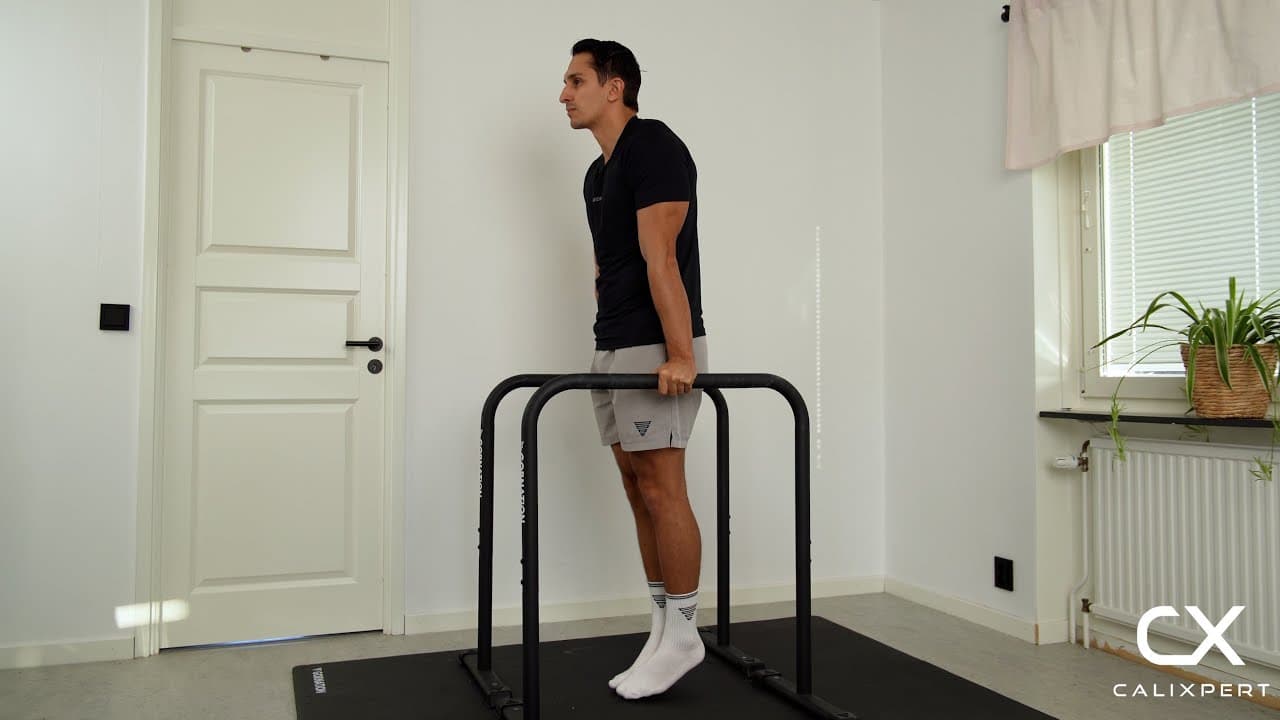
Check that they stand still. Cheap dip bars often shake, and a pair that is too low limits you when you are tall or want to add weight later. See our page on dip bars, or the ones I use.
Parallettes
Parallettes are not the same as dip bars. They are lower and smaller, for push-ups, the L-sit and handstand work. The neutral grip puts less strain on the wrists than the floor.
If you buy one pair as a beginner, get the higher ones. They make exercises easier to scale: a push-up on high parallettes is easier than on the floor, and you can go deeper as you get stronger. A tuck L-sit is also easier when your legs have room to hang. Wood or metal is a matter of taste. I prefer wood because the grip feels more natural. See our parallettes page, and the ones I use.
What can wait for months
A dip belt is for adding weight once your bodyweight is not enough any more, which is later in the journey. When you can do 5 to 10 clean dips, you can start thinking about it. Our weighted calisthenics program asks for 10 clean pull-ups, 10 clean dips and 20 push-ups before you start. See the dip belt.
What fits a rented flat
Bands, chalk and a door bar need no screws and almost no space. That is all you need to start, and you take it all with you when you move. Rings can hang from the door bar too.
Dip bars are free standing, so you can move them around the living room. A full pull-up station is the bigger step: it needs about 122 x 122 cm of floor and stays indoors, but it gives you a high bar and dip bars in one, with no drilling. Read more on the pull-up station.
How to buy gear you will not have to replace
Cheap gear often costs more in the end. Parallettes that come loose after one drop, or dip bars that shake, end up being bought twice. Read reviews, try in a store if you can, and look at what athletes who train every day use.
A higher price does not always mean better, though. A simple sum helps: if you will use it for two years, divide the price by 104 weeks and ask if that is worth it to you.
If you are missing something
Do not let one missing piece stop you. Start with what you have. Members often ask us if they can use a chair, a kitchen counter or a yoga belt instead, and most of the time the answer is yes. Our members can post a photo in the community, and we give them a version for what they have.
Where to go from here
Get the bands, the chalk and a place to hang, and start with the first steps of a plan. Our beginner program is built for little equipment and training at home.
Are you over 30 and struggling with pull-ups, handstands or muscle-ups? We have helped thousands of people master these skills, and we will help thousands more. If you want a systematic and supportive approach to your calisthenics goals, start a 7-day free trial of Calixpert.