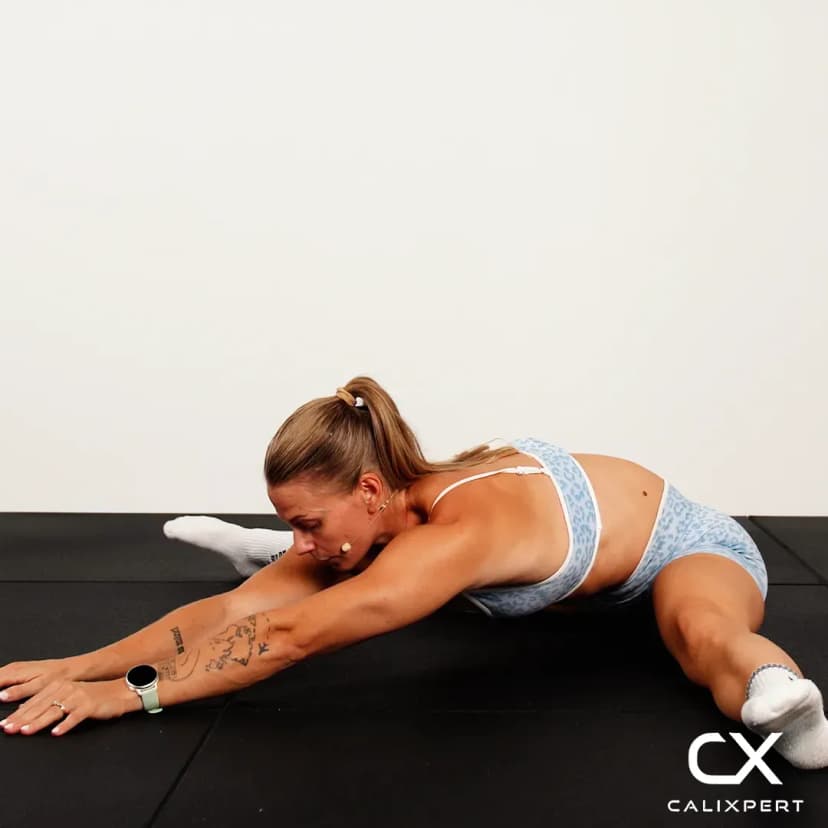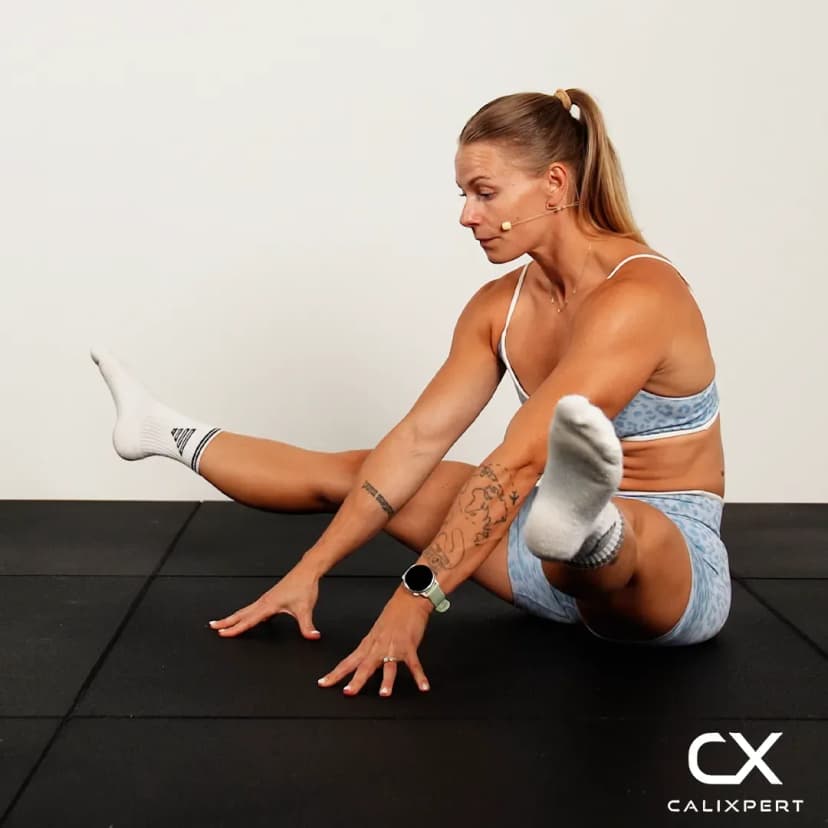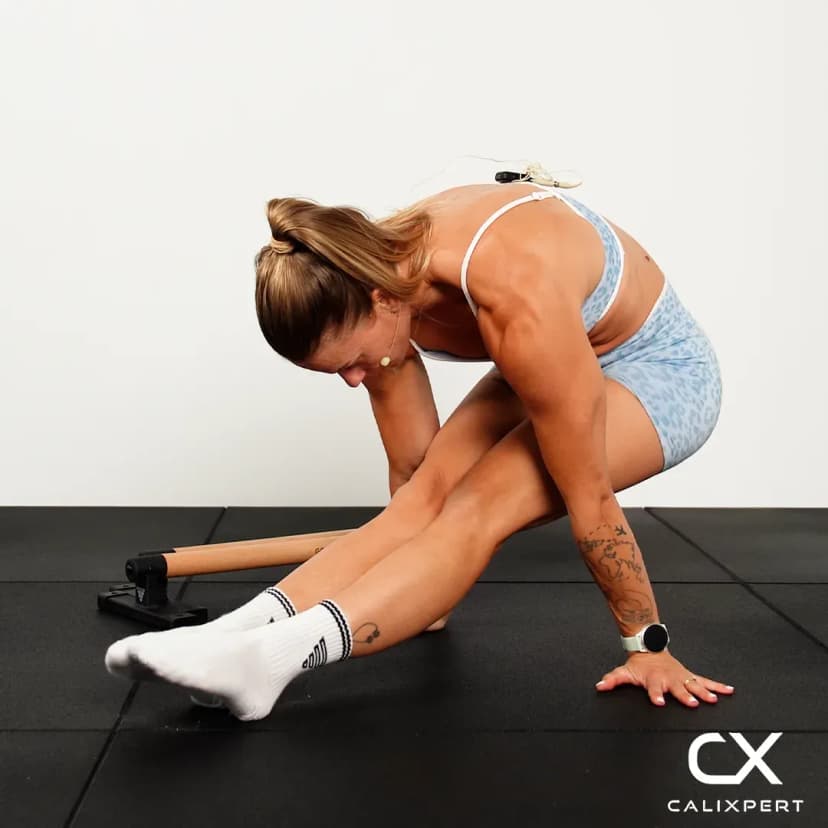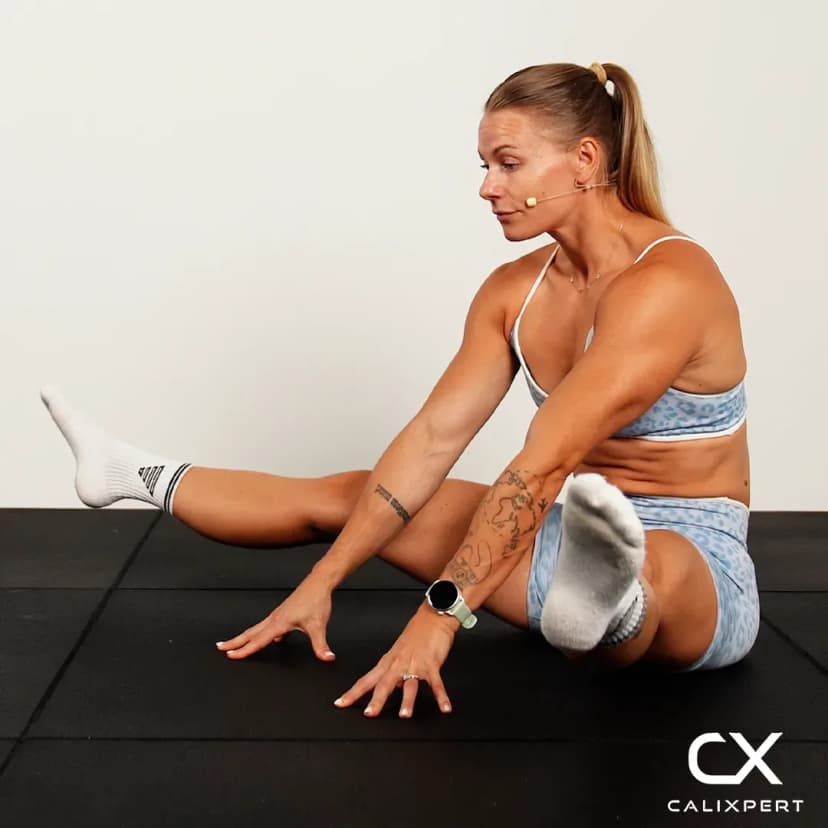
Frog Stretch
The frog stretch is a kneeling mobility drill for the adductors, the muscles on the inside of your thighs. From all fours, you slide your knees as far apart as you can, lower onto your forearms if that feels comfortable and, if you can, tilt the pelvis slightly forward to go deeper. Because the knees stay bent, it trains straddle width without the hamstrings limiting the position, so it pairs with pancake stretches like the Seated Pancake Stretch rather than replacing them.

The frog stretch is a kneeling mobility drill for the adductors, the muscles on the inside of your thighs. From all fours, you slide your knees as far apart as you can, lower onto your forearms if that feels comfortable and, if you can, tilt the pelvis slightly forward to go deeper. Because the knees stay bent, it trains straddle width without the hamstrings limiting the position, so it pairs with pancake stretches like the Seated Pancake Stretch rather than replacing them.
How to Do Frog Stretch
1. Start On All Fours
Get down on your hands and knees on a mat with your knees apart. Put your toes down and keep them pointed, with the tops of your feet resting on the floor behind you.
Knees apart, toes pointed
2. Slide Your Knees Apart
Make the distance between your knees as big as possible. As the knees move further apart, you slide lower toward the floor. Keep your hips roughly in line with your knees, since that setup puts the stretch where you want it.
Bigger and bigger
3. Lower Onto Your Forearms
If you feel comfortable, place your forearms on the floor. If the stretch is already strong with your hands down, stay on your hands until the width feels easier.
Forearms down if it feels okay
4. Tilt The Pelvis Slightly Forward
If you can, tilt your pelvis slightly to the front, a slight anterior pelvic tilt. This takes the stretch in your adductors even deeper, and the adductors are where you should feel it the most.
Slight tilt, feel the inner thighs
5. Set Your Back And Head
Keep a straight back and an upright torso, with your head in a neutral position in line with your back. Do not let the lower back round to get lower.
Straight back, neutral head
6. Breathe Into It
Breathe, and with every breath try to go deeper and get your knees further and further apart from each other. Move slowly. This is not a position to force your way into.
Every breath, knees further apart
Treat the frog as a slow stretch you breathe into, starting on your hands and moving to the forearms only once that feels comfortable. If you feel it in your knees or a pinch in the hip, bring the knees in a little and tilt the pelvis slightly forward instead of pushing wider. Do it in the same session as a pancake stretch, since the frog covers straddle width but not hamstring range.
Muscles Worked During Frog Stretch
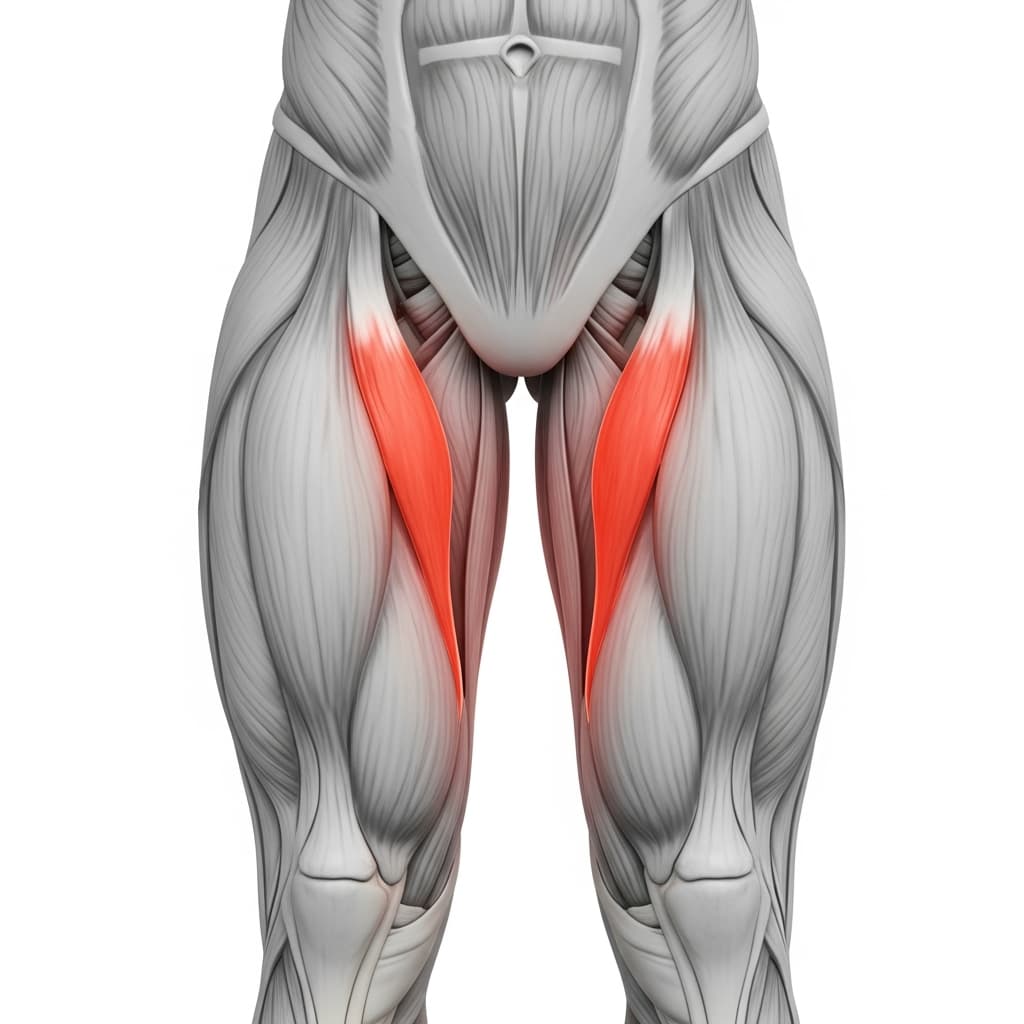
Primary Muscles:
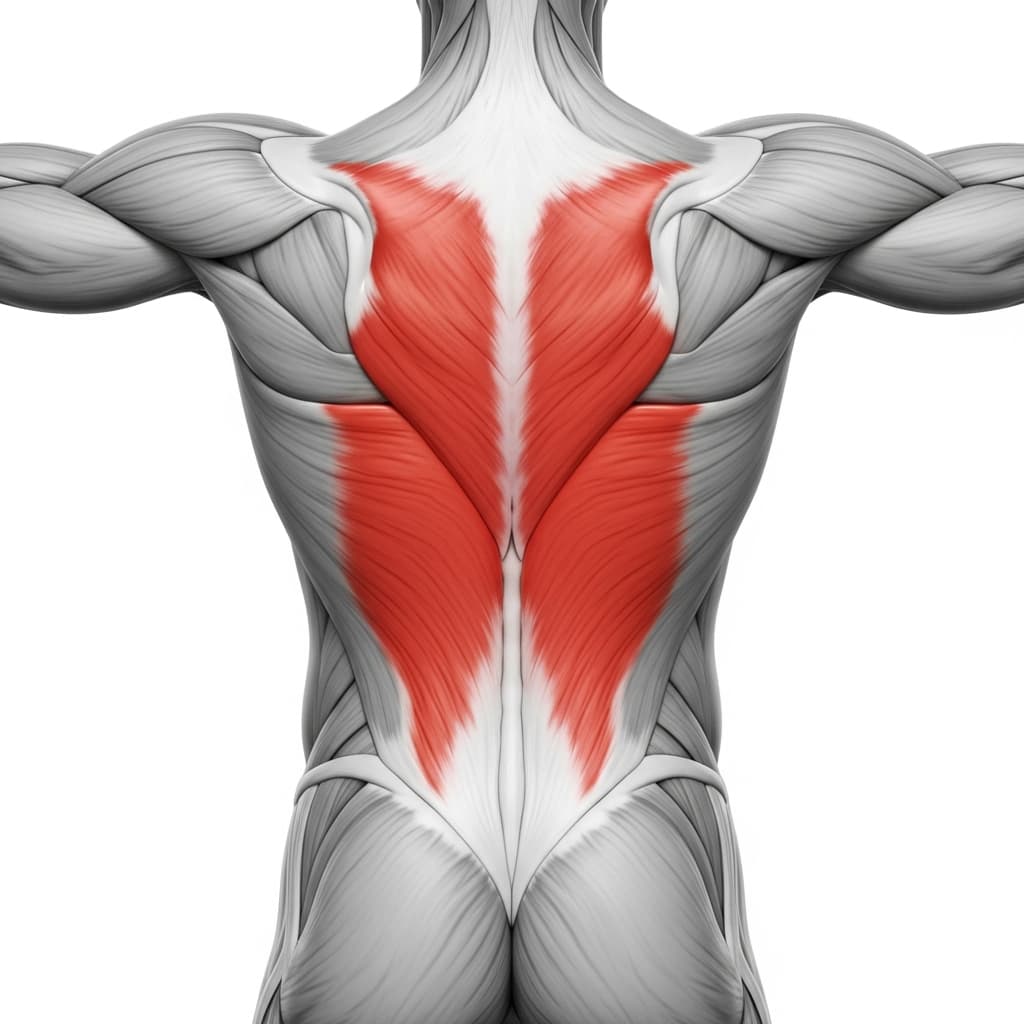
Secondary Muscles:
Primary Muscles
Hip Adductors (Adductors) - The adductors on the inside of the thigh are the main muscles stretched as the knees slide apart, and a slight forward pelvic tilt takes the stretch deeper.
Secondary Muscles
Erector Spinae (Spinal Erectors) - The spinal erectors work lightly to hold a straight back and the slight forward pelvic tilt, so the lower back does not round while the knees move further apart.
Benefits of Frog Stretch
- Stretches the adductors on the inside of the thigh, which cover the width side of your straddle.
- Keeps the knees bent, so you can train straddle width on its own without the hamstrings limiting the position.
- Pairs with pancake stretches, which cover the hip flexion and hamstring range the frog leaves out.
- Gives you practice tilting the pelvis forward with the hips wide open, the same pelvis action the pancake asks for.
- More straddle width means less lean at toe off in the press handstand.
- Scales easily: start on your hands with the knees closer, then move to the forearms and a wider position as you open up.
Who Is This Exercise For?
There is no strength requirement, but you need to be able to kneel on all fours without knee pain and get down to and up from the floor comfortably. Use a mat or other padding, because your knees carry part of your weight for the whole hold. You do not need much range to begin: open the knees only as wide as you can hold without pain and widen over the coming weeks.
Common Mistakes to Avoid
Forcing the knees wide in one go: Open to a width where you feel a strong stretch in your inner thighs, then let each breath take you further. Bouncing or rocking in and out of the end range does not help you settle into it, so hold the position instead.
Rounding the lower back: When the back rounds and the pelvis tucks under, you get lower without the stretch going deeper into the adductors. Keep a straight back and, if you can, tilt the pelvis slightly forward instead, since that small tilt is what takes the stretch deeper.
Letting the hips drift out of line with the knees: Keep your hips roughly in line with your knees, which puts the stretch where you want it, in your inner thighs. Check your hips each time you widen the knees, because they tend to drift as you slide lower.
Feeling it in the knees instead of the inner thighs: The stretch belongs in your adductors, not in the knee joints. Kneel on a mat or add a folded blanket under your knees, and bring the knees in a little until the pressure in the joint goes away.
Holding your breath: Keep breathing slowly through the whole hold. Each breath is your chance to go a little deeper, and that only happens when you relax into the stretch instead of bracing against it.
Variations & Progressions
Frog Stretch On Hands
Stay on your hands instead of lowering to your forearms. Your hips stay higher and you control how much weight goes into the stretch, which is the place to start if the full position feels too strong.