

Pull Up One Rep Max Calculator
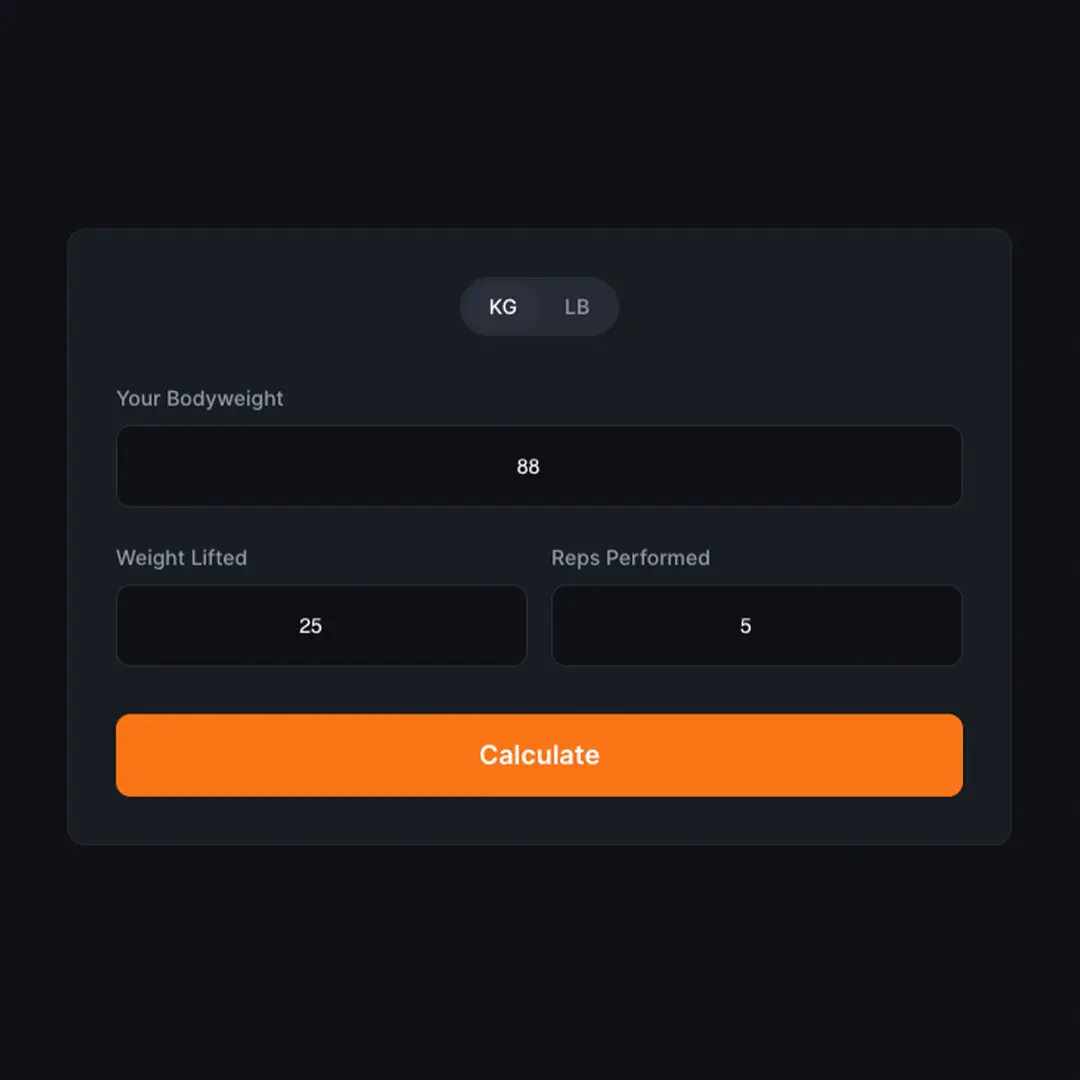
Discover your true strength with our Pull Up One Rep Max Calculator - a powerful tool designed to estimate the maximum weight you can lift for a single pull-up based on your current reps and resistance.
Other Strength Calculators You Might Need

1RM Dips Calculator
Find out your dips personal record by calculating your 1RM from submaximal sets with weight, using proven strength formulas.

Macro Calculator
Calculate your ideal daily intake of protein, carbohydrates, and fats based on your body composition, activity level, and fitness goals.

Calisthenics Strength Index Calculator
Compare your weighted pull-up, dip, or muscle-up 1RM to the best recorded lifts and get a Strength Index score from 0 to 100.
How to Calculate Your One Rep Max for Pull Ups with Added Weight
Our calculator uses the number of reps and the weight you've added (via belt or vest) to estimate your one rep max for pull-ups. This method gives you a science-backed approximation of your true upper body strength, helping you set clear goals and monitor strength gains over time. Just enter your reps and the load you used, we’ll handle the rest.
Why Track Your Pull Up One Rep Max?
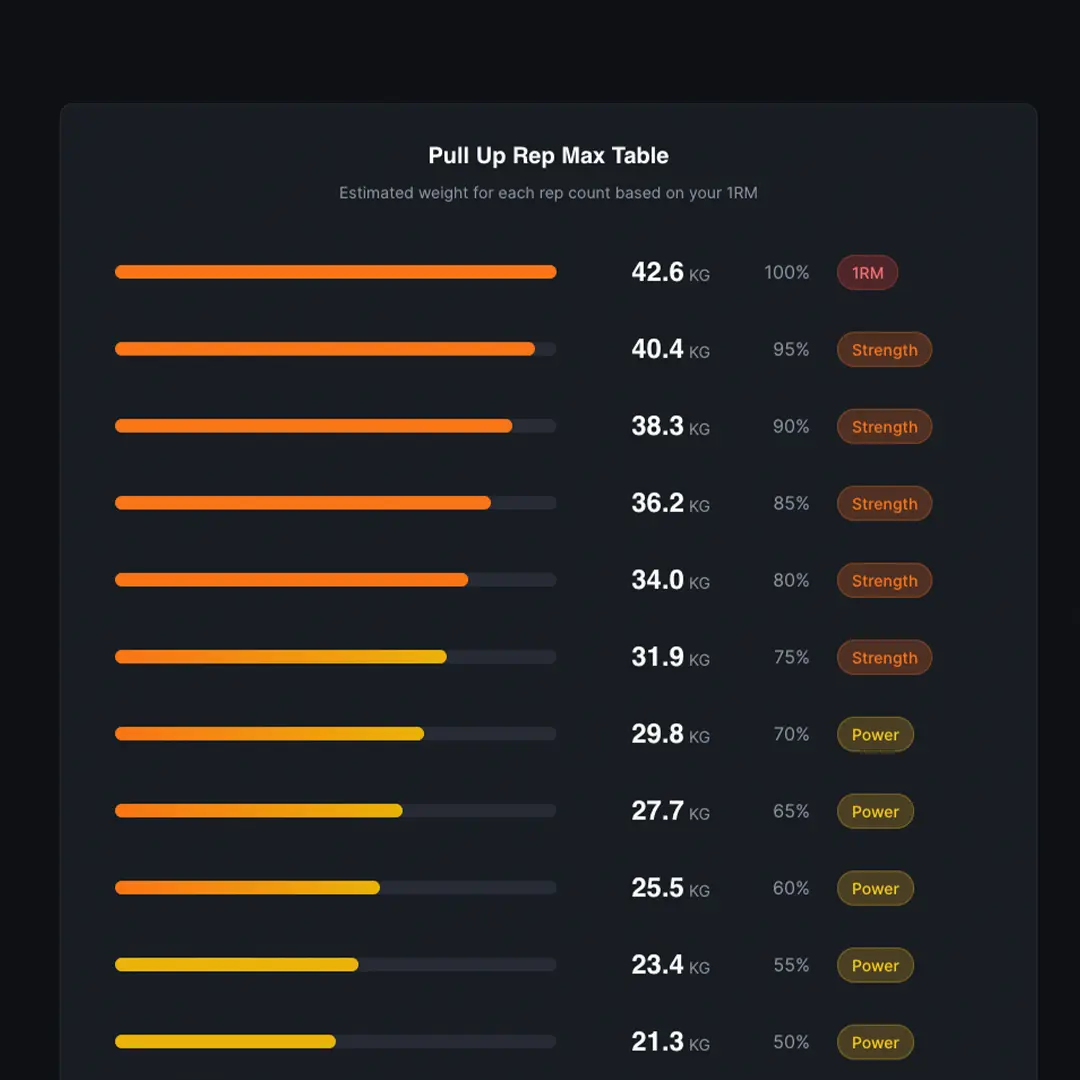
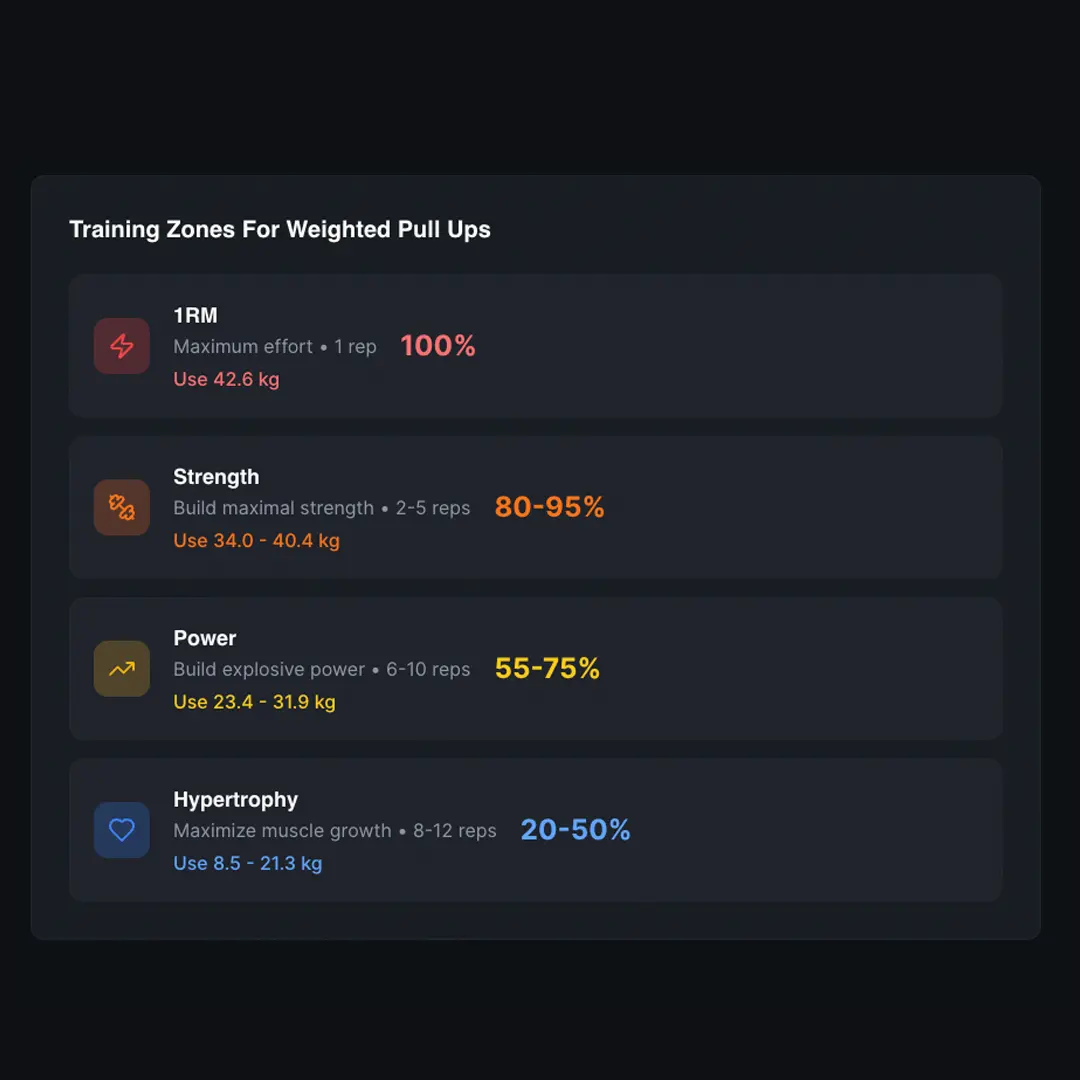
Knowing your one rep max isn't just about bragging rights. It’s a powerful training metric that lets you plan smarter workouts, avoid plateaus, and build real pulling power. By understanding your maximum effort capability, you can fine-tune your pull-up programming with precision, whether you're focused on hypertrophy, endurance, or max strength.
Best Practices for Weighted Pull Up Progressions
To safely improve your pull-up one rep max, progressive overload is key. Start with manageable loads, increase resistance gradually, and use our calculator weekly or monthly to measure gains. Consistent testing and tracking helps prevent injury and keeps your strength curve climbing. Always warm up properly and focus on strict form when testing max reps with added weight.
Frequently Asked Questions
A pull-up one rep max calculator provides an estimate based on proven strength formulas, like the Epley or Brzycki equation. While it's not 100% exact, it offers a reliable benchmark for tracking your progress, especially when testing maxes regularly would be unsafe or impractical.
No, this calculator is specifically designed for weighted pull-ups. If you're only doing bodyweight pull-ups without any added resistance, the calculator won't provide an accurate estimate. You'll need to use a different method or calculator for unweighted pull-up assessments.
For most lifters, testing every 4–8 weeks is ideal. This gives you enough time to build strength while tracking meaningful progress. Avoid testing too frequently, as it can lead to burnout or injury without enough recovery.
Pull-up strength standards can vary, but here’s a general guide based on added weight as a percentage of your bodyweight:
Beginner: 10–30% of your bodyweight
Intermediate: 30–75% of your bodyweight
Advanced: 75–100%+ of your bodyweight
Elite: 100–140%+ – World-class athletes can achieve this. For example, the current record involves a lifter at 87 kg bodyweight pulling 120 kg added weight – that’s nearly 140% of their bodyweight!Use this calculator to see where you stand and set smart goals to move up the ranks.
Learn more about One Rep Max Pull-Up
What Is a One Rep Max (1RM) in Pull Ups?
A one rep max (1RM) is the maximum amount of weight you can successfully pull for a single repetition. In the case of weighted pull-ups, it combines your bodyweight and the added load. Knowing your 1RM is crucial for programming strength training and monitoring progress over time.
How Is Pull Up One Rep Max Calculated?
This calculator uses established strength formulas, such as the Epley equation, to estimate your 1RM. You simply input the number of reps completed and the weight added during those reps. The result gives you an approximation of the maximum weight you could lift for one rep in a pull-up.
Is the Calculator Suitable for All Fitness Levels?
Yes – whether you're just starting to experiment with weighted pull-ups or you're an advanced athlete, this calculator can provide insight. It’s particularly helpful for those progressing past bodyweight pull-ups and looking to track strength gains accurately over time.
Can You Increase Your Pull Up One Rep Max?
Absolutely. Like any strength goal, increasing your pull-up 1RM requires progressive overload, proper recovery, and consistent training. Focus on gradually increasing the weight you can handle for lower reps, maintain strict form, and retest periodically using the calculator.
Weighted Pull Ups vs. Bodyweight Pull Ups
While bodyweight pull-ups are a solid foundation, weighted pull-ups push your strength to the next level. They help build serious pulling power, muscle density, and overall athleticism. This calculator helps quantify that progress by turning reps and weight into real metrics.
Why Use a Pull Up Max Calculator Instead of Testing Directly?
Testing your true 1RM with maximum weight can be risky and draining. A calculator gives you a safe and efficient alternative, allowing you to estimate your max without going to failure. This is especially useful for beginners, or when training fatigue is a concern.