

Calisthenics Strength Index Calculator
Compare your weighted pull-up, dip, or muscle-up 1RM to the best recorded lifts and get a Strength Index score from 0 to 100. Based on real data from officialstreetlifting.com, this tool lets you see how your strength stacks up across elite weight classes.
Other Calculators You Might Need

1RM Pull-Up Calculator
Estimate the maximum weight you can pull for a single rep with added resistance using this weighted pull-up 1RM calculator.

1RM Dips Calculator
Find out your dips personal record by calculating your 1RM from submaximal sets with weight, using proven strength formulas.
One Rep Max Calculator
Estimate your 1RM for any major lift using reps and weight, with built-in strength formulas for accurate programming.
How does this Calisthenics strength index calculator work?
The Strength Index Calculator uses your 1 rep max (1RM) in weighted calisthenics exercises and compares it to the current world record in your weight class and gender. It then assigns a score from 0 to 100 and labels your level: Beginner to Elite.
Exercises included:
- Weighted Pull-Up
- Weighted Dip
- Weighted Muscle-Up
This tool is ideal for streetlifting athletes, calisthenics competitors, and anyone serious about measuring upper body strength against world-class standards.

How to Interpret Your Strength Index Score
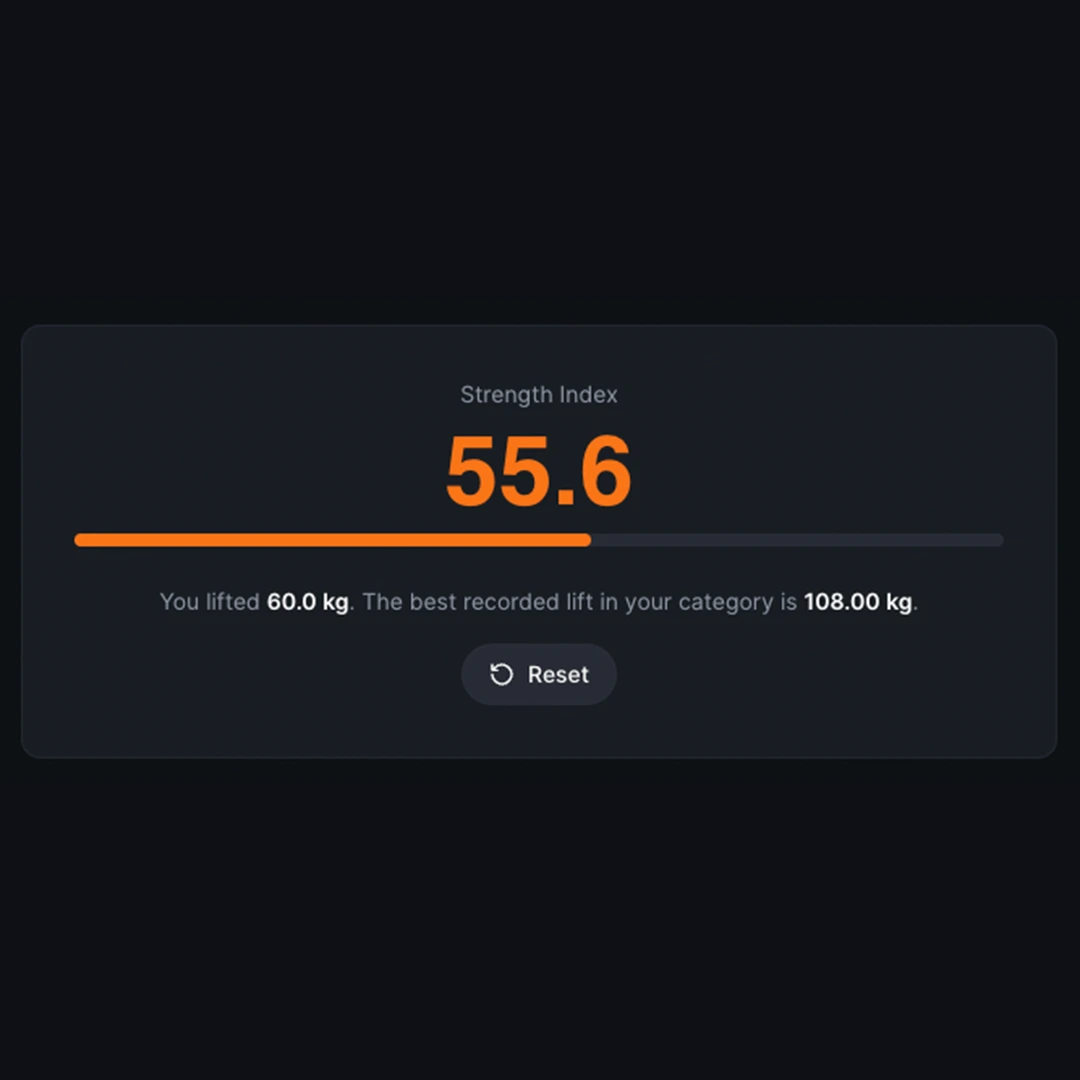
Your Strength Index compares your lift to the best performance ever recorded in your weight class. So even a score of 40 or 50 means you're lifting 40–50% of what the top athlete in the world did — and that’s seriously impressive for most people. A score in that range shows you're well above average in relative strength, especially if you're not training competitively. Scores of 60+ put you in elite company, while 80–100 means you're approaching or matching the strongest athletes on the planet.
Why Use a Strength Index Instead of Just Weight Lifted?
Measuring your raw lift alone doesn’t give the full picture, your body weight and category matter. The Strength Index lets you compare your 1RM performance fairly against others in your weight class, providing a more accurate benchmark for your relative strength. It helps athletes focus on progression, not just numbers.
FAQs About the Strength Index Calculator
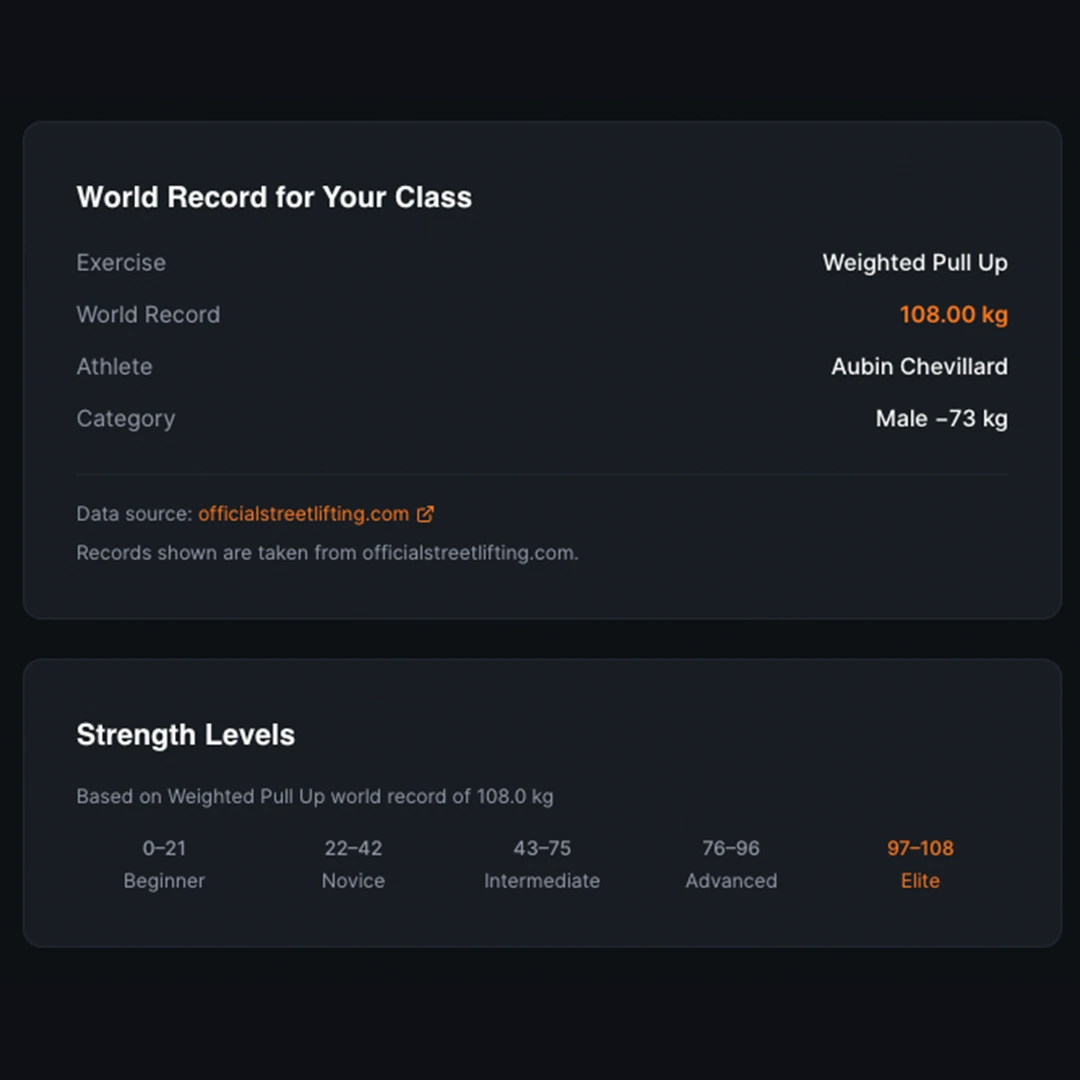
The Strength Index is a score from 0 to 100 that shows how your 1RM in a specific exercise compares to the world record for your gender and weight class. The formula is simple: (your lift ÷ world record) × 100, capped at 100. It's a quick way to benchmark your progress against elite-level performance.
All world record numbers are sourced from officialstreetlifting.com, the most reliable and up-to-date ranking site for competitive weighted calisthenics and streetlifting.
A Strength Index of:
0–19 = Beginner
20–39 = Novice
40–59 = Intermediate
60–79 = Advanced
80–100 = Elite
Hitting a 60+ score means you’re well above average and in the top tiers of strength for your class.
No, this calculator focuses purely on added weight in each lift. Your bodyweight is accounted for indirectly by selecting your weight class, which aligns your lift with the appropriate world record standard.
Learn More About the Strength Index Calculator
What Is a Strength Index and Why Should You Use It?
A Strength Index gives you a clear numerical benchmark to see how your lifts compare to elite performers in your sport. Instead of just chasing arbitrary goals, you can measure yourself against real world records, adjust your training accordingly, and track progress in a way that matters. It’s a motivational and data-driven tool for competitive lifters and dedicated athletes.
How This Calculator Helps Competitive Calisthenics Athletes
In sports like streetlifting, knowing how you compare to top athletes is crucial. This calculator provides a quick and easy reference to your competitive level without needing access to a coach or federation stats. It uses real competition data and a standardized formula to help you target the next level in your category.
Strength Index vs One Rep Max: What’s the Difference?
Your one rep max is the raw number you can lift for a single rep. Your Strength Index tells you how impressive that lift is relative to your peers and world-class athletes. Think of it as turning your lift into a score - just like VO2 max does for endurance or GPA does for academics.
How Accurate Is the Strength Index Calculator?
Because it’s based on actual competition data and straightforward math, the Strength Index is extremely accurate within its scope. While it doesn’t replace in-person testing or official meets, it’s a reliable personal metric - especially when tracking progress over time.
Who Should Use a Strength Index Calculator?
This tool is ideal for anyone training in calisthenics, streetlifting, or hybrid strength disciplines. It’s especially useful if you’re preparing for competition, following a weighted pull-up or dip progression, or simply want a numeric goal to shoot for. Coaches can also use it to benchmark athletes quickly.
Can You Improve Your Strength Index Over Time?
Yes - and that’s exactly the point. By consistently training with progressive overload, refining your technique, and focusing on the lifts in this tool (pull-up, dip, muscle-up), you can steadily raise your Strength Index. It’s a great tool for measuring long-term progress, especially as you advance through weight classes or build strength season over season.