

One Rep Max Calculator – 1RM
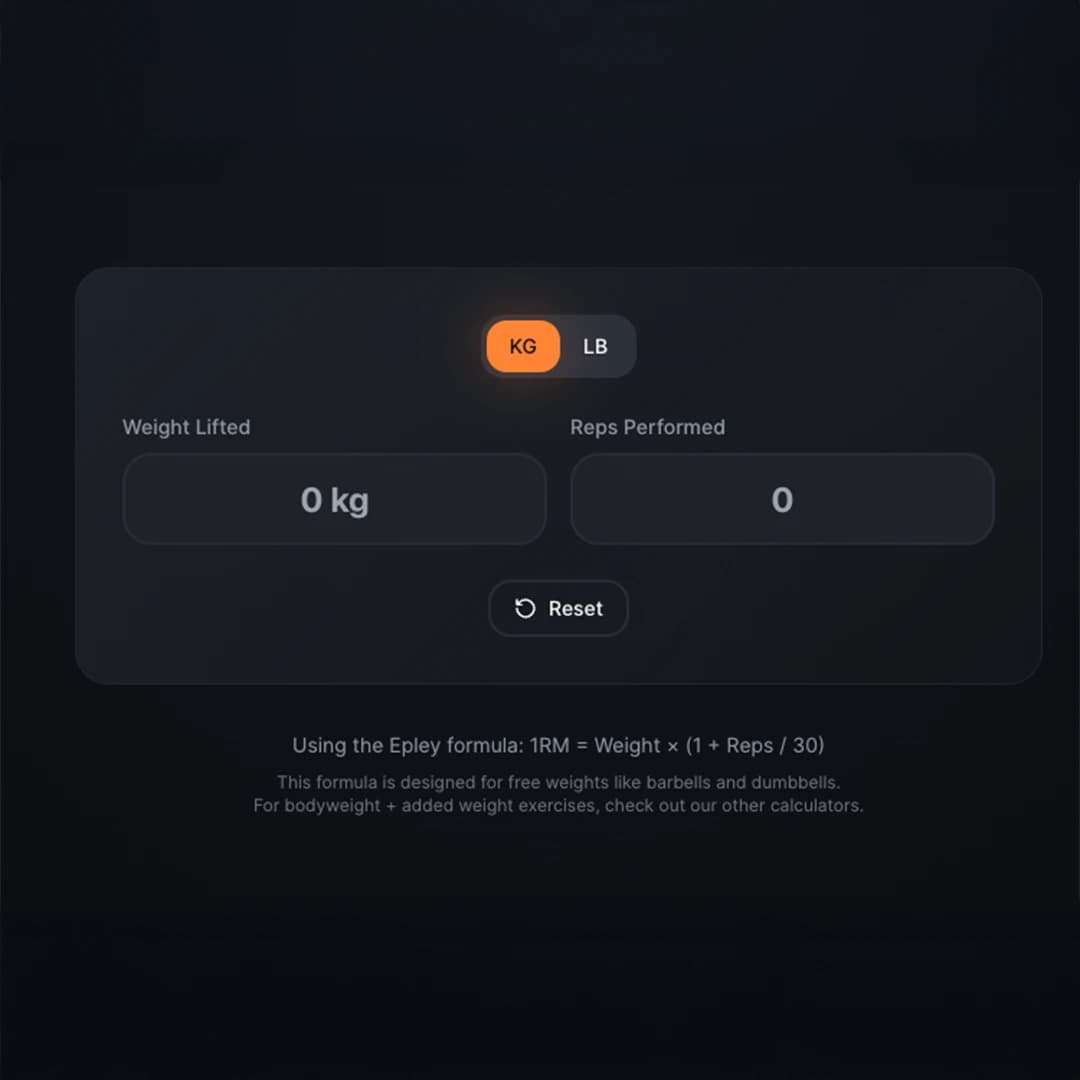
Easily calculate your one-rep max (1RM) using the weight you lifted and how many reps you performed. This calculator is ideal for traditional weight training movements like the bench press, squat, deadlift, or shoulder press.
Using the Epley formula: 1RM = Weight × (1 + Reps / 30)
This formula is designed for free weights like barbells and dumbbells.
For bodyweight + added weight exercises, check out our other calculators.
How This One Rep Max Calculator Works
Your one rep max is the maximum amount of weight you can lift for a single repetition with correct form, the gold standard measure of strength. This 1RM calculator uses proven prediction formulas to estimate your max from a submaximal set, allowing you to avoid testing to failure. Popular formulas like Epley and Brzycki are trusted by coaches and lifters worldwide for accurate, safe strength programming.
Why Use a One Rep Max Calculator Instead of Max Testing
Testing your real 1RM can be risky, especially without a spotter or controlled environment. A 1RM calculator gives you the ability to estimate max strength safely and often, with no need for all-out attempts. Use your calculated 1RM to assign training intensities, manage fatigue, and track long-term performance gains.
How to Calculate Your 1RM With Reps and Weight
To calculate your one-rep max, simply enter the amount of weight you lifted and how many reps you completed with that weight. The calculator then estimates your true 1RM using formulas designed for strength training - like the Epley, Brzycki, or Landerformulas. These give you an accurate strength profile without the need to test maxes in the gym. It's safer, faster, and great for consistent progress tracking across all major barbell and dumbbell lifts.
FAQs About 1RM and Strength Calculators
Other Strength Calculators You Might Need
These tools help you optimize your training, track progress, and make informed decisions for strength, nutrition, and overall fitness.

1RM Pull-Up Calculator
Estimate the maximum weight you can pull for a single rep with added resistance using this weighted pull-up 1RM calculator.

1RM Dips Calculator
Find out your dips personal record by calculating your 1RM from submaximal sets with weight, using proven strength formulas.

Calisthenics Strength Index Calculator
Compare your weighted pull-up, dip, or muscle-up 1RM to the best recorded lifts and get a Strength Index score from 0 to 100.
Learn More About One Rep Max and Strength Calculators
What Is a One Rep Max (1RM) in Pull Ups?
Your 1RM tells you how strong you are in a specific lift, it's a benchmark for programming workouts and setting measurable goals. Whether you're training for power, hypertrophy, or endurance, understanding your max effort is the first step to structured progression.
How 1RM Formulas Are Used in Strength Programming
Instead of testing with maximal effort, you can input a safe, heavy set (like 5 or 8 reps) and let the calculator do the work. Formulas like Epley or Brzycki are reliable tools used by trainers and athletes to estimate a safe and accurate 1RM from rep performance.
One Rep Max vs. PR (Personal Record)
A PR is the most you've actually lifted in training or competition. Your estimated 1RM, however, is a calculated number based on performance. Think of it as your potential PR, it helps you program workouts and work toward that next big personal best.
Using 1RM to Design Your Training Cycles
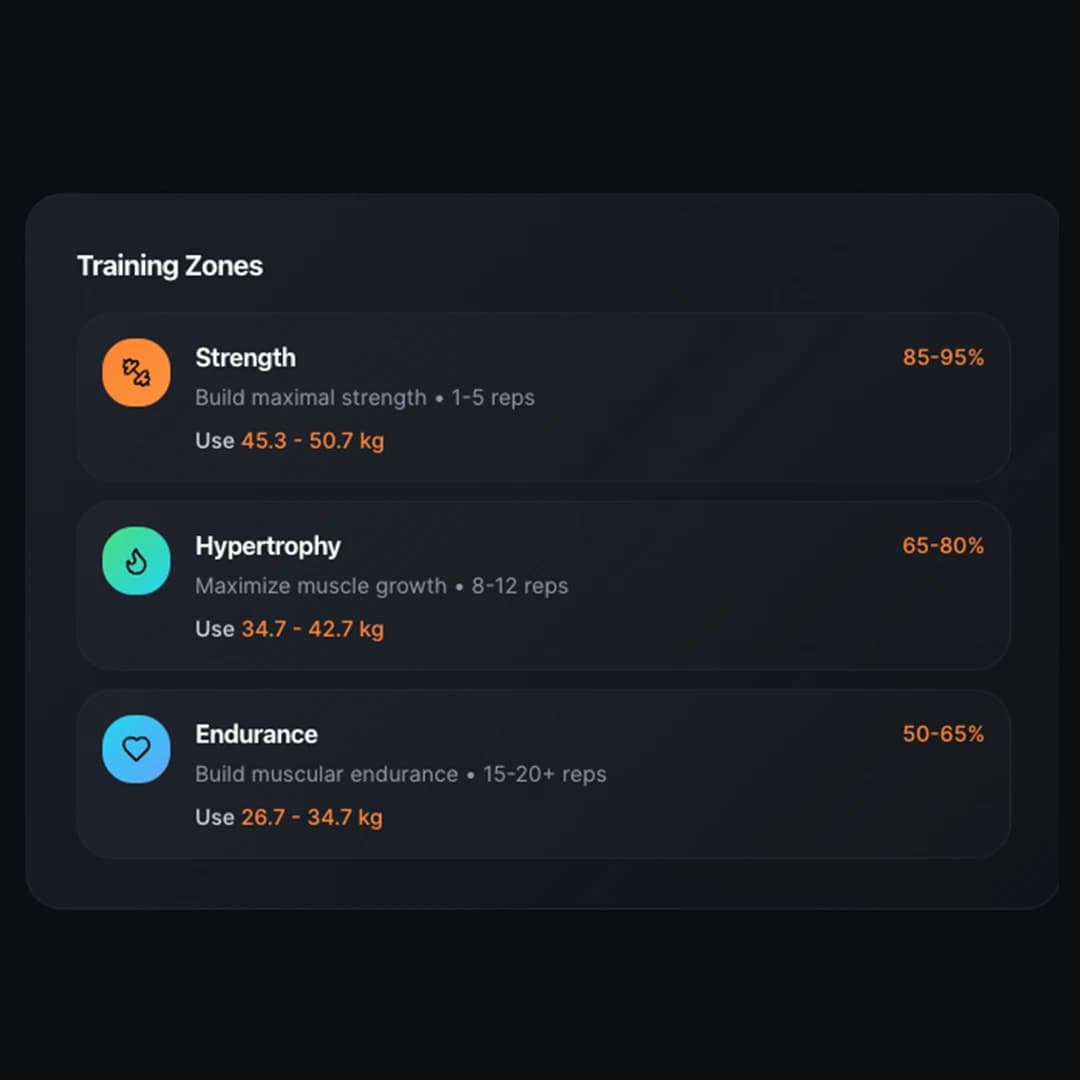
Once you have your 1RM, you can build training plans around it using percentages: 65-75% for volume work, 75-85% for strength development, and 90%+ for peak strength and testing. This keeps your workouts efficient, progressive, and in line with your goals.
What Rep Ranges Tell You About Strength Levels
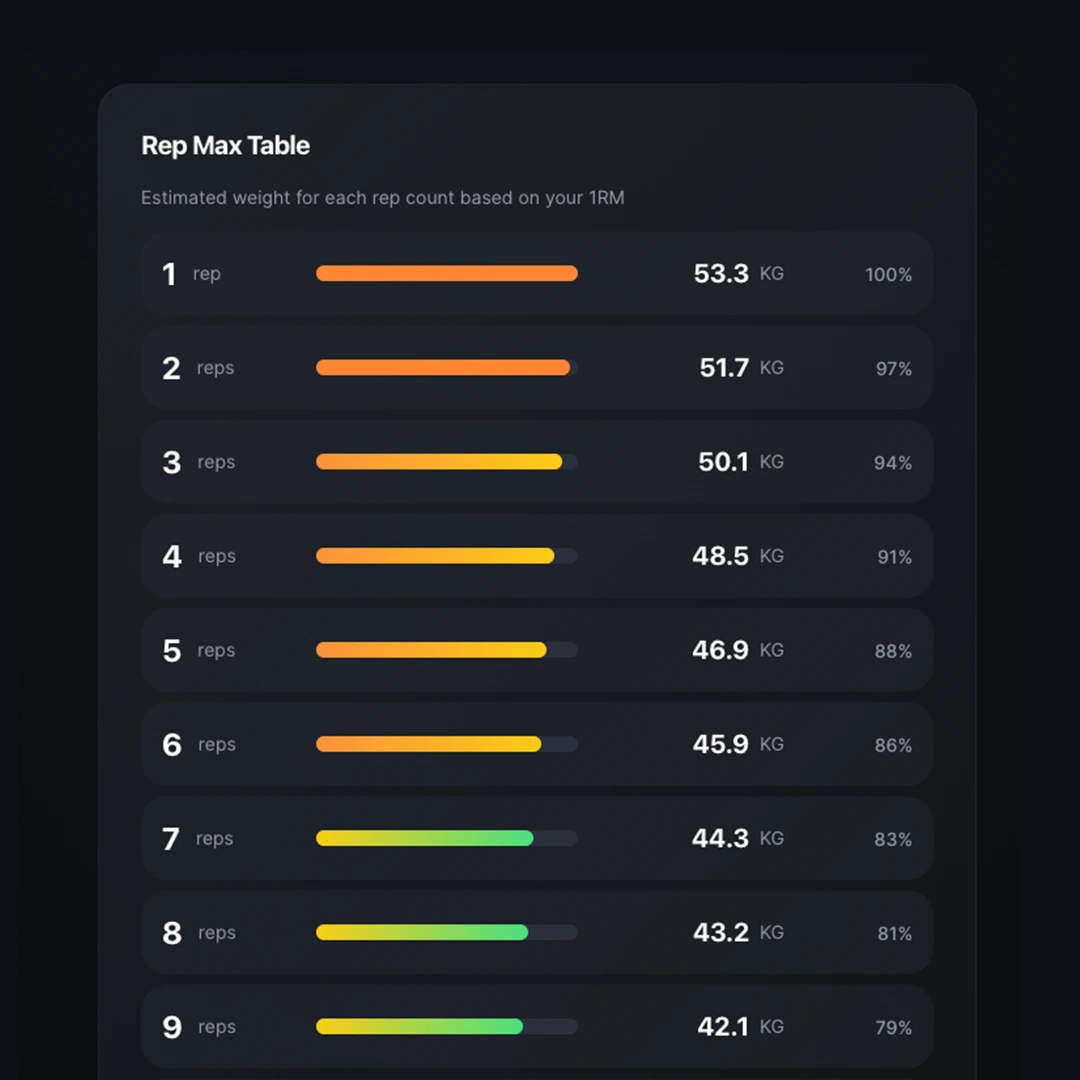
Each rep range corresponds roughly to a percentage of your 1RM. For example: 5 reps is approximately 86%, 8 reps approximately 80%, and 10 reps approximately 75%. These ranges help you reverse engineer your max and create smarter plans without maxing out.
Tips to Improve Your 1RM Over Time
Focus on progressive overload, recovery, and good technique. To increase your 1RM, rotate volume and intensity phases, ensure you're eating enough, and get adequate rest. Use this calculator every few weeks to assess gains and keep challenging yourself.